 KPMI


Current issue
- Page Path
- HOME > Browse Articles > Current issue
- Volume 33(5); October 2026
-


 PDF
Research Articles
- [English]
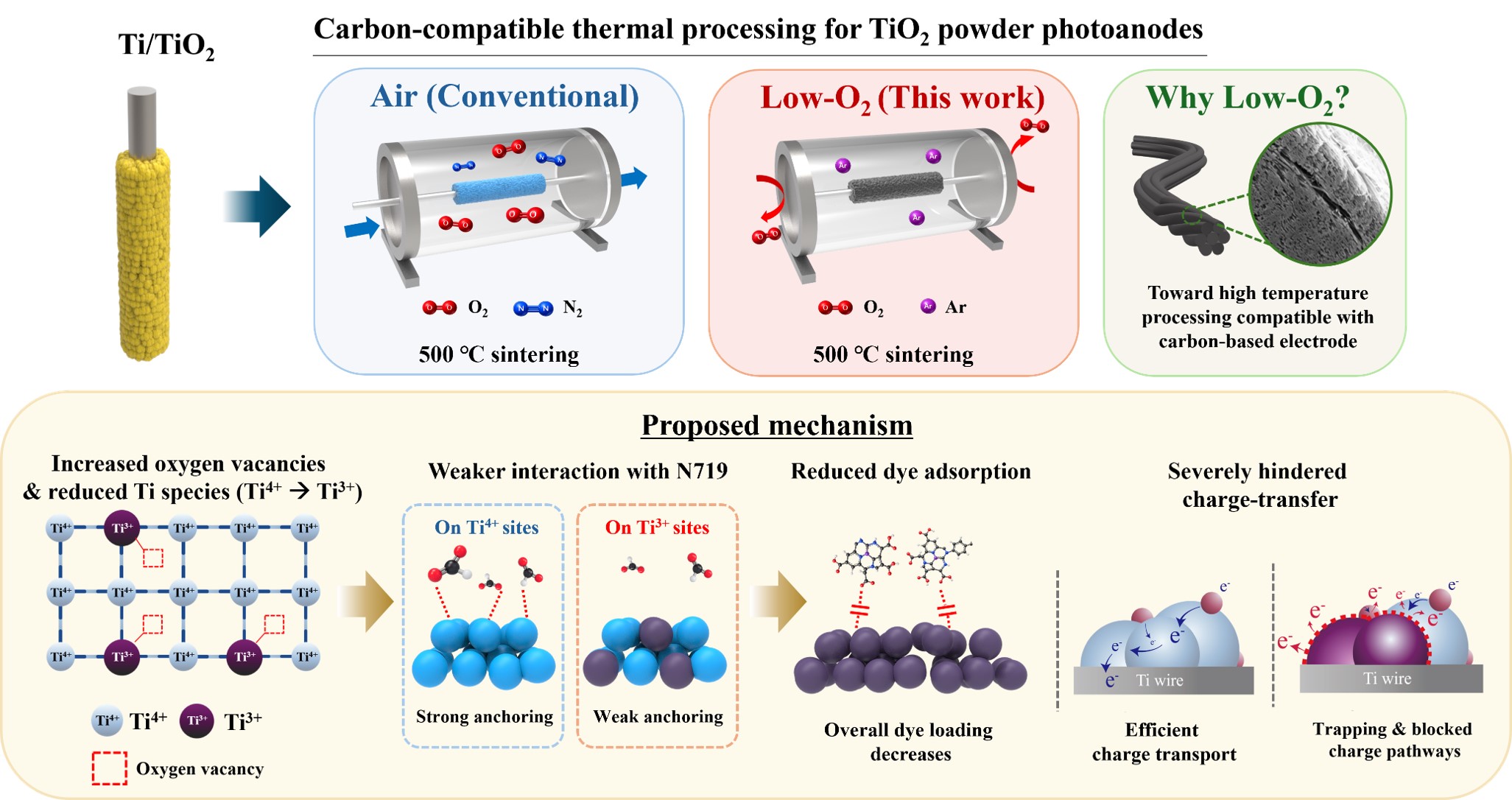
- Effect of Low-Oxygen Atmosphere Sintering on TiO2 Powder Photoanodes for Fiber-Shaped Dye-Sensitized Solar Cells toward Carbon-Based Electrode Integration.
- Yeonggwon Kim, Chae Young Woo, Sung Min Kim, Jiseong Park, Yongseon Jeong, Dabin Chun, Seungfeel Jeong, Hyung Woo Lee
- J Powder Mater. 2026;33(5):327-337. Published online October 30, 2026
- DOI: https://doi.org/10.4150/jpm.2026.00241
- 20 View
- 2 Download
-
 Abstract
 PDF
- Motivated by the goal of achieving high-temperature photoanode processing compatible with carbon-based current collectors, this study investigates the effect of sintering atmosphere on Ti wire/TiO2 photoanodes for fiber-shaped dye-sensitized solar cells. Photoanodes sintered under conventional air (Air) and a custom low-oxygen condition (LO, continuous Ar flow under reduced pressure at 500 °C) were compared, along with a subsequent low-temperature air-annealing treatment (LO-A). X-ray diffraction (XRD) and scanning electron microscopy (SEM) revealed no substantial difference between Air and LO, whereas X-ray photoelectron spectroscopy (XPS) showed a marked increase in reduced Ti species (Ti3+, Ti2+) and an approximately twofold higher C 1s signal for LO, accompanied by significantly reduced N719 dye adsorption. LO photoanodes exhibited short-circuit-like device behavior, precluding reliable photovoltaic characterization. Although LO-A eliminated this short-circuit behavior and largely restored dye adsorption, photovoltaic performance remained severely suppressed, and electrochemical impedance spectroscopy revealed a three-orders-of-magnitude increase in photoanode-related charge-transfer resistance relative to Air. These results indicate that dye-anchoring capacity and interfacial charge-transfer resistance are governed by at least partially distinct factors, possibly involving reduced Ti species, carbon residue, and leakage paths, whose contributions were not separated, and that low-temperature annealing alone is insufficient to restore the photoelectrochemical functionality compromised by LO sintering.
- [English]
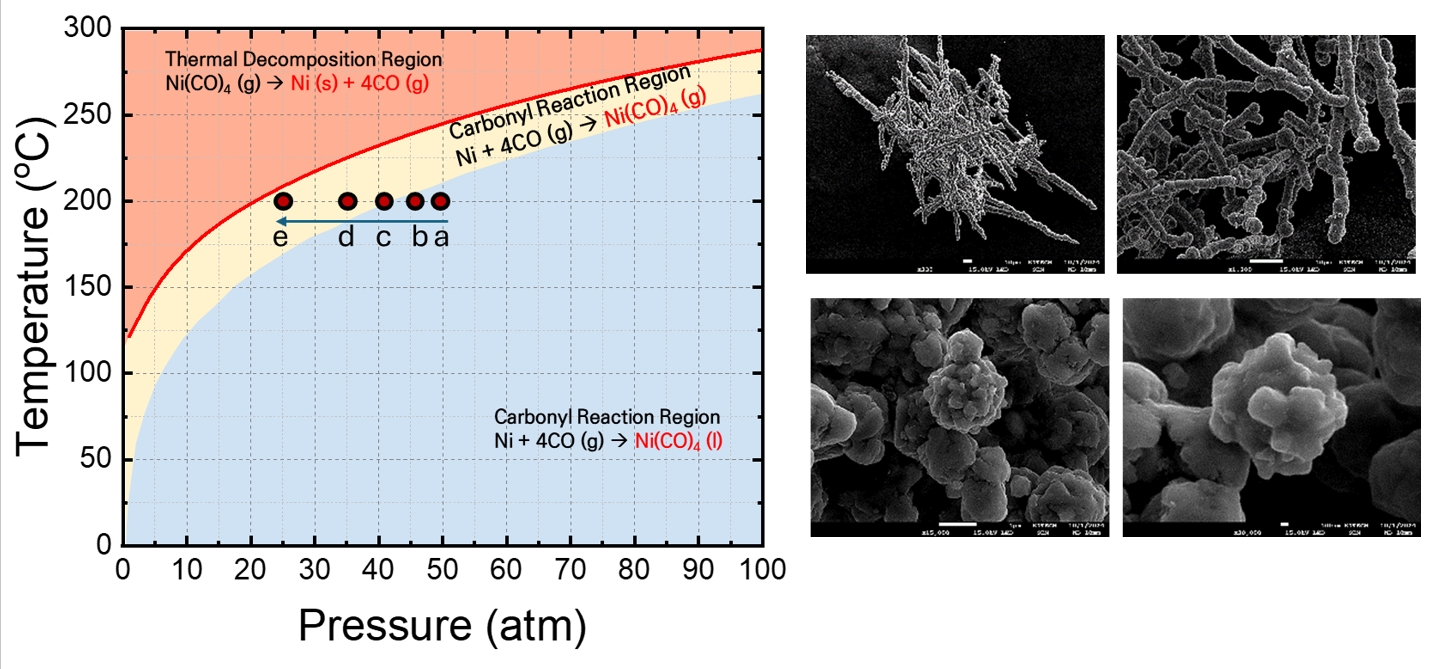
- Phase-Equilibrium-Guided Carbonyl Processing of Highly Active Nickel Powders
- Seoung Uk Bae, Kyoung-Tae Park, Joo Hyun Park, Jae Hong Shin
- J Powder Mater. 2026;33(5):338-347. Published online October 30, 2026
- DOI: https://doi.org/10.4150/jpm.2026.00185
- 21 View
- 0 Download
-
Abstract
PDF
- Nickel powders with large specific surface areas are cost-effective alternatives to noble-metal catalysts for hydrogen-producing reactions, including methane reforming and ammonia decomposition. However, thermodynamic control of nickel carbonyl formation and decomposition is essential for producing catalytically active powders through the Mond process. In this study, we established a thermodynamic framework for carbonyl nickel production by combining Gibbs free-energy analysis, the Clausius–Clapeyron relation, and liquid–gas phase-equilibrium calculations for the reaction Ni + 4CO ↔ Ni(CO)₄. The resulting phase-equilibrium map identified operating windows for selective nickel carbonyl formation and subsequent decomposition. High-pressure carbonylation achieved 99.7% nickel conversion at 200 °C and 50 atm, whereas thermal decomposition at 300 °C and 1 atm yielded 57.9% nickel recovery. Scanning electron microscopy revealed needle-like nickel particles, suggesting a morphology favorable for catalytic applications. Process simulations captured pressure evolution and Ni(CO)₄ phase transitions, supporting rational selection between liquid- and gas-phase operating regimes. These findings indicate that phase-equilibrium-guided carbonyl processing offers a scalable route to high-activity nickel powder catalysts for hydrogen-production technologies.
- [Korean]
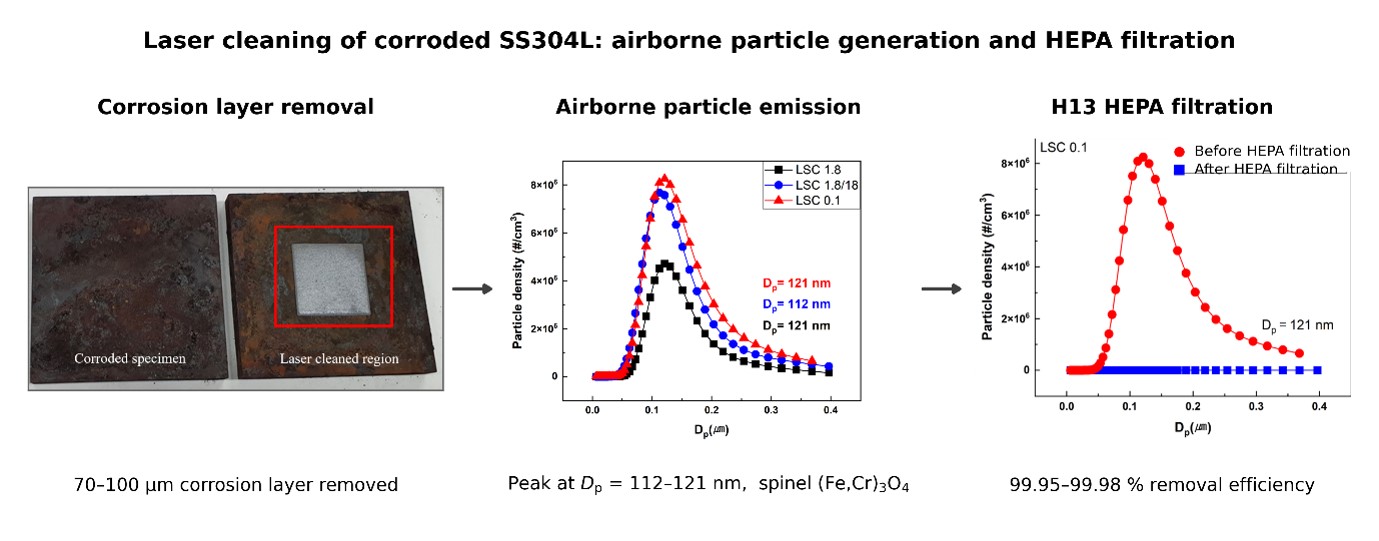
- Corrosion Layer Removal from 304L Stainless Steel and Airborne Particle Generation and Filtration under Different Laser Scanning Conditions
- Hyun Jong Yoo, Changkyoo Park, Jeoung Han Kim
- J Powder Mater. 2026;33(5):348-355. Published online October 30, 2026
- DOI: https://doi.org/10.4150/jpm.2026.00199
- 21 View
- 0 Download
-
Abstract
PDF
- Laser surface cleaning (LSC) can remove corrosion layers without chemicals or abrasives but releases airborne particles that require control for safe industrial use. We cleaned artificially corroded 304L stainless steel with a 1200 W nanosecond Nd:YAG laser using three scanning strategies: a single pass with a 1.8 mm hatch distance (LSC 1.8), 18 offset passes at 1.8 mm (LSC 1.8/18), and a single pass at 0.1 mm (LSC 0.1). Residual corrosion products remained after LSC 1.8, whereas LSC 1.8/18 and LSC 0.1 removed the corrosion layer. Peak particle number concentrations were 4.71 × 10⁶, 7.67 × 10⁶, and 8.25 × 10⁶ #/cm³, respectively, and modal diameters ranged from 112 to 121 nm. After normalization by the thickness of the removed layer, peak concentrations differed by only about 1.4% between LSC 1.8/18 and LSC 0.1, indicating that the concentration difference was mainly associated with the amount of material removed. Transmission electron microscopy showed agglomerates of nanoscale primary particles joined by necks; energy-dispersive X-ray spectroscopy and selected-area electron diffraction identified Fe–Cr–O particles with a spinel structure consistent with (Fe,Cr)₃O₄. H13-grade high-efficiency particulate air filtration achieved particle removal efficiencies of 99.95–99.98% across all conditions.
- [English]
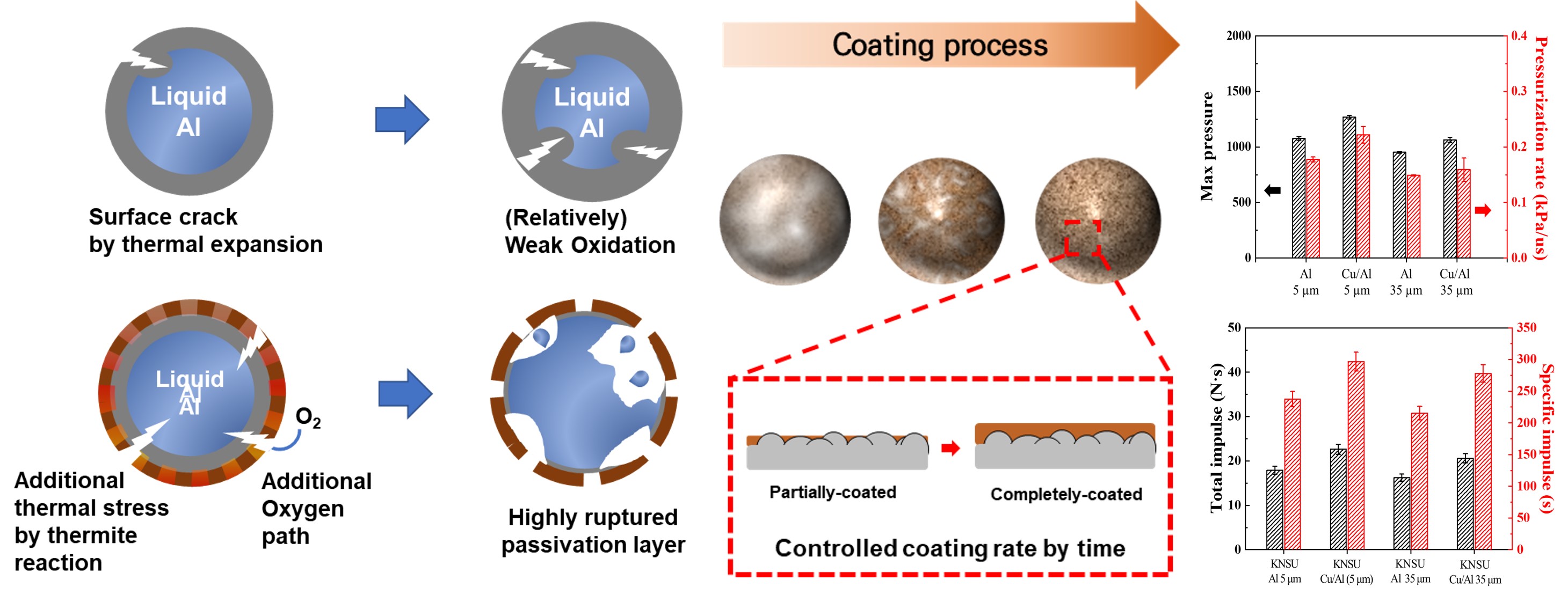
- Thermite-Assisted Cu-Coated Al Powder as a Solid Propellant: Expanding the Use of Coarse Al Powder
- Soo-ho Jung, Jinhee Bae, Ji Hun Yu, Ho sung Kim, Soo Hyung Kim
- J Powder Mater. 2026;33(5):356-364. Published online October 30, 2026
- DOI: https://doi.org/10.4150/jpm.2026.00206
- 20 View
- 1 Download
-
Abstract
PDF
 Supplementary Material
- Aluminum (Al) powder is a key fuel for solid propellants, but its native oxide (Al2O3) layer acts as a diffusion barrier, resulting in incomplete combustion. Although coarse Al powders offer excellent handling stability, their reactivity is considerably lower. To address this limitation, we coated Al powders with copper (Cu) by electroless plating to form a dual-layer shell with an outer Cu layer and an inner Al2O3 layer. During combustion, the Cu layer induces a thermite reaction at the powder surface, generating intense thermal stress that ruptures the dense oxide shell and promotes oxidation of the internal Al core. Thermogravimetric analysis and differential scanning calorimetry showed higher reactivity and significantly greater heat release in the Cu-coated Al (Cu/Al) powders. In combustion and propulsion tests, the 35 μm Cu/Al powder achieved maximum explosion pressures and pressurization rates comparable to those of pristine 5 μm Al powder, together with a higher specific impulse. This surface modification improves the combustion efficiency of coarse Al powders and offers a promising route to high-performance solid propellants. However, the reduced margin against electrostatic discharge must be considered during handling.
- [Korean]
- Microstructural Characteristics and High-Temperature Compression Behavior of a Ni-Based ODS-Composition Alloy and Refractory Composite
- Song-Yi Kim, Do-Hun Kwon, Eun-Ji Cha, Hwi-Jun Kim
- J Powder Mater. 2026;33(5):365-371. Published online October 30, 2026
- DOI: https://doi.org/10.4150/jpm.2026.00234
- 19 View
- 2 Download
-
Abstract
PDF
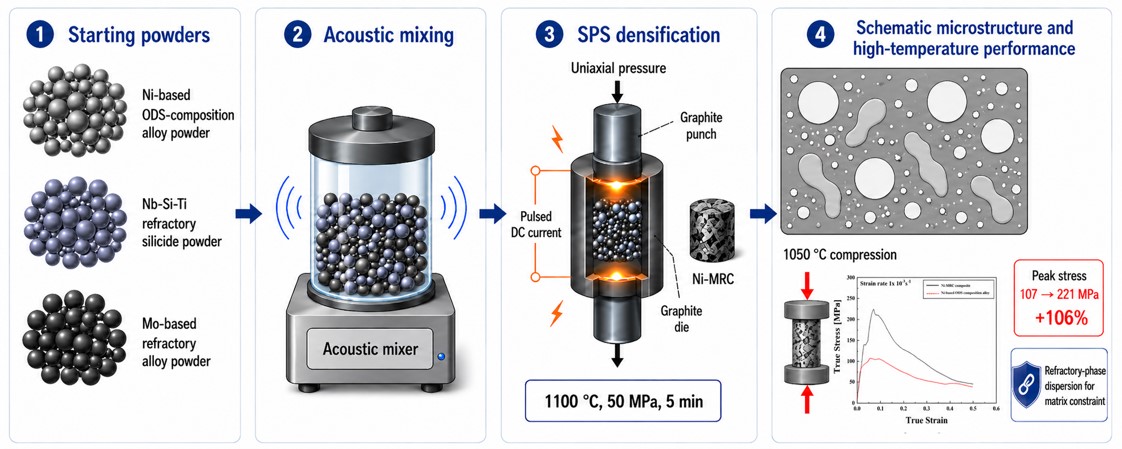
- Nickel-based alloys have been widely used as high-temperature structural materials owing to their excellent oxidation resistance, phase stability, and mechanical reliability. However, their mechanical properties can rapidly deteriorate under ultrahigh-temperature conditions due to thermally activated dislocation motion, dynamic recovery, and grain-boundary-mediated deformation. Therefore, introducing thermally stable refractory constituents that retain high strength at elevated temperatures may provide an effective strategy for overcoming this limitation. In this study, Nb-Si-Ti-based refractory silicide alloy powder and Mo-based refractory alloy powder were introduced as reinforcing constituents to improve the ultrahigh-temperature deformation resistance of a Ni-based ODS-composition alloy. A Ni-MRC composite was fabricated by spark plasma sintering. The composite powder consisted of 65 wt.% Ni-based ODS-composition alloy powder, 25 wt.% Nb-Si-Ti-based refractory silicide alloy powder, and 10 wt.% Mo-based refractory alloy powder. Powder morphology, phase constitution, SPS-consolidated microstructure and ultrahigh-temperature compression behavior at 1050 °C were analyzed using SEM, XRD, EBSD, and Gleeble-based compression testing to evaluate the role of refractory reinforcements in improving the deformation resistance of the Ni-based matrix. The Ni-MRC composite exhibited a peak stress of 221 MPa at 1050 ℃, approximately 106% higher than that of the Ni-based ODS-composition alloy, indicating improved ultrahigh-temperature deformation resistance.
- [English]
- Role of Oxides in the Tensile Properties of Pure Copper Processed by Laser Powder Bed Fusion
- Haeum Park, Ki Jong Kim, Yeon Woo Kim, Hahun Lee, Kichul Park, Yerim Kim, Kee-Ahn Lee, Seok Su Sohn, Jeong Min Park
- J Powder Mater. 2026;33(5):372-378. Published online October 30, 2026
- DOI: https://doi.org/10.4150/jpm.2026.00248
- 17 View
- 0 Download
-
Abstract
PDF
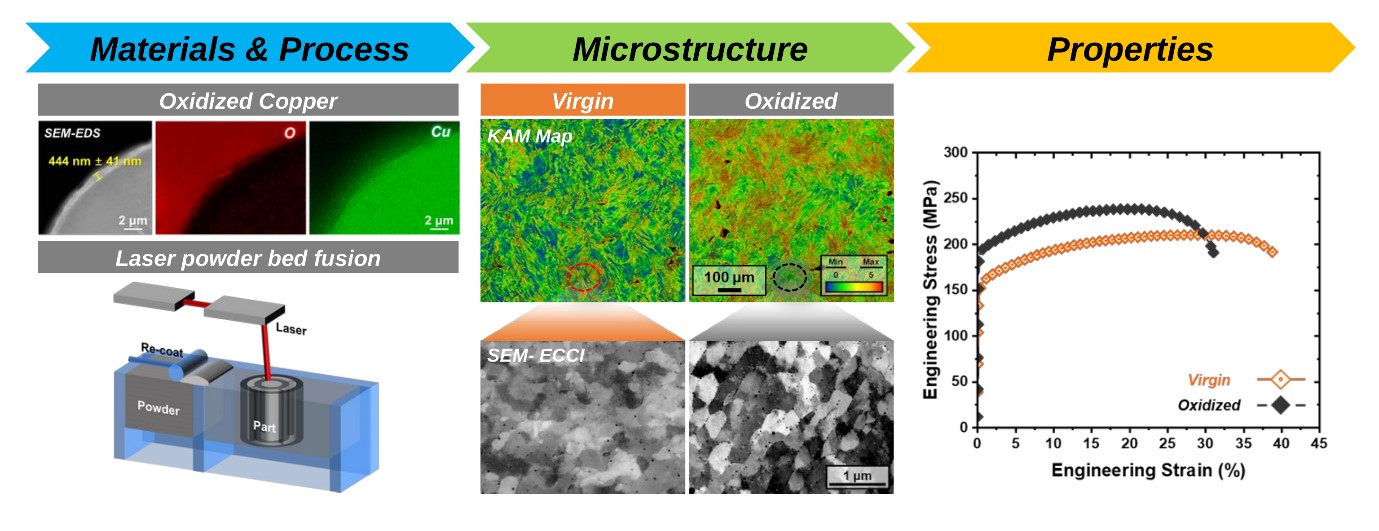
- Oxide particles can affect the tensile properties of pure Cu processed by laser powder bed fusion (LPBF) through their interactions with dislocations. This study compared the microstructure and tensile behavior of samples produced from virgin and oxidized pure Cu powders under identical LPBF conditions. The two samples had comparable relative densities above 98.7% and similar grain sizes. Yield and ultimate tensile strengths were nevertheless higher in the oxidized sample, whereas uniform and total elongations were lower. Backscattered-electron imaging and image analysis indicated that oxide particles occupied a higher apparent area fraction in the examined fields of the oxidized sample; electron backscatter diffraction analysis also showed higher kernel average misorientation. Together, these observations suggest two possible roles for oxide particles: acting as dispersed obstacles to dislocation motion and promoting dislocation retention during LPBF, consistent with the higher kernel average misorientation. The strength increase may therefore reflect both particle strengthening and a greater contribution from dislocation strengthening.
- [Korean]
- Pressure-Dependent Resistivity of Commercial Nickel Powders with Different Morphologies and Sieve Classes for Pressure-Conductive Rubber Semiconductor Test Sockets
- DongWook Lee, Moonjung Kim
- J Powder Mater. 2026;33(5):379-387. Published online October 30, 2026
- DOI: https://doi.org/10.4150/jpm.2026.00255
- 22 View
- 0 Download
-
Abstract
PDFSupplementary Material
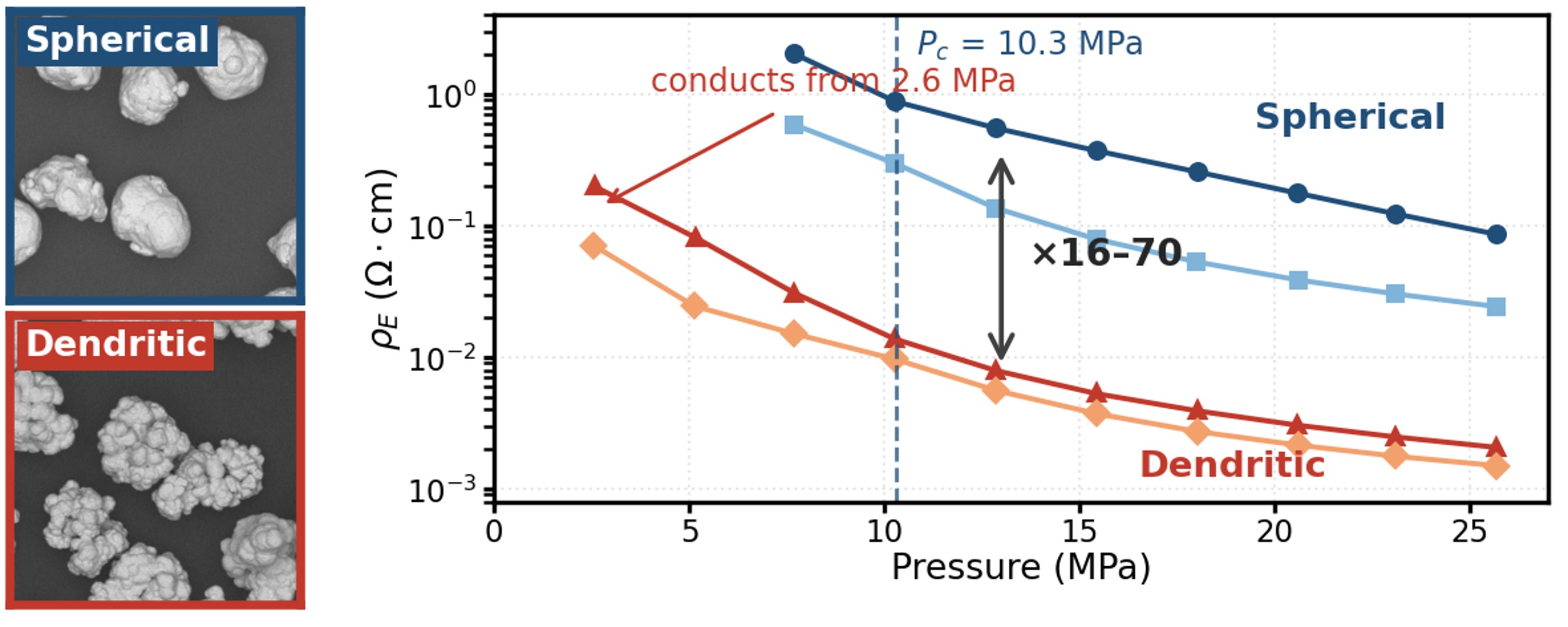
- Pressure-conductive rubber (PCR) sockets rely on Ni powder fillers. We characterized four commercial Ni powders of two morphologies (spherical and dendritic) and two sieve classes (25–32 and 32–45 μm) using laser diffraction, N₂ adsorption, He pycnometry, scanning electron microscopy, and four-point powder resistivity at 2.6–25.7 MPa. Sieve subclassification had little effect on specific surface area, true density, or resistivity, whereas the spherical and dendritic groups differed markedly; as the two morphologies came from different suppliers, this is a combined morphology/supplier effect. Dendritic powders conducted in all three replicates at the lowest pressure (2.6 MPa), whereas spherical powders did so only from 10.3 MPa, with partial conduction at 7.7 MPa. At matched pressures, the groups differed by a factor of 16–70 (1.5 vs 86 mΩ•cm at 25.7 MPa). Despite lower packing fractions, dendritic powders had lower resistivity, consistent with contact topology, not packing density, governing conduction. With residual resistivity fixed at the bulk Ni value, the Montes compaction model described all specimens (R² = 0.986–0.996) with group-dependent exponents (n ≈ 2.1 dendritic, 3.2–3.9 spherical). These findings support using pressure-dependent powder resistivity to prescreen candidate Ni fillers before PCR socket prototyping.
 First
 Prev


TOP

