 KPMI
KPMI

Search
- Page Path
- HOME > Search
- [English]
- Finite Element and Discrete Element Analyses of Anisotropic Powder Compaction for Axial Flux Motor Cores
- Jeong Ah Lee, Do Won Lee, , Hyojeong Ha, Ki Hyuk Kwon, Eon Byeong Park, Taeyoung Kim, Hyoung Seop Kim
- J Powder Mater. 2025;32(6):451-458. Published online December 31, 2025
- DOI: https://doi.org/10.4150/jpm.2025.00409
- 1,214 View
- 30 Download
-
 Abstract
 PDF
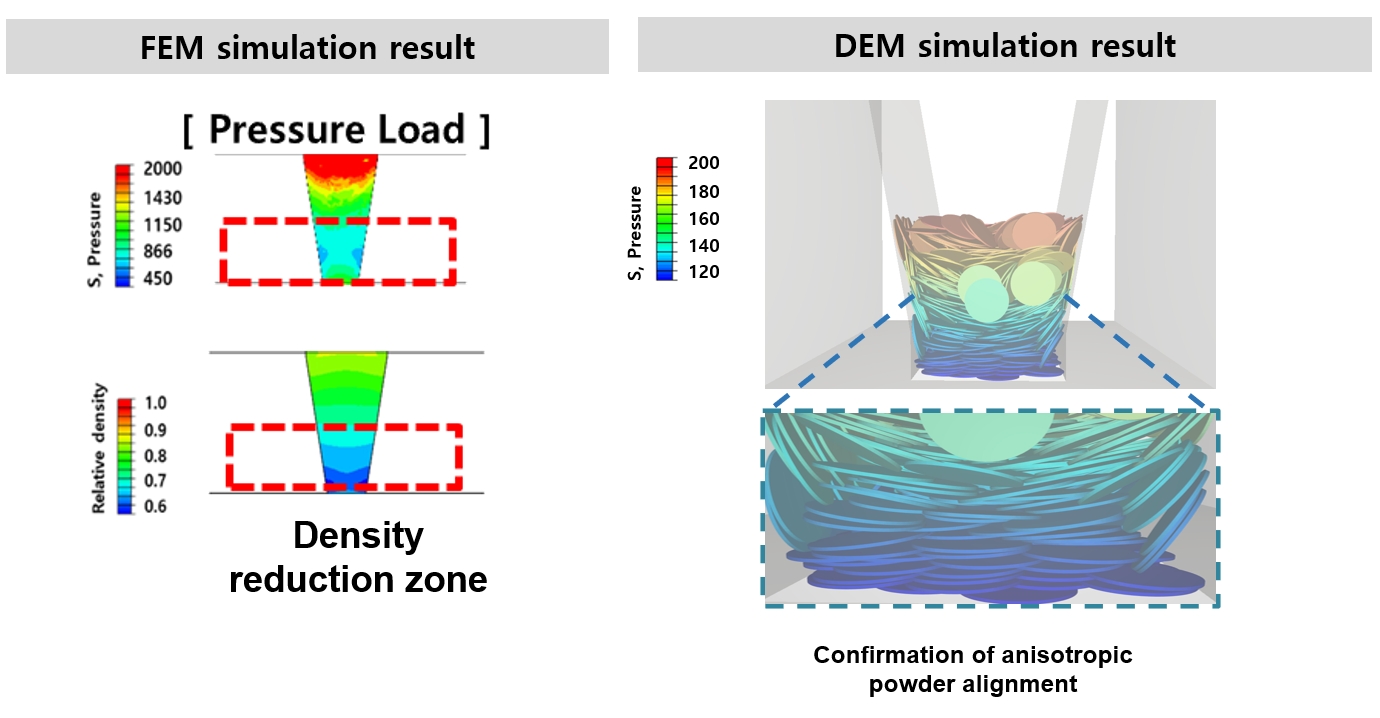
PDF - This study investigates the compaction behavior of anisotropic, plate-like powders used in axial flux motor cores through a combined FEM–DEM approach. A porous continuum FEM model captures stress and density evolution during die pressing, revealing strong gradients along the compaction direction, with higher stress and densification near the upper punch and reduced compaction in the lower region. Guided by these results, DEM simulations examine particle packing, orientation, and contact pressure in representative zones. The DEM analysis shows that higher local pressure promotes denser packing and in-plane particle alignment near the upper punch, while the lower region exhibits more random orientations and lower contact forces. As a result, the multi-scale FEM–DEM framework clarifies how anisotropic particle behavior governs local densification and offers practical guidance for die design and process optimization to achieve more uniform density and controlled magnetic-property-relevant particle alignment in axial flux motor cores.
- [Korean]
- Effect of Cellulose Fiber Density Variation on Energy Harvesting Performance in a Hydrovoltaic Generator
- Seung-Hwan Lee, So Hyun Baek, Hyun-Woo Lee, Yongbum Kwon, Kanghyuk Lee, Kee-Ryung Park, Yoseb Song, Bum Sung Kim, Ji Young Park, Yong-Ho Choa, Da-Woon Jeong
- J Powder Mater. 2025;32(2):113-121. Published online April 30, 2025
- DOI: https://doi.org/10.4150/jpm.2025.00052
- 1,712 View
- 40 Download
- 1 Citations
-
Abstract
PDF
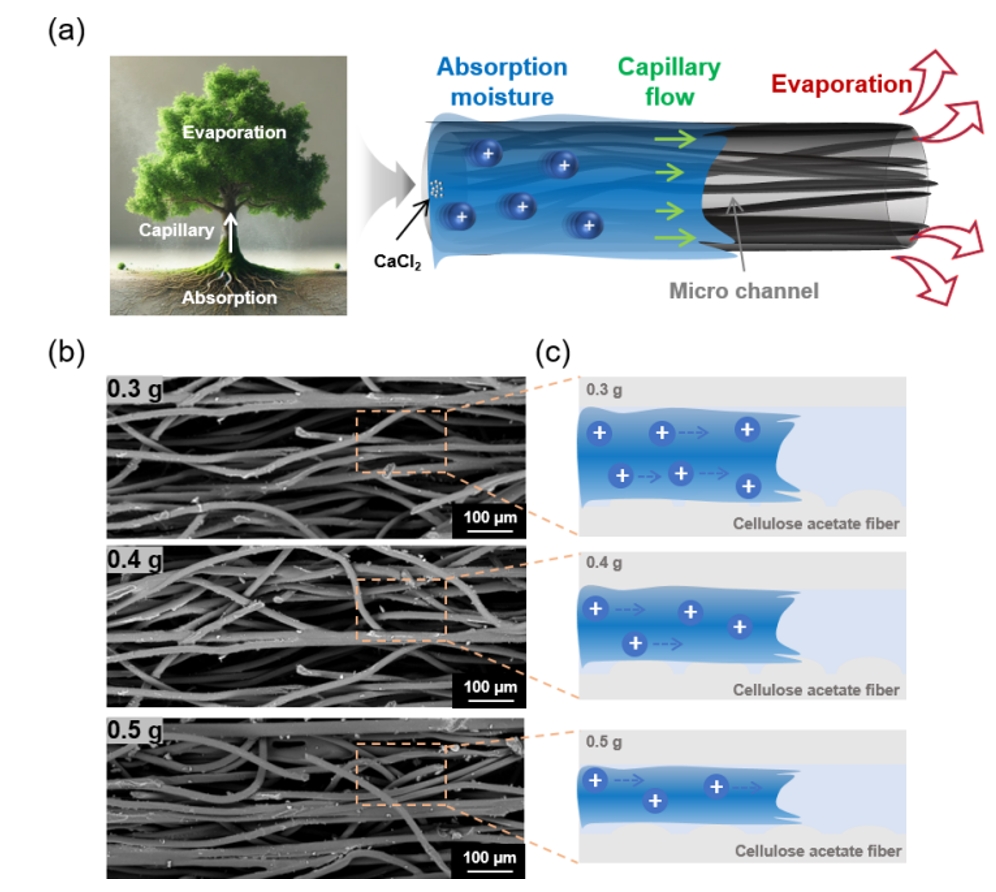
- Energy harvesting has become a crucial technology for sustainable energy solutions; in particular, the utilization of ambient water movement in hydrovoltaic generators has emerged as a promising approach. However, optimizing performance requires an understanding of structural factors affecting energy harvesting, particularly capillary effects. This study aimed to improve hydrovoltaic generator performance by adjusting internal fiber density, which influences water transport and ion mobility. Using cold isostatic pressing, cellulose acetate (CA) loading in a urethane mold was varied to optimize internal density. As CA loading increased, the fiber arrangement became denser, narrowing capillary pathways and reducing proton mobility. While open-circuit voltage (VOC) remained stable, short-circuit current (ISC) decreased with higher CA mass. The sample with a loading of 0.3 g exhibited the highest energy harvesting efficiency, achieving ISC = 107.2 μA, VOC = 0.15 V, and power (P) = 16.7 μW. This study provides insights into methods of improving hydrovoltaic generator efficiency through internal structural modifications.
-
Citations
Citations to this article as recorded by
- Hydrovoltaic Electricity Generators: A Comprehensive Overview of Chemical and Architectural Designs
Kaiying Zhao, Shengyou Li, Minji Kwon, Gwanho Kim, EunAe Shin, Guangtao Zan, Cheolmin Park
Chemical Reviews.2026; 126(7): 4237. CrossRef
- Hydrovoltaic Electricity Generators: A Comprehensive Overview of Chemical and Architectural Designs
- [English]
- Machine Learning Modeling of the Mechanical Properties of Al2024-B4C Composites
- Maurya A. K., Narayana P. L., Wang X.-S., Reddy N. S.
- J Powder Mater. 2024;31(5):382-389. Published online October 31, 2024
- DOI: https://doi.org/10.4150/jpm.2024.00234
- 2,188 View
- 43 Download
-
Abstract
PDF
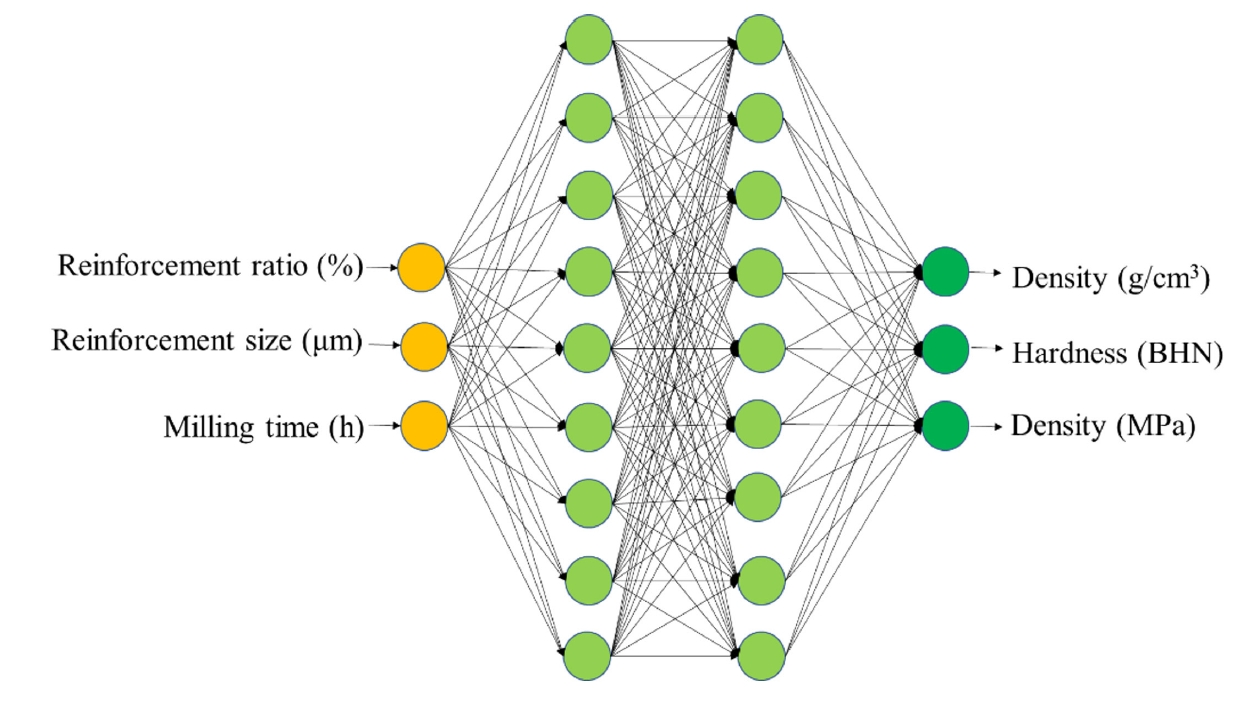
- Aluminum-based composites are in high demand in industrial fields due to their light weight, high electrical conductivity, and corrosion resistance. Due to its unique advantages for composite fabrication, powder metallurgy is a crucial player in meeting this demand. However, the size and weight fraction of the reinforcement significantly influence the components' quality and performance. Understanding the correlation of these variables is crucial for building high-quality components. This study, therefore, investigated the correlations among various parameters—namely, milling time, reinforcement ratio, and size—that affect the composite’s physical and mechanical properties. An artificial neural network model was developed and showed the ability to correlate the processing parameters with the density, hardness, and tensile strength of Al2024-B4C composites. The predicted index of relative importance suggests that the milling time has the most substantial effect on fabricated components. This practical insight can be directly applied in the fabrication of high-quality Al2024-B4C composites.
- [Korean]
- Characterization of Compacted and Pressureless Sintered Parts for Molybdenum Oxide Powder according to Hydrogen Reduction Temperature
- Jong Hoon Lee, Kun-Jae Lee
- J Powder Mater. 2024;31(4):336-341. Published online August 30, 2024
- DOI: https://doi.org/10.4150/jpm.2024.00241

- 1,755 View
- 20 Download
- 1 Citations
-
Abstract
PDF
- Molybdenum, valued for its high melting point and exceptional physical and chemical properties, is studied in diverse fields such as electronics, petrochemicals, and aviation. Among molybdenum oxides, molybdenum dioxide stands out for its higher electrical conductivity than other transition metal oxides due to its structural characteristics, exhibiting metallic properties. It is applied as pellets to gas sensors, semiconductors, and secondary batteries for its properties. Thus, research on molybdenum dioxide compaction and pressureless sintering is necessary, yet research on pressureless sintering is currently insufficient. This study synthesized MoO₃ powder via solution combustion synthesis and reduced it using the 3% hydrogen/argon gas mixture to investigate the effect of reduction temperature on the powder. Additionally, the reduced powder was compacted and subjected to pressureless sintering with temperature as a variable. The density and the microstructure of brown parts were analyzed and discussed.
-
Citations
Citations to this article as recorded by- High-sensitivity optical fiber hydrogen sensing with MoO3/PANI/Pd nanocomposite
Mohammed M. Alkhabet, Saad H. Girei, Ammar H. Farhan, Fatimah F. Hashim, Jaafar A. Jaafar, Husam K. Salih, Manar F. Abbood, Mohd H. Yaacob
Materials Science in Semiconductor Processing.2025; 200: 110021. CrossRef
- High-sensitivity optical fiber hydrogen sensing with MoO3/PANI/Pd nanocomposite
- [Korean]
- Study for the Process Parameter Control to Achieve High Build Rate of Laser Powder Bed Fused IN718 Super Alloy Using Optimal VED
- Sang Uk Kim, Kyu-Sik Kim, Yongho Sohn, Kee-Ahn Lee
- J Powder Mater. 2022;29(5):390-398. Published online October 1, 2022
- DOI: https://doi.org/10.4150/KPMI.2022.29.5.390

- 1,243 View
- 14 Download
-
Abstract
PDF
Recently, considerable attention has been given to nickel-based superalloys used in additive manufacturing. However, additive manufacturing is limited by a slow build rate in obtaining optimal densities. In this study, optimal volumetric energy density (VED) was calculated using optimal process parameters of IN718 provided by additive manufacturing of laser powder-bed fusion. The laser power and scan speed were controlled using the same ratio to maintain the optimal VED and achieve a fast build rate. Cube samples were manufactured using seven process parameters, including an optimal process parameter. Analysis was conducted based on changes in density and melt-pool morphology. At a low laser power and scan speed, the energy applied to the powder bed was proportional to
and not . At a high laser power and scan speed, a curved track was formed due to Plateau-Rayleigh instability. However, a wide melt-pool shape and continuous track were formed, which did not significantly affect the density. We were able to verify the validity of the VED formula and succeeded in achieving a 75% higher build rate than that of the optimal parameter, with a slight decrease in density and hardness.
- [Korean]
- Effect of Polymeric Binders on Green body Properties of WC-Co Cemented Carbides
- Young-Soo Lim, Sun-Yong Ahn, Jae-Suk Lim, Yeong-Kyeun Paek, Tai-Joo Chung
- J Powder Mater. 2022;29(4):291-296. Published online August 1, 2022
- DOI: https://doi.org/10.4150/KPMI.2022.29.4.291

- 641 View
- 4 Download
-
Abstract
PDF
The green body of WC-Co cemented carbides containing polymeric binders such as paraffin, polyethylene glycol (PEG), and polyvinyl acetate (PVA) are prepared. The green density of the WC-Co cemented carbides increases with the addition of binders, with the exception of PVA, which is known to be a polar polymeric substance. The green strength of the WC-Co cemented carbides improves with the addition of paraffin and a mixture of PEG400 and PEG4000. In contrast, the green strength of the WC-Co does not increase when PEG400 and PEG4000 is added individually. The compressive strength of the green body increases to 14 MPa, and the machinability of the green body improves when more than 4–6 wt% paraffin and a mixture of PEG400 and PEG4000 is used. Simultaneously, the sintered density of WC-Co is as high as 99% relative density, similar to a low binder addition of 1–2 wt%.
- [Korean]
- Additive Manufacturing Optimization of Directed Energy Deposition-Processed Ti-6Al-4V Alloy using Energy Density and Powder Deposition Density
- Yukyeong Lee, Eun Sung Kim, Se-Ho Chun, Jae Bok Seol, Hyokyung Sung, Jung Seok Oh, Hyoung Seop Kim, Taekyung Lee, Tae-Hyun Nam, Jung Gi Kim
- J Korean Powder Metall Inst. 2021;28(6):491-496. Published online December 1, 2021
- DOI: https://doi.org/10.4150/KPMI.2021.28.6.491

- 1,365 View
- 9 Download
- 1 Citations
-
Abstract
PDF
The process optimization of directed energy deposition (DED) has become imperative in the manufacture of reliable products. However, an energy-density-based approach without a sufficient powder feed rate hinders the attainment of an appropriate processing window for DED-processed materials. Optimizing the processing of DEDprocessed Ti-6Al- 4V alloys using energy per unit area (Eeff) and powder deposition density (PDDeff) as parameters helps overcome this problem in the present work. The experimental results show a lack of fusion, complete melting, and overmelting regions, which can be differentiated using energy per unit mass as a measure. Moreover, the optimized processing window (Eeff = 44~47 J/mm2 and PDDeff = 0.002~0.0025 g/mm2) is located within the complete melting region. This result shows that the Eeff and PDDeff-based processing optimization methodology is effective for estimating the properties of DED-processed materials.
-
Citations
Citations to this article as recorded by- Cryogenic Tensile Behavior of Ferrous Medium-entropy Alloy Additively Manufactured by Laser Powder Bed Fusion
Seungyeon Lee, Kyung Tae Kim, Ji-Hun Yu, Hyoung Seop Kim, Jae Wung Bae, Jeong Min Park
journal of Korean Powder Metallurgy Institute.2024; 31(1): 8. CrossRef
- Cryogenic Tensile Behavior of Ferrous Medium-entropy Alloy Additively Manufactured by Laser Powder Bed Fusion
- [Korean]
- Effect of Pressure on Densification and Transmittance of ZnS in HIP Process
- In-He Gwon, Gun-Eik Jang
- J Korean Powder Metall Inst. 2021;28(4):325-330. Published online August 1, 2021
- DOI: https://doi.org/10.4150/KPMI.2021.28.4.325

- 1,186 View
- 10 Download
-
Abstract
PDF
In this study, a ZnS film of 8-mm thickness was prepared on graphite using a hot-wall-type CVD technique. The ZnS thick film was then hot isostatically pressed under different pressures (125–205 MPa) in an argon atmosphere. The effects of pressure were systematically studied in terms of crystallographic orientation, grain size, density, and transmittance during the HIP process. X-ray diffraction pattern analysis revealed that the preferred (111) orientation was well developed after a pressure of 80 MPa was applied during the HIP process. A high transmittance of 61.8% in HIPZnS was obtained under the optimal conditions (1010°C, 205MPa, 6 h) as compared with a range of approximately 10% for the CVD-ZnS thick film under a 550-nm wavelength. In addition, the main cause of the improvement in transmittance was determined to be the disappearance of the scattering factor due to grain growth and the increase in density.
- [Korean]
- RBSC Prepared by Si Melt Infiltration into the Y2O3 Added Carbon Preform
- Min-Ho Jang, Kyeong-Sik Cho
- J Korean Powder Metall Inst. 2021;28(1):51-58. Published online February 1, 2021
- DOI: https://doi.org/10.4150/KPMI.2021.28.1.51

- 1,767 View
- 17 Download
-
Abstract
PDF
The conversion of carbon preforms to dense SiC by liquid infiltration is a prospectively low-cost and reliable method of forming SiC-Si composites with complex shapes and high densities. Si powder was coated on top of a 2.0wt .% Y2O3-added carbon preform, and reaction bonded silicon carbide (RBSC) was prepared by infiltrating molten Si at 1,450°C for 1-8 h. Reactive sintering of the Y2O3-free carbon preform caused Si to be pushed to one side, thereby forming cracking defects. However, when prepared from the Y2O3-added carbon preform, a SiC-Si composite in which Si is homogeneously distributed in the SiC matrix without cracking can be produced. Using the Si + C → SiC reaction at 1,450°C, 3C and 6H SiC phases, crystalline Si, and Y2O3 were generated based on XRD analysis, without the appearance of graphite. The RBSC prepared from the Y2O3-added carbon preform was densified by increasing the density and decreasing the porosity as the holding time increased at 1,450°C. Dense RBSC, which was reaction sintered at 1,450°C for 4 h from the 2.0wt.% Y2O3-added carbon preform, had an apparent porosity of 0.11% and a relative density of 96.8%.
- [English]
- Modeling the Relationship between Process Parameters and Bulk Density of Barium Titanates
- Sang Eun Park, Hong In Kim, Jeoung Han Kim, N. S. Reddy
- J Korean Powder Metall Inst. 2019;26(5):369-374. Published online October 1, 2019
- DOI: https://doi.org/10.4150/KPMI.2019.26.5.369

- 1,222 View
- 6 Download
-
Abstract
PDF
The properties of powder metallurgy products are related to their densities. In the present work, we demonstrate a method to apply artificial neural networks (ANNs) trained on experimental data to predict the bulk density of barium titanates. The density is modeled as a function of pressure, press rate, heating rate, sintering temperature, and soaking time using the ANN method. The model predictions with the training and testing data result in a high coefficient of correlation (R2 = 0.95 and Pearson’s r = 0.97) and low average error. Moreover, a graphical user interface for the model is developed on the basis of the transformed weights of the optimally trained model. It facilitates the prediction of an infinite combination of process parameters with reasonable accuracy. Sensitivity analysis performed on the ANN model aids the identification of the impact of process parameters on the density of barium titanates.
- [English]
- Modeling the Density and Hardness of AA2024-SiC Nanocomposites
- A-Hyun Jeon, Hong In Kim, Hyokyung Sung, N. S. Reddy
- J Korean Powder Metall Inst. 2019;26(4):275-281. Published online August 1, 2019
- DOI: https://doi.org/10.4150/KPMI.2019.26.4.275
- 1,315 View
- 6 Download
-
Abstract
PDF
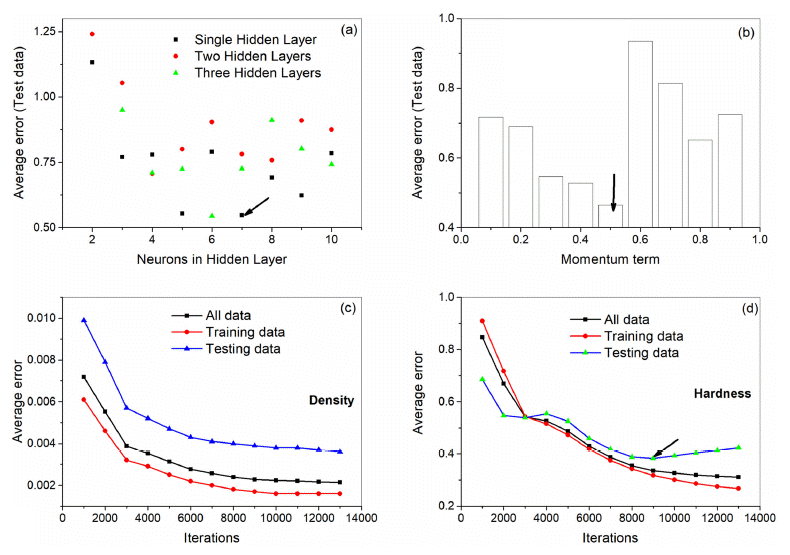
An artificial neural network (ANN) model is developed for the analysis and simulation of correlation between flake powder metallurgy parameters and properties of AA2024-SiC nanocomposites. The input parameters of the model are AA 2024 matrix size, ball milling time, and weight percentage of SiC nanoparticles and the output parameters are density and hardness. The model can predict the density and hardness of the unseen test data with a correlation of 0.986 beyond the experimental data. A user interface is designed to predict properties at new instances. We have used the model to simulate the individual as well as the combined influence of parameters on the properties. Moreover, we have analyzed the calculated results from the powder metallurgical point of view. The developed model can be used as a guide for further composite development.
- [Korean]
- Thermal Properties and Microstructural Changes of Fe-Co System Valve Seat Alloy by High Densification Process
- In-Shup Ahn, Dong-Kyu Park, Kwang-Bok Ahn, Seoung-Mok Shin
- J Korean Powder Metall Inst. 2019;26(2):112-118. Published online April 1, 2019
- DOI: https://doi.org/10.4150/KPMI.2019.26.2.112

- 1,090 View
- 7 Download
-
Abstract
PDF
Infiltration is a popular technique used to produce valve seat rings and guides to create dense parts. In order to develop valve seat material with a good thermal conductivity and thermal expansion coefficient, Cu-infiltrated properties of sintered Fe-Co-M(M=Mo,Cr) alloy systems are studied. It is shown that the copper network that forms inside the steel alloy skeleton during infiltration enhances the thermal conductivity and thermal expansion coefficient of the steel alloy composite. The hard phase of the CoMoCr and the network precipitated FeCrC phase are distributed homogeneously as the infiltrated Cu phase increases. The increase in hardness of the alloy composite due to the increase of the Co, Ni, Cr, and Cu contents in Fe matrix by the infiltrated Cu amount increases. Using infiltration, the thermal conductivity and thermal expansion coefficient were increased to 29.5 W/mK and 15.9 um/m°C, respectively, for tempered alloy composite.
- [Korean]
- The Effects of Si or Sn on the Sintered Properties of Fe-(Mo,Mn)-P Lean alloy
- Woo-Young Jung, Jin-Uk Ok, Dong-Kyu Park, In-Shup Ahn
- J Korean Powder Metall Inst. 2018;25(4):302-308. Published online August 1, 2018
- DOI: https://doi.org/10.4150/KPMI.2018.25.4.302

- 816 View
- 1 Download
-
Abstract
PDF
A lean alloy is defined as a low alloy steel that minimizes the content of the alloying elements, while maintaining the characteristics of the sintered alloy. The purpose of this study is to determine the change in microstructure and mechanical properties due to the addition of silicon or tin in Fe-Mo-P, Fe-Mn-P, and Fe-Mo-Mn-P alloys. Silicon- or tin-added F-Mo-P, Fe-Mn-P, and Fe-Mo-Mn-P master alloys were compacted at 700 MPa and subsequently sintered under a H2-N2 atmosphere at 1120°C. The sintered density of three alloy systems decreases under the same compacting pressure due to dimensional expansion with increasing Si content. As the diffusion rate in the Fe-P-Mo system is higher than that in the Fe-P-Mn system, the decrease in the sintered density is the largest in the Fe-PMn system. The sintered density of Sn added alloys does not change with the increasing Sn content due to the effect of non-dimensional changes. However, the effect of Si addition on the transverse rupture strengthening enhancement is stronger than that of Sn addition in these lean alloys.
- [Korean]
- Pre-treatments of initial materials for controlling synthesized TaC characteristics in the SHS process
- Jae Jin Sim, Sang Hoon Choi, Ji Hwan Park, Il Kyu Park, Jae Hong Lim, Kyoung Tae Park
- J Korean Powder Metall Inst. 2018;25(3):251-256. Published online June 1, 2018
- DOI: https://doi.org/10.4150/KPMI.2018.25.3.251

- 1,181 View
- 5 Download
-
Abstract
PDF
We report the feasibility of TaC production via self-propagating high temperature synthesis, and the influence of the initial green compact density on the final composite particle size. Experiments are carried out from a minimum pressure of 0.3 MPa, the pressure at which the initial green body becomes self-standing, up to 3 MPa, the point at which no further combustion occurs. The green density of the pellets varies from 29.99% to 42.97%, as compared with the theoretical density. The increase in green density decreases the powder size of TaC, and the smallest particle size is observed with 1.5 MPa, at 10.36 μm. Phase analysis results confirm the presence of the TaC phase only. In the range of 0.3-0.5 MPa, traces of unreacted Ta and C residues are detected. However, results also show the presence of only C residue in the matrix within the pressure range of 0.6-3.0 MPa.
- [Korean]
- Sintering behavior of Fe-(Mo-Mn-P)-xSi alloys according to the Green Density
- Woo-Young Jung, Jin-Uk Ok, Dong-Kyu Park, In-Shup Ahn
- J Korean Powder Metall Inst. 2017;24(5):400-405. Published online October 1, 2017
- DOI: https://doi.org/10.4150/KPMI.2017.24.5.400
- 1,524 View
- 7 Download
- 1 Citations
-
Abstract
PDF
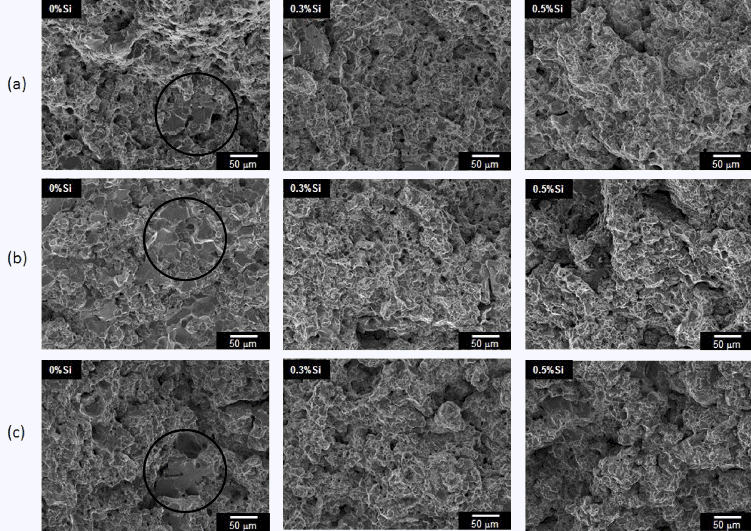
The addition of a large amount of alloying elements reduces the compactibility and increases the compacting pressure, thereby shortening the life of the compacting die and increasing the process cost of commercial PM steel. In this study, the characteristic changes of Fe-Mo-P, Fe-Mn-P, and Fe-Mo-Mn-P alloys are investigated according to the Si contents to replace the expensive elements, such as Ni. All compacts with different Si contents are fabricated with the same green densities of 7.0 and 7.2 g/cm3. The transverse rupture strength (TRS) and sintered density are measured using the specimens obtained through the sintering process. The sintered density tends to decrease, whereas the TRS increases as the Si content increases. The TRS of the sintered specimen compacted with 7.2 g/cm3 is twice as high as that compacted with 7.0 g/cm3.
-
Citations
Citations to this article as recorded by- The Effects of Si or Sn on the Sintered Properties of Fe-(Mo,Mn)-P Lean alloy
Woo-Young Jung, Jin-Uk Ok, Dong-Kyu Park, In-Shup Ahn
Journal of Korean Powder Metallurgy Institute.2018; 25(4): 302. CrossRef
- The Effects of Si or Sn on the Sintered Properties of Fe-(Mo,Mn)-P Lean alloy
- [Korean]
- Effect of Organic Additives on Microstructure and Green Density of Zirconia Granules Using Water Solvent
- Ji-Hwan Jung, Sang-Jin Lee
- J Korean Powder Metall Inst. 2017;24(2):147-152. Published online April 1, 2017
- DOI: https://doi.org/10.4150/KPMI.2017.24.2.147
- 1,931 View
- 34 Download
- 2 Citations
-
Abstract
PDF
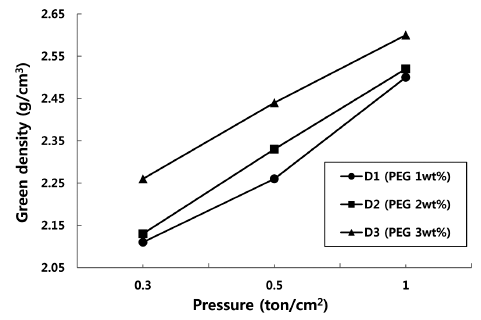
Spherical-type zirconia granules are successfully fabricated by a spray-drying process using a water solvent slurry, and the change in the green density of the granule powder compacts is examined according to the organic polymers used. Two organic binders, polyvinyl alcohol (PVA) and 2-hydroxyethyl methacrylate (HEMA), which are dissolved in a water solvent and have different degrees of polymerization, are applied to the slurry with a plasticizer (polyethylene glycol). The granules employing a binder with a higher degree of polymerization (PVA) are not broken under a uniaxial press; consequently, they exhibit a poor green density of 2.4 g/cm3. In contrast, the granule powder compacts employing a binder with a lower degree of polymerization (HEMA) show a higher density of 2.6 g/cm3 with an increase in plasticizer content. The packing behavior of the granule powders for each organic polymer system is studied by examining the microstructure of the fracture surface at different applied pressures.
-
Citations
Citations to this article as recorded by- Effects of TiO2 Addition and Processing Variables on the Properties of Black Aluminum Nitride
Min-Kwon Park, Sin-Il Go, Kwang-Hee Han, Sang-Jin Lee
Korean Journal of Materials Research.2025; 35(8): 345. CrossRef - Uniaxial compaction and sintering of ZrO2−3 mol% Y2O3 using rubber and PEG solutions as binders
M.I. Dvornik, O.O. Shichalin, E.A. Mikhailenko, A.A. Burkov, S.V. Nikolenko, N.M. Vlasova, E.V. Chernyakov, A.A. Gnidenko, P.G. Chigrin, I. Yu Buravlev, N.S. Konovalova
Materials Chemistry and Physics.2024; 328: 129981. CrossRef
- Effects of TiO2 Addition and Processing Variables on the Properties of Black Aluminum Nitride
- [Korean]
- Mechanical Properties of Fe-P-(Mo,Mn) Sintered Alloy Related with Si Contents
- Woo-Young Jung, Dong-Kyu Park, Byung-Hyun Ko, Jin-Woo Park, In-Shup Ahn
- J Korean Powder Metall Inst. 2016;23(5):397-401. Published online October 1, 2016
- DOI: https://doi.org/10.4150/KPMI.2016.23.5.397

- 1,071 View
- 3 Download
- 2 Citations
-
Abstract
PDF
A lean alloy is defined as a low alloy steel with a minimum amount of the alloying element that maintains the characteristics of the sintered alloy. It is well known that the addition of elements such as Cr, P, Si, or Mn improves the mechanical characteristics of the alloy, but decreases the sinterability. The mother alloy is used to avoid an oxidation reaction with the alloying elements of Cr, P, Si or Mn. The purpose of this study is to determine the change in the mechanical properties of Fe-P-Mo and Fe-P-Mn alloys as a result of the addition of Si. In this article, the Fe-P-Mo and Fe-P-Mn alloys to which Si is added are compacted at 7.0 g/cm3 and then sintered in H2-N2 at 1120°C. The P around the macropores and large grains reduces due to the formation of SiO2 as the Si content increases. This is caused by the increase in strength owing to reducing intergranular fracture by suppressing the reaction with oxygen.
-
Citations
Citations to this article as recorded by- The Effects of Si or Sn on the Sintered Properties of Fe-(Mo,Mn)-P Lean alloy
Woo-Young Jung, Jin-Uk Ok, Dong-Kyu Park, In-Shup Ahn
Journal of Korean Powder Metallurgy Institute.2018; 25(4): 302. CrossRef - Sintering behavior of Fe-(Mo-Mn-P)-xSi alloys according to the Green Density
Woo-Young Jung, Jin-Uk Ok, Dong-Kyu Park, In-Shup Ahn
Journal of Korean Powder Metallurgy Institute.2017; 24(5): 400. CrossRef
- The Effects of Si or Sn on the Sintered Properties of Fe-(Mo,Mn)-P Lean alloy
- [Korean]
- Preparation of Ni(OH)2 Hollow Spheres by Solvent Displacement Crystallization Using Micro-Injection Device
- Seiki Kim, Kyungsoo Park, Kwang-Il Jung
- J Korean Powder Metall Inst. 2016;23(4):311-316. Published online August 1, 2016
- DOI: https://doi.org/10.4150/KPMI.2016.23.4.311
- 1,438 View
- 9 Download
- 1 Citations
-
Abstract
PDF
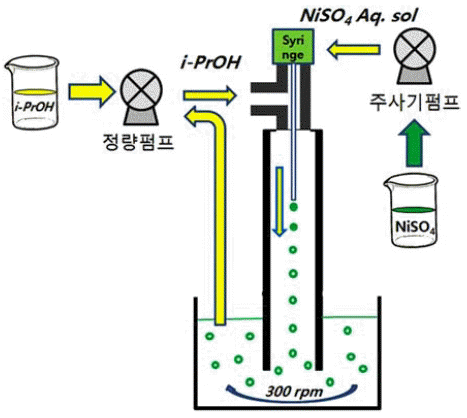
Ni(OH)2 hollow spheres have been prepared by solvent displacement crystallization using a micro-injection device, and the effect of process parameters such as concentration and the relative ratio of the injection speed of the precursor solution, which is an aqueous solution of NiSO4·6H2O, to isopropyl alcohol of displacement solvent have been investigated. The crystal phases after NaOH treatment are in the β-phase for all process parameters. A higher concentration of NiSO4·6H2O aqueous solution is injected by a micro-injection device and bigger Ni(OH)2 hollow spheres with a narrower particle size distribution are formed. The crystallinity and hardness of the as-obtained powder are so poor that hydrothermal treatment of the as-obtained Ni(OH)2 at 120°C for 24 h in distilled water is performed in order to greatly improve the crystallinity. It is thought that a relative ratio of the injection speed of NiSO4·6H2O to that of isopropyl alcohol of at least more than 1 is preferable to synthesize Ni(OH)2 hollow spheres. It is confirmed that this solution- based process is very effective in synthesizing ceramic hollow spheres by simple adjustment of the process parameters such as the concentration and the injection speed.
-
Citations
Citations to this article as recorded by- The Effects of Hexamethylenetetramine Concentration on the Structural and Electrochemical Performances of Ni(OH)2 Powder for Pseudocapacitor Applications
Dong Yeon Kim, Young-Min Jeong, Seong-Ho Baek, Injoon Son
Journal of Korean Powder Metallurgy Institute.2019; 26(3): 231. CrossRef
- The Effects of Hexamethylenetetramine Concentration on the Structural and Electrochemical Performances of Ni(OH)2 Powder for Pseudocapacitor Applications
- [Korean]
- Effect of Hot Isostatic Pressing on the Microstructure and Properties of Kinetic Sprayed Nb Coating Material
- Ji-Hye Lee, Sangsun Yang, Kee-Ahn Lee
- J Korean Powder Metall Inst. 2016;23(1):15-20. Published online February 1, 2016
- DOI: https://doi.org/10.4150/KPMI.2016.23.1.15

- 774 View
- 7 Download
- 1 Citations
-
Abstract
PDF
Niobium is one of the most important and rarest metals, and is used in the electronic and energy industries. However, it’s extremely high melting point and oxygen affinity limits the manufacture of Nb coating materials. Here, a Nb coating material is manufactured using a kinetic spray process followed by hot isotactic pressing to improve its properties. OM (optical microscope), XRD (X-ray diffraction), SEM (scanning electron microscopy), and Vickers hardness and EPMA (electron probe micro analyzer) tests are employed to investigate the macroscopic properties of the manufactured Nb materials. The powder used to manufacture the material has angular-shaped particles with an average particle size of 23.8 μm. The porosity and hardness of the manufactured Nb material are 0.18% and 221 Hv, respectively. Additional HIP is applied to the manufactured Nb material for 4 h under an Ar atmosphere after which the porosity decreases to 0.08% and the hardness increases to 253 Hv. Phase analysis after the HIP shows the presence of only pure Nb. The study also discusses the possibility of using the manufactured Nb material as a sputtering target.
-
Citations
Citations to this article as recorded by- Microstructure evolution and superior high temperature strength of cold spray additive manufactured Nb
Young-Kyun Kim, Soobin Kim, Kee-Ahn Lee
International Journal of Refractory Metals and Hard Materials.2026; 138: 107747. CrossRef
- Microstructure evolution and superior high temperature strength of cold spray additive manufactured Nb
- [Korean]
- Superconducting Properties and Phase Formation of MgB2 Superconductors Prepared by the Solid State Reaction Method using MgB4 and Mg Powder
- Hyeondeok Jeonga, Chan-Joong Kim, Byung-Hyuk Jun, Seolhyang Kim, Hai-Woong Park
- J Korean Powder Metall Inst. 2015;22(5):344-349. Published online October 1, 2015
- DOI: https://doi.org/10.4150/KPMI.2015.22.5.344
- 883 View
- 4 Download
-
Abstract
PDF
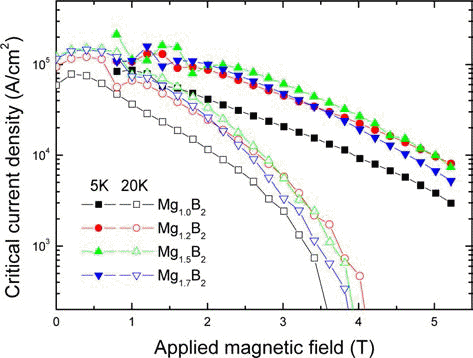
MgB2 bulk superconductors are synthesized by the solid state reaction of (MgB4+xMg) precursors with excessive Mg compositions (x=1.0, 1.4, 2.0 and 2.4). The MgB4 precursors are synthesized using (Mg+B) powders. The secondary phases (MgB4 and MgO) present in the synthesized MgB4 are removed by HNO3 leaching. It is found that the formation reaction of MgB2 is accelerated when Mg excessive compositions are used. The magnetization curves of Mg1+xB2 samples show that the transition from the normal state to the superconducting state of the Mg excessive samples with x=0.5 and x=0.7 are sharper than that of MgB2. The highest
J c-B curve at 5 K and 20 K is achieved for x=0.5. Further addition of Mg decreases theJ c owing to the formation of more pores in the MgB2 matrix and smaller volume fraction of MgB2.
- [Korean]
- Controlling Structural and Electrical Properties of Pt Nanopowder-Dispersed SiO2 Film
- Jae Ho Lee, In Joo Shin, Sung Woo Lee, Hyeong Cheol Kim, Byung Joon Choi
- J Korean Powder Metall Inst. 2014;21(5):355-359. Published online October 1, 2014
- DOI: https://doi.org/10.4150/KPMI.2014.21.5.355

- 857 View
- 1 Download
-
Abstract
PDF
Pt nanopowder-dispersed SiO2 (SOP) films were prepared by RF co-sputtering method using Pt and SiO2 targets in Ar atmosphere. The growth rate and Pt content in the film were controlled by means of manipulating the RF power of Pt target while that of SiO2 was fixed. The roughness of the film was increased with increasing the power of Pt target, which was mainly due to the increment of the size and planar density of Pt nanopowder. It was revealed that SOP film formed at 10, 15, 20 W of Pt power contained 2.3, 2.7, and 3.0 nm of spherical Pt nanopowder, respectively. Electrical conductivity of SOP films was exponentially increased with increasing Pt power as one can expect. Interestingly, conductivity of SOP films from Hall effect measurement was greater than that from DC
I-V measurement, which was explained by the significant increase of electron density.
- [Korean]
- Manufacturing and Evaluation of Properties of Nanocrystalline Ni bulk by Dynamic Compaction of Nano Ni powders using a Gas-gun System
- Wooyeol Kim, Dong-Hyun Ahn, Lee Ju Park, Jong-Il Park, Hyoung Seop Kim
- J Korean Powder Metall Inst. 2014;21(1):44-49. Published online February 1, 2014
- DOI: https://doi.org/10.4150/KPMI.2014.21.1.44

- 854 View
- 0 Download
-
Abstract
PDF
In this study, nanocrystalline nickel powders were cold compacted by a dynamic compaction method using a single-stage gas gun system. A bending test was conducted to measure the bonding strengths of the compacted regions and microstructures of the specimen were analyzed using a scanning electron microscopy. The specimen was separated into two parts by a horizontal crack after compaction. Density test shows that the powder compaction occurred only in the upper part of the specimen. Brittle fracture was occurred during the bending test of the compact sample. Dispersion of shock energy due to spalling highly affected the bonding status of the nanocrystalline nickel powder.
 First
First Prev
Prev

TOP

