 KPMI
KPMI

Search
- Page Path
- HOME > Search
- [English]
- Mechanical Behavior of Aluminum Matrix Composites Reinforced with Nanoscale Carbon Nanotubes and Silicon Carbide
- Kanhu Charan Nayak, Jiwon Lee, Kon-Bae Lee, Ke Jiang, Hyunjoo Choi
- J Powder Mater. 2026;33(4):267-280. Published online August 31, 2026
- DOI: https://doi.org/10.4150/jpm.2026.00164
- 294 View
- 6 Download
-
 Abstract
 PDF
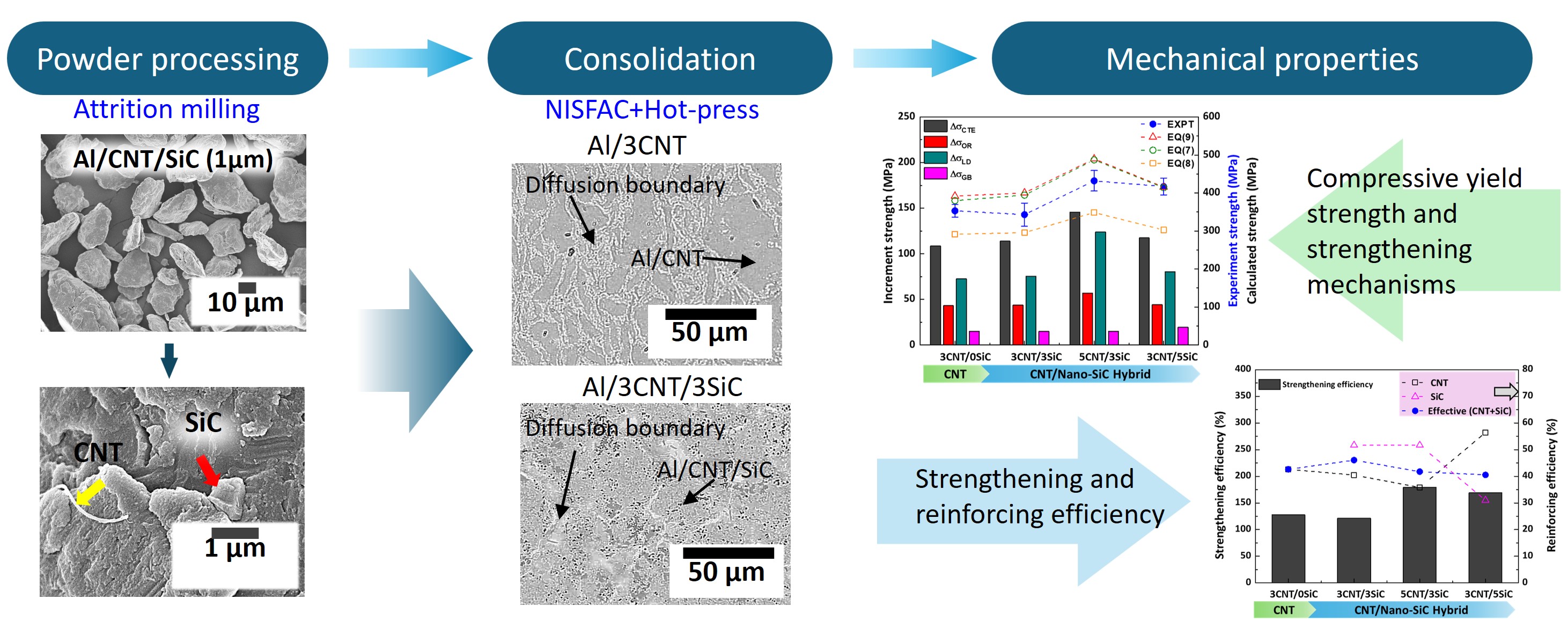
PDF - Lightweight aluminum (Al) matrix composites reinforced with carbon nanotubes (CNTs) and nanoscale silicon carbide (SiC) were fabricated using high-energy attrition milling, nitridation-induced self-forming consolidation (NISFAC), and hot pressing to improve mechanical performance through CNT/SiC hybrid reinforcement. Attrition milling refined the composite powders and promoted the incorporation of CNTs and SiC particles into the Al matrix, whereas NISFAC and hot pressing enabled near-full densification and effective interparticle bonding. Among the investigated compositions, Al/5CNT/3SiC showed the best mechanical performance, with a hardness of 197 HV, compressive yield strength of 432 MPa, compressive strength of 756 MPa, and Young’s modulus of 110 GPa. These improvements are attributed to the combined effects of load transfer, thermal-mismatch-induced dislocation strengthening, Orowan strengthening, and grain-boundary strengthening. Compared with values reported in the literature, the present composites showed competitive mechanical properties despite their relatively low reinforcement content. These findings indicate that CNT/SiC hybrid reinforcement combined with NISFAC and hot pressing is an effective route for producing dense, high-strength Al matrix composites.
- [English]
- Enhanced Compressive Strength of Fired Iron Ore Pellets: Effects of Blending Fine and Coarse Particle Concentrates
- Ngo Quoc Dung, Tran Xuan Hai, Nguyen Minh Thuyet, Nguyen Quang Tung, Arvind Barsiwal, Nguyen Hoang Viet
- J Powder Mater. 2025;32(4):315-329. Published online August 29, 2025
- DOI: https://doi.org/10.4150/jpm.2025.00129

- 2,930 View
- 83 Download
-
Abstract
PDF
- This study investigated the effects of oxidative firing parameters and raw material characteristics on the pelletization of Australian and Minh Son (Vietnam) iron ore concentrates. The influence of firing temperature (1050°C–1150°C) and holding time (15–120 min) on pellet compressive strength was examined, focusing on microstructural changes during consolidation. Green pellets were prepared using controlled particle size distributions and bentonite as a binder. Scanning electron microscopy and energy-dispersive X-ray spectroscopy analyses revealed that grain boundary diffusion, liquid phase formation, and densification significantly improved mechanical strength. X-ray diffraction confirmed the complete oxidation of magnetite to hematite at elevated temperatures, a critical transformation for metallurgical performance. Optimal firing conditions for both single and blended ore compositions yielded compressive strengths above 250 kgf/pellet, satisfying the requirements for blast furnace applications. These results provide valuable guidance for improving pellet production, promoting the efficient utilization of diverse ore types, and enhancing the overall performance of ironmaking operations.
- [English]
- Effect of the Cross-rolling Process on the Microstructures and Mechanical Properties of 9Cr-1W ODS Steel
- Bu-An Kim, Sanghoon Noh
- J Powder Mater. 2025;32(1):37-42. Published online February 28, 2025
- DOI: https://doi.org/10.4150/jpm.2024.00332
- 1,973 View
- 42 Download
- 1 Citations
-
Abstract
PDF
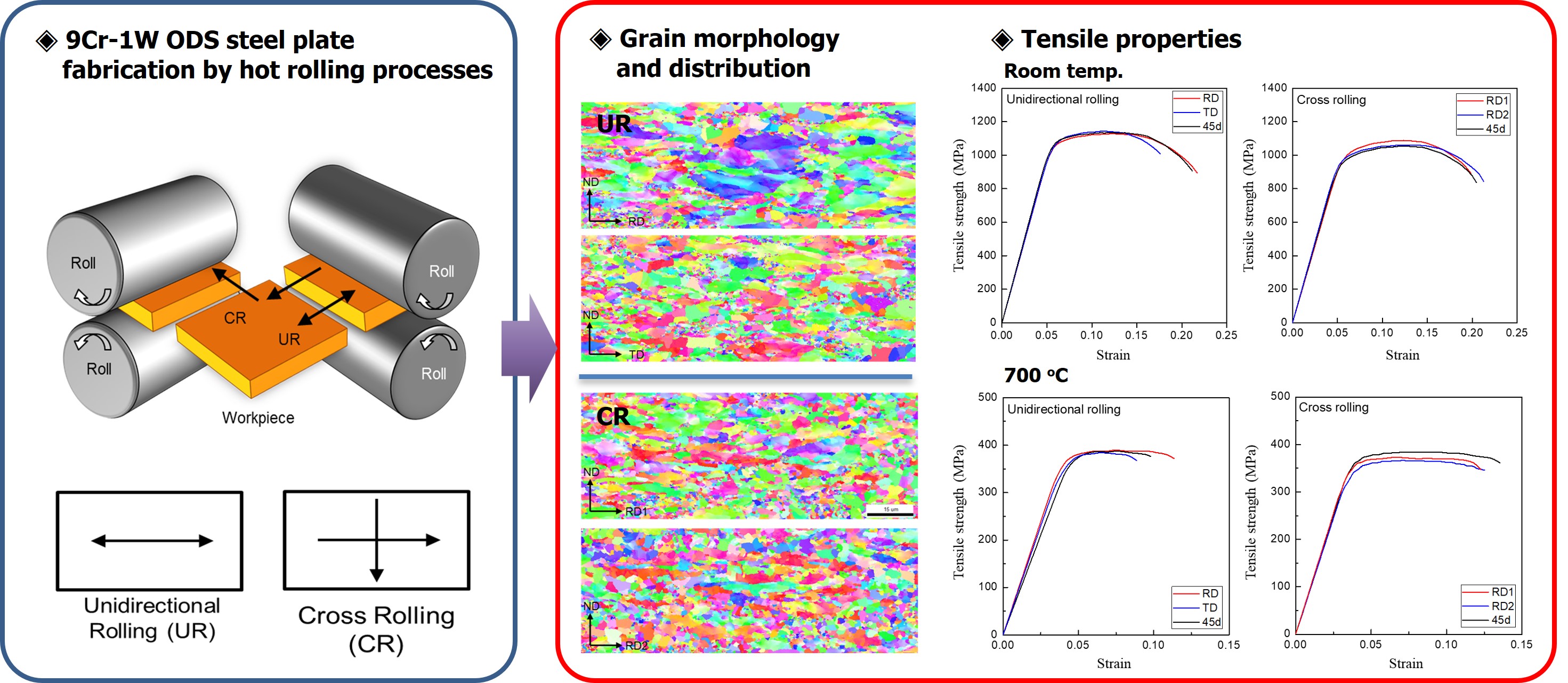
- This study employed a cross-rolling process to fabricate oxide dispersion strengthened (ODS) steel plates and investigated their microstructures and mechanical properties. The 9Cr-1W ODS ferritic steel was fabricated using mechanical alloying and hot isostatic pressing. The hot cross-rolling process produced thick ODS ferritic steel plates with a well-extended rectangular shape. The working direction greatly affected the grain structure and crystal texture of the ODS ferritic steel. Cross-rolled plates showed fine micro-grains with random crystal orientation, while unidirectionally rolled plates exhibited a strong orientation with larger, elongated grains. Transmission electron microscopy revealed a uniform distribution of nano-oxide particles in both rolling methods, with no major differences. Tensile tests of the ODS ferritic steel plates showed that the unidirectional rolled plates had anisotropic elongation, while cross-rolled plates exhibited isotropic behavior with uniform elongation. Cross-rolling produced finer, more uniform grains, reducing anisotropy and improving mechanical properties, making it ideal for manufacturing wide ODS steel components.
-
Citations
Citations to this article as recorded by
- Transverse Cold Rolling-Induced Microstructural Modification and Mechanical and Electrochemical Responses of UNS S32304 Lean Duplex Stainless Steel
Victor Hugo Mafra Monfredo Ferreira, Arthur Ecard Guimarães, Mauricio dos Santos Azevedo, Guilherme Yuuki Koga, Ivan Napoleão Bastos, Luis Cesar Rodríguez Aliaga, Leandro de Amorim Ratamero, Francisco Gil Coury, Verona Biancardi Aguiar
Journal of Materials Engineering and Performance.2026;[Epub] CrossRef
- Transverse Cold Rolling-Induced Microstructural Modification and Mechanical and Electrochemical Responses of UNS S32304 Lean Duplex Stainless Steel
- [Korean]
- Inter-laminar Strength of NITE-SiC/SiC Composites With Various Fiber Reinforcing Architecture
- Jong-il Kim
- J Powder Mater. 2024;31(5):437-444. Published online October 31, 2024
- DOI: https://doi.org/10.4150/jpm.2024.00248
- 1,596 View
- 20 Download
-
Abstract
PDF
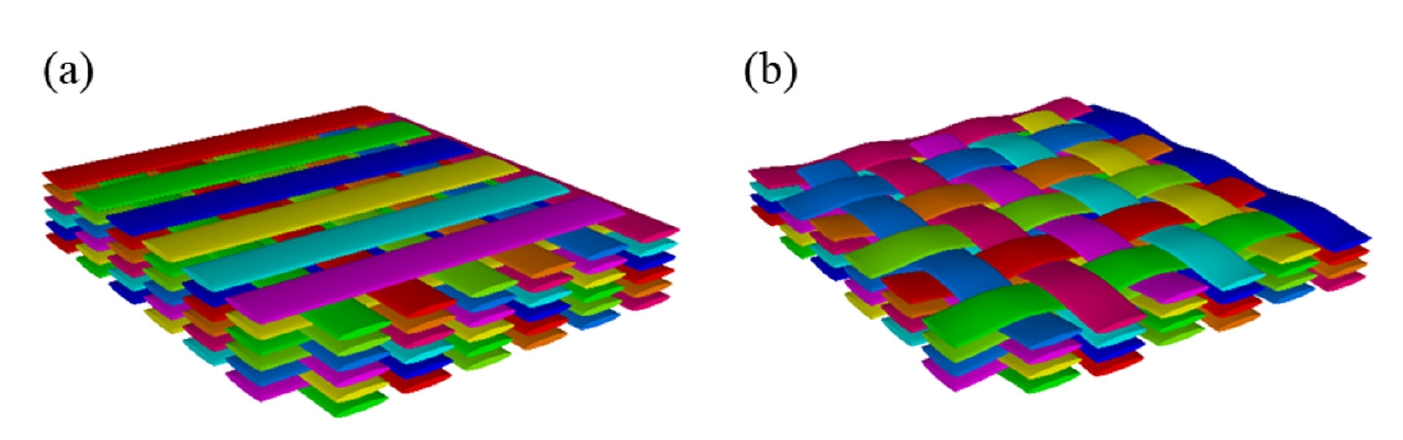
- The mechanical performance of SiC/SiC composites is significantly influenced by the architecture of fiber reinforcement. Among the various fabrication methods, the nano-powder infiltration transition/eutectic (NITE) process is a promising technique that is capable of achieving a dense and stoichiometric SiC matrix. The reinforcement architecture, such as cross-ply (CP) or woven prepreg (WP), is determined during the preform stage of the NITE process, which is crucial in determining the mechanical properties of SiC/SiC composites. In this study, the tensile test and double notch shear (DNS) test were conducted using NITE-SiC/SiC composites to investigate the effect of the fiber reinforcing architecture on the fracture mechanism of SiC/SiC composites. The tensile strength and maximum shear strength of both CP and WP specimens were nearly identical. However, other mechanical properties, particularly those of CP specimens, exhibited significant variability. A comparison of fracture surfaces and load-displacement curve analyses from the DNS tests revealed that the cross points of the longitudinal or transverse fibers act as obstacles to both deformation and crack propagation. These obstacles were found to be more densely distributed in WP specimens than in CP specimens. The variability observed in the mechanical properties of CP specimens is likely due to size effects caused by the sparser distribution of these obstacles compared to the WP specimens.
- [Korean]
- TiO2 Thin Film Coating on an Nb-Si–Based Superalloy via Atomic Layer Deposition
- Ji Young Park, Su Min Eun, Jongmin Byun, Byung Joon Choi
- J Powder Mater. 2024;31(3):255-262. Published online June 27, 2024
- DOI: https://doi.org/10.4150/jpm.2024.00052
- 2,937 View
- 63 Download
- 3 Citations
-
Abstract
PDF
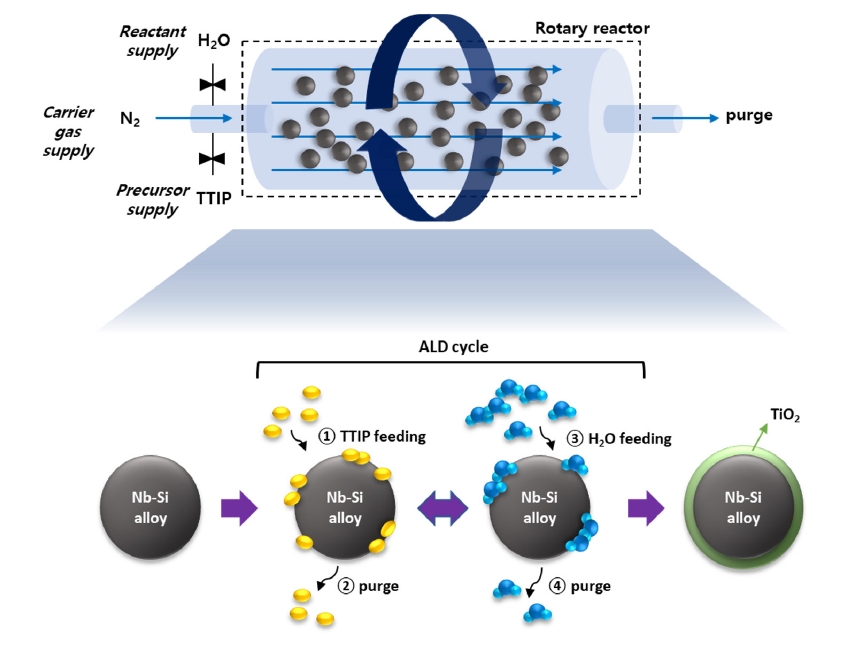
- Nano-oxide dispersion–strengthened (ODS) superalloys have attracted attention because of their outstanding mechanical reinforcement mechanism. Dispersed oxides increase the material’s strength by preventing grain growth and recrystallization, as well as increasing creep resistance. In this research, atomic layer deposition (ALD) was applied to synthesize an ODS alloy. It is useful to coat conformal thin films even on complex matrix shapes, such as nanorods or powders. We coated an Nb-Si–based superalloy with TiO2 thin film by using rotary-reactor type thermal ALD. TiO2 was grown by controlling the deposition recipe, reactor temperature, N2 flow rate, and rotor speed. We could confirm the formation of uniform TiO2 film on the surface of the superalloy. This process was successfully applied to the synthesis of an ODS alloy, which could be a new field of ALD applications.
-
Citations
Citations to this article as recorded by- Interfacial Characterization of Al2O3-Coated p-Type Bi–Sb–Te Powders by Thermal and UV-assisted Atomic Layer Deposition
Jin Kyeong Shin, Yeongtae Choi, Byung Joon Choi
Journal of Powder Materials.2026; 33(3): 221. CrossRef - Engineering oxide-structured niobium composites via atomic layer deposition and spark plasma sintering
Ji Young Park, Seung-Hyeok Shin, Jongmin Byun, Byoungchul Hwang, Byung Joon Choi
Materials & Design.2026; 268: 116547. CrossRef - Fabrication of Multilayer Core-Shell Structure for High Power Factor in Bi2Te2.7Se0.3 Thermoelectrics
Su Min Eun, Jin Kyeong Shin, Se Been Jeong, Eui Seon Lee, Sung-Tag Oh, Byung Joon Choi
Journal of Powder Materials.2026; 33(4): 299. CrossRef
- Interfacial Characterization of Al2O3-Coated p-Type Bi–Sb–Te Powders by Thermal and UV-assisted Atomic Layer Deposition
- [Korean]
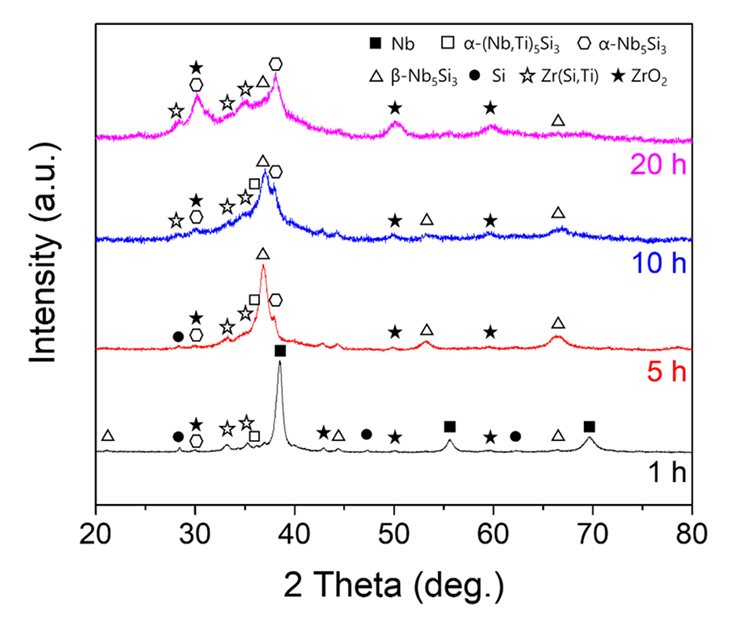
- Development of High-strength, High-temperature Nb-Si-Ti Alloys through Mechanical Alloying
- Jung-Joon Kim, Sang-Min Yoon, Deok-Hyun Han, Jongmin Byun, Young-Kyun Kim
- J Powder Mater. 2024;31(1):30-36. Published online February 28, 2024
- DOI: https://doi.org/10.4150/KPMI.2024.31.1.30
- 3,284 View
- 67 Download
- 1 Citations
-
PDF
-
Citations
Citations to this article as recorded by- Review of “Integrated Computer-Aided Process Engineering Session in the 17th International Symposium on Novel and Nano Materials (ISNNM, 14–18 November 2022)”
Yeon-Joo Lee, Pil-Ryung Cha, Hyoung-Seop Kim, Hyun-Joo Choi
MATERIALS TRANSACTIONS.2025; 66(1): 144. CrossRef
- Review of “Integrated Computer-Aided Process Engineering Session in the 17th International Symposium on Novel and Nano Materials (ISNNM, 14–18 November 2022)”
- [Korean]
- Evaluation of Microstructures and Mechanical Properties of Ni-Y2O3 Sintered Alloys Based on the Powder Preparation Methods
- Gun-Woo Jung, Ji-Ho Cha, Min-Seo Jang, Minsuk Oh, Jeshin Park
- J Powder Mater. 2023;30(6):484-492. Published online December 1, 2023
- DOI: https://doi.org/10.4150/KPMI.2023.30.6.484
- 1,701 View
- 18 Download
-
Abstract
PDF
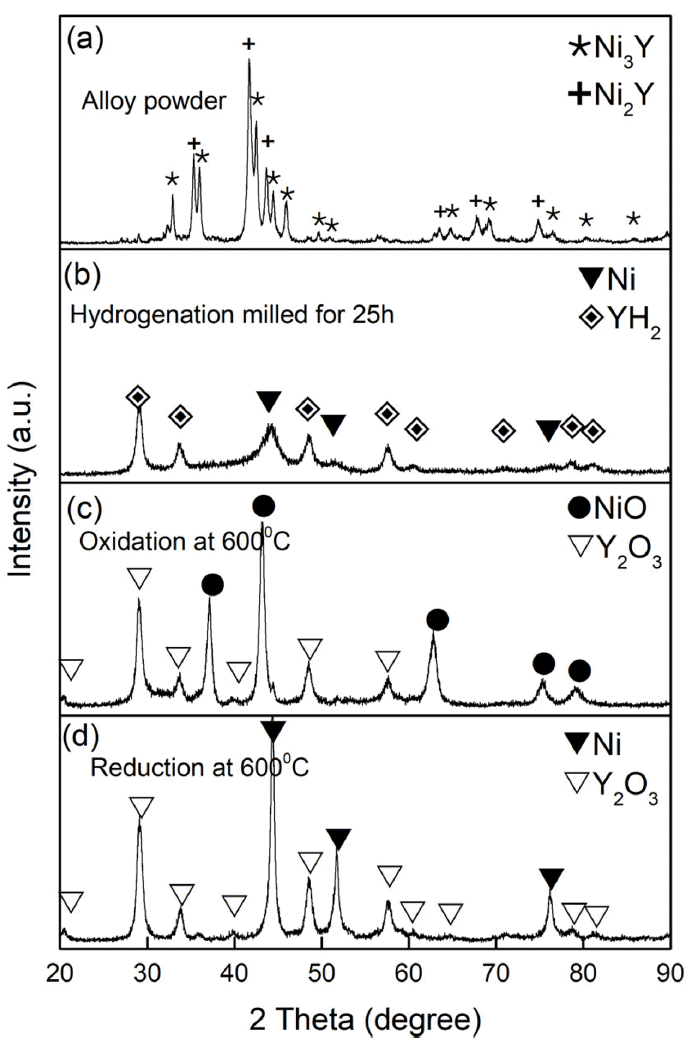
In this study, Ni-Y2O3 powder was prepared by alloying recomposition oxidation sintering (AROS), solution combustion synthesis (SCS), and conventional mechanical alloying (MA). The microstructure and mechanical properties of the alloys were investigated by spark plasma sintering (SPS). Among the Ni-Y2O3 powders synthesized by the three methods, the AROS powder had approximately 5 nm of Y2O3 crystals uniformly distributed within the Ni particles, whereas the SCS powder contained a mixture of Ni and Y2O3 nanoparticles, and the MA powder formed small Y2O3 crystals on the surface of large Ni particles by milling the mixture of Ni and Y2O3. The average grain size of Y2O3 in the sintered alloys was approximately 15 nm, with the AROS sinter having the smallest, followed by the SCS sinter at 18 nm, and the MA sinter at 22 nm. The yield strength (YS) of the SCS- and MA-sintered alloys were 1511 and 1688 MPa, respectively, which are lower than the YS value of 1697 MPa for the AROS-sintered alloys. The AROS alloy exhibited improved strength compared to the alloys fabricated by SCS and conventional MA methods, primarily because of the increased strengthening from the finer Y2O3 particles and Ni grains.
- [Korean]
- Machine Learning-based Data Analysis for Designing High-strength Nb-based Superalloys
- Eunho Ma, Suwon Park, Hyunjoo Choi, Byoungchul Hwang, Jongmin Byun
- J Powder Mater. 2023;30(3):217-222. Published online June 1, 2023
- DOI: https://doi.org/10.4150/KPMI.2023.30.3.217
- 1,358 View
- 16 Download
-
Abstract
PDF
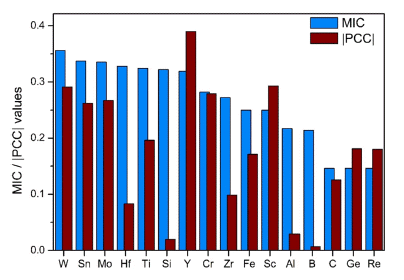
Machine learning-based data analysis approaches have been employed to overcome the limitations in accurately analyzing data and to predict the results of the design of Nb-based superalloys. In this study, a database containing the composition of the alloying elements and their room-temperature tensile strengths was prepared based on a previous study. After computing the correlation between the tensile strength at room temperature and the composition, a material science analysis was conducted on the elements with high correlation coefficients. These alloying elements were found to have a significant effect on the variation in the tensile strength of Nb-based alloys at room temperature. Through this process, a model was derived to predict the properties using four machine learning algorithms. The Bayesian ridge regression algorithm proved to be the optimal model when Y, Sc, W, Cr, Mo, Sn, and Ti were used as input features. This study demonstrates the successful application of machine learning techniques to effectively analyze data and predict outcomes, thereby providing valuable insights into the design of Nb-based superalloys.
- [Korean]
- Effect of Iron Content on Microstructure and Mechanical Properties of Ti-Mo-Fe P/M Alloys
- HyoWoon Hwang, YongJae Lee, JiHwan Park, Dong-Geun Lee
- J Powder Mater. 2022;29(4):325-331. Published online August 1, 2022
- DOI: https://doi.org/10.4150/KPMI.2022.29.4.325
- 1,955 View
- 8 Download
- 3 Citations
-
Abstract
PDF
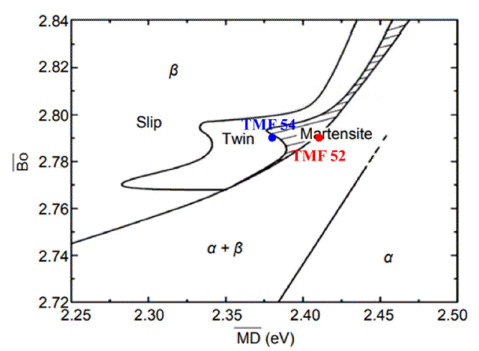
Beta-titanium alloys are used in many industries due to their increased elongation resulting from their BCC structure and low modulus of elasticity. However, there are many limitations to their use due to the high cost of betastabilizer elements. In this study, biocompatible Ti-Mo-Fe beta titanium alloys are designed by replacing costly betastabilizer elements (e.g., Nb, Zr, or Ta) with inexpensive Mo and Fe elements. Additionally, Ti-Mo-Fe alloys designed with different Fe contents are fabricated using powder metallurgy. Fe is a strong, biocompatible beta-stabilizer element and a low-cost alloying element. The mechanical properties of the Ti-Mo-Fe metastable beta titanium alloys are analyzed in relation to the microstructural changes. When the Fe content increases, the tensile strength and elongation decrease due to brittle fracture despite a decreasing pore fraction. It is confirmed that the hardness and tensile strength of Ti-5Mo-2Fe P/M improve to more than 360 Hv and 900 MPa, respectively.
-
Citations
Citations to this article as recorded by- Cost-effective Fabrication of Near β-Ti Alloy via L-PBF: Process Optimization of In-situ Alloying Ti-3Fe
Sehun Kim, Ukju Gim, Taehu Kang, Jongik Lee, Sanghee Jeong, Jimin Han, Bin Lee
Journal of Powder Materials.2025; 32(4): 288. CrossRef - Fabrication of Ti-Mo Core-shell Powder and Sintering Properties for Application as a Sputtering Target
Won Hee Lee, Chun Woong Park, Heeyeon Kim, Yuncheol Ha, Jongmin Byun, Young Do Kim
journal of Korean Powder Metallurgy Institute.2024; 31(1): 43. CrossRef - Effect of Strain Rate on Deformation Behaviors of Ti-12.1Mo -1Fe Metastable Beta Alloy
In Kyeong Jin, Dong-Geun Lee
Korean Journal of Metals and Materials.2023; 61(10): 741. CrossRef
- Cost-effective Fabrication of Near β-Ti Alloy via L-PBF: Process Optimization of In-situ Alloying Ti-3Fe
- [Korean]
- Effect of Polymeric Binders on Green body Properties of WC-Co Cemented Carbides
- Young-Soo Lim, Sun-Yong Ahn, Jae-Suk Lim, Yeong-Kyeun Paek, Tai-Joo Chung
- J Powder Mater. 2022;29(4):291-296. Published online August 1, 2022
- DOI: https://doi.org/10.4150/KPMI.2022.29.4.291

- 947 View
- 6 Download
-
Abstract
PDF
The green body of WC-Co cemented carbides containing polymeric binders such as paraffin, polyethylene glycol (PEG), and polyvinyl acetate (PVA) are prepared. The green density of the WC-Co cemented carbides increases with the addition of binders, with the exception of PVA, which is known to be a polar polymeric substance. The green strength of the WC-Co cemented carbides improves with the addition of paraffin and a mixture of PEG400 and PEG4000. In contrast, the green strength of the WC-Co does not increase when PEG400 and PEG4000 is added individually. The compressive strength of the green body increases to 14 MPa, and the machinability of the green body improves when more than 4–6 wt% paraffin and a mixture of PEG400 and PEG4000 is used. Simultaneously, the sintered density of WC-Co is as high as 99% relative density, similar to a low binder addition of 1–2 wt%.
- [Korean]
- Development of Amorphous Iron Based Coating Layer using High-velocity Oxygen Fuel (HVOF) Spraying
- Jungjoon Kim, Song-Yi Kim, Jong-Jae Lee, Seok-Jae Lee, Hyunkyu Lim, Min-Ha Lee, Hwi-Jun Kim, Hyunjoo Choi
- J Korean Powder Metall Inst. 2021;28(6):483-490. Published online December 1, 2021
- DOI: https://doi.org/10.4150/KPMI.2021.28.6.483

- 1,372 View
- 8 Download
-
Abstract
PDF
A new Fe-Cr-Mo-B-C amorphous alloy is designed, which offers high mechanical strength, corrosion resistance as well as high glass-forming ability and its gas-atomized amorphous powder is deposited on an ASTM A213-T91 steel substrate using the high-velocity oxygen fuel (HVOF) process. The hybrid coating layer, consisting of nanocrystalline and amorphous phases, exhibits strong bonding features with the substrate, without revealing significant pore formation. By the coating process, it is possible to obtain a dense structure in which pores are hardly observed not only inside the coating layer but also at the interface between the coating layer and the substrate. The coating layer exhibits good adhesive strength as well as good wear resistance, making it suitable for coating layers for biomass applications.
- [Korean]
- Microstructure and High Temperature Mechanical Properties of Oxide Dispersion Strengthened Steels Manufactured by Combination Milling Process
- Jung-Uk Lee, Young-Kyun Kim, Jeoung Han Kim, Hwi-Jin Kim, Kee-Ahn Lee
- J Korean Powder Metall Inst. 2021;28(5):389-395. Published online October 1, 2021
- DOI: https://doi.org/10.4150/KPMI.2021.28.5.389
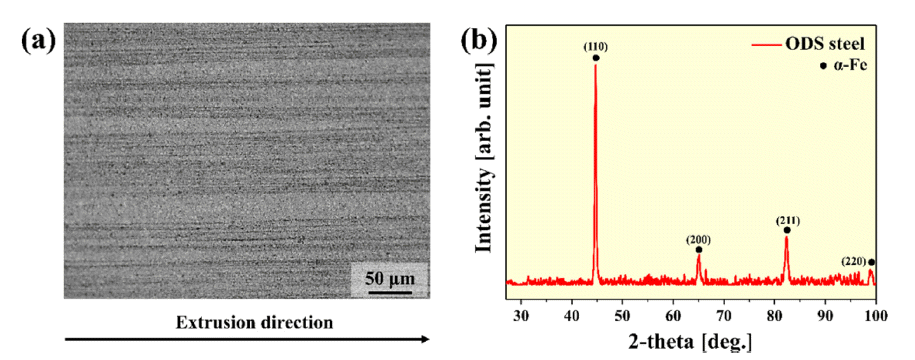
- 1,270 View
- 10 Download
-
Abstract
PDF
Oxide dispersion-strengthened (ODS) steel has excellent high-temperature properties, corrosion resistance, and oxidation resistance, and is expected to be applicable in various fields. Recently, various studies on mechanical alloying (MA) have been conducted for the dispersion of oxide particles in ODS steel with a high number density. In this study, ODS steel is manufactured by introducing a complex milling process in which planetary ball milling, cryogenic ball milling, and drum ball milling are sequentially performed, and the microstructure and high-temperature mechanical properties of the ODS steel are investigated. The microstructure observation revealed that the structure is stretched in the extrusion direction, even after the heat treatment. In addition, transmission electron microscopy (TEM) analysis confirmed the presence of oxide particles in the range of 5 to 10 nm. As a result of the room-temperature and high-temperature compression tests, the yield strengths were measured as 1430, 1388, 418, and 163 MPa at 25, 500, 700, and 900°C, respectively. Based on these results, the correlation between the microstructure and mechanical properties of ODS steel manufactured using the composite milling process is also discussed.
- [Korean]
- Evolution on Microstructures and Tensile Properties of 10Cr-1Mo ODS Steel with Different Lengths of Mechanical Alloying Process Times
- Sanghoon Noh, Tae Kyu Kim
- J Korean Powder Metall Inst. 2021;28(5):375-380. Published online October 1, 2021
- DOI: https://doi.org/10.4150/KPMI.2021.28.5.375

- 1,688 View
- 8 Download
-
Abstract
PDF
In this study, we investigate the effect of the duration of mechanical alloying on the microstructures and mechanical properties of ODS ferritic/martensitic steel. The Fe(bal.)-10Cr-1Mo pre-alloyed powder and Y2O3 powder are mechanically alloyed for the different mechanical alloying duration (0 to 40 h) and then constantly fabricated using a uniaxial hot pressing process. Upon increasing the mechanical alloying time, the average powder diameter and crystallite size increased dramatically. In the initial stages within 5 h of mechanical alloying, inhomogeneous grain morphology is observed along with coarsened carbide and oxide distributions; thus, precipitate phases are temporarily observed between the two powders because of insufficient collision energy to get fragmented. After 40 h of the MA process, however, fine martensitic grains and uniformly distributed oxide particles are observed. This led to a favorable tensile strength and elongation at room temperature and 650°C.
- [Korean]
- Development of Aluminum Matrix Composites Containing Nano-carbon Materials
- Jungjoon Kim, Daeyoung Kim, Hyunjoo Choi
- J Korean Powder Metall Inst. 2021;28(3):253-258. Published online June 1, 2021
- DOI: https://doi.org/10.4150/KPMI.2021.28.3.253

- 1,586 View
- 9 Download
- 2 Citations
-
Abstract
PDF
There is increasing demand for the development of a new material with high strength, high stiffness, and good electrical conductivity that can be used for high-voltage direct current cables. In this study, we develop aluminumbased composites containing C60 fullerenes, carbon nanotubes, or graphene using a powder metallurgical route and evaluate their strength, stiffness, coefficient of thermal expansion, and electrical conductivity. By optimizing the process conditions, a material with a tensile strength of 800 MPa, an elastic modulus of 90 GPa, and an electrical conductivity of 40% IACS is obtained, which may replace iron-core cables. Furthermore, by designing the type and volume fraction of the reinforcement, a material with a tensile strength of 380 MPa, elastic modulus of 80 GPa, and electrical conductivity of 54% IACS is obtained, which may compete with AA 6201 aluminum alloys for use in all-aluminum conductor cables.
-
Citations
Citations to this article as recorded by- Synergistic strengthening of aluminum with SiC by grain refinement and dispersion hardening
Kanhu C. Nayak, Juyeon Han, Suwon Park, Miran Joo, Kon‐Bae Lee, Donghyun Bae, Hyunjoo Choi
Journal of the American Ceramic Society.2023; 106(12): 7340. CrossRef - Synergetic effect of milling speed and duration on particle morphology and mechanical properties of nanocrystalline Al matrix containing SiC
K.C. Nayak, J.Y. Han, C.H. Jung, M.R. Joo, K.B. Lee, D.H. Bae, H.J. Choi
Powder Metallurgy.2023; 66(5): 519. CrossRef
- Synergistic strengthening of aluminum with SiC by grain refinement and dispersion hardening
- [Korean]
- Mechanical Properties of Bulk Graphite using Artificial Graphite Scrap as a Function of Particle Size
- Sang Hye Lee, Sang Min Lee, Won Pyo Jang, Jae Seung Roh
- J Korean Powder Metall Inst. 2021;28(1):13-19. Published online February 1, 2021
- DOI: https://doi.org/10.4150/KPMI.2021.28.1.13

- 2,904 View
- 29 Download
- 7 Citations
-
Abstract
PDF
Bulk graphite is manufactured using graphite scrap as the filler and phenolic resin as the binder. Graphite scrap, which is the by-product of processing the final graphite product, is pulverized and sieved by particle size. The relationship between the density and porosity is analyzed by measuring the mechanical properties of bulk graphite. The filler materials are sieved into mean particle sizes of 10.62, 23.38, 54.09, 84.29, and 126.64 μm. The bulk graphite density using the filler powder with a particle size of 54.09 μm is 1.38 g/cm3, which is the highest value in this study. The compressive strength tends to increase as the bulk graphite density increases. The highest compressive strength of 43.14 MPa is achieved with the 54.09 μm powder. The highest flexural strength of 23.08 MPa is achieved using the 10.62 μm powder, having the smallest average particle size. The compressive strength is affected by the density of bulk graphite, and the flexural strength is affected by the filler particle size of bulk graphite.
-
Citations
Citations to this article as recorded by- Effect of Microstructural Change under Pressure during Isostatic Pressing on Mechanical and Electrical Properties of Isotropic Carbon Blocks
Tae-Sub Byun, Sang-Hye Lee, Suk-Hwan Kim, Jae-Seung Roh
Materials.2024; 17(2): 387. CrossRef - Feasibility assessment of manufacturing carbonized blocks from rice husk charcoal
Young-Min Hwang, Jae-Seung Roh, Gibeop Nam
Biomass Conversion and Biorefinery.2024; 14(20): 26409. CrossRef - Improving the packing and mechanical properties of graphite blocks by controlling filler particle-size distribution
Hye in Hwang, Ji Hong Kim, Ji Sun Im
Advanced Composite Materials.2024; 33(5): 762. CrossRef - Effect of Impregnation and Graphitization on EDM Performance of Graphite Blocks Using Recycled Graphite Scrap
Sang-Hye Lee, Dong-Pyo Jeon, Hyun-Yong Lee, Dong-Gu Lee, Jae-Seung Roh
Processes.2023; 11(12): 3368. CrossRef - Ultrafine Graphite Scrap and Carbon Blocks Prepared by High-Solid-Loading Bead Milling and Conventional Ball Milling: A Comparative Assessment
Chonradee Amnatsin, Waroot Kanlayakan, Siraprapa Lhosupasirirat, Nattarut Verojpipath, Boonsueb Pragobjinda, Tanakorn Osotchan, Chakrit Sirisinha, Toemsak Srikhirin
ACS Omega.2023; 8(50): 47919. CrossRef - The Effect of the Heating Rate during Carbonization on the Porosity, Strength, and Electrical Resistivity of Graphite Blocks Using Phenolic Resin as a Binder
Sang-Hye Lee, Jae-Hyun Kim, Woo-Seok Kim, Jae-Seung Roh
Materials.2022; 15(9): 3259. CrossRef - Rheological Behaviour of Hard-Metal Carbide Powder Suspensions at High Shear Rates
B. Hausnerová, P. Sáha, J. Kubát, T. Kitano, J. Becker
Journal of Polymer Engineering.2000;[Epub] CrossRef
- Effect of Microstructural Change under Pressure during Isostatic Pressing on Mechanical and Electrical Properties of Isotropic Carbon Blocks
- [Korean]
- Effect of Morphological Control of Secondary Phase using Yb2O3 and Ca-Al-Si-O-based Glass on Thermal and Mechanical Properties of AlN
- Dong Kyu Choi, Shi Yeon Kim, Dong Hun Yeo, Hyo Soon Shin, Dae Yong Jeong
- J Korean Powder Metall Inst. 2020;27(6):498-502. Published online December 1, 2020
- DOI: https://doi.org/10.4150/KPMI.2020.27.6.498
- 2,465 View
- 10 Download
-
Abstract
PDF
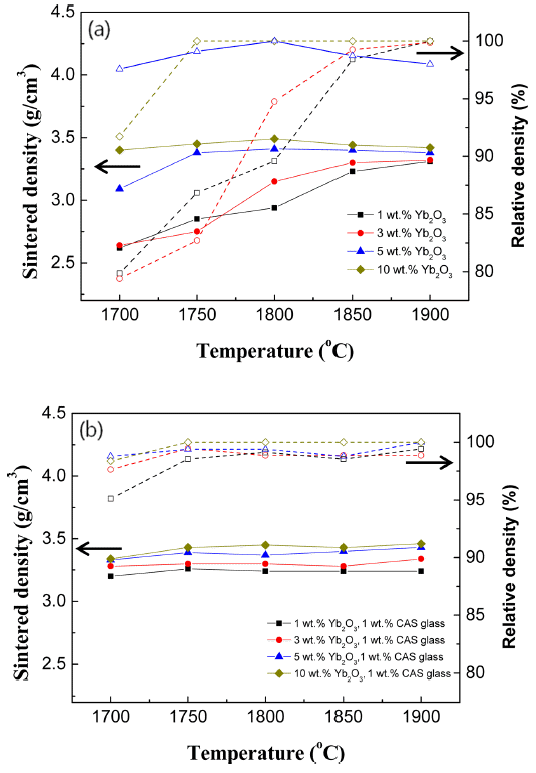
We investigate the effects of Yb2O3 and calcium aluminosilicate (CAS) glass as sintering additives on the sintering behavior of AlN. The AlN specimens are sintered at temperatures between 1700°C and 1900°C for 2 h in a nitrogen atmosphere. When the Yb2O3 content is low (within 3 wt.%), an isolated shape of secondary phase is observed at the AlN grain boundary. In contrast, when 3 wt.% Yb2O3 and 1 wt.% CAS glass are added, a continuous secondary phase is formed at the AlN grain boundary. The thermal conductivity decreases when the CAS glass is added, but the sintering density does not decrease. In particular, when 10 wt.% Yb2O3 and 1 wt.% CAS glass are added to AlN, the flexural strength is the highest, at 463 MPa. These results are considered to be influenced by changes in the microstructure of the secondary phase of AlN.
- [Korean]
- Fabrication, Microstructure and Adhesive Properties of BCuP-5 Filler Metal/Ag Plate Composite by using Plasma Spray Process
- Seong-June Youn, Young-Kyun Kim, Jae-Sung Park, Joo-Hyun Park, Kee-Ahn Lee
- J Korean Powder Metall Inst. 2020;27(4):333-338. Published online August 1, 2020
- DOI: https://doi.org/10.4150/KPMI.2020.27.4.333
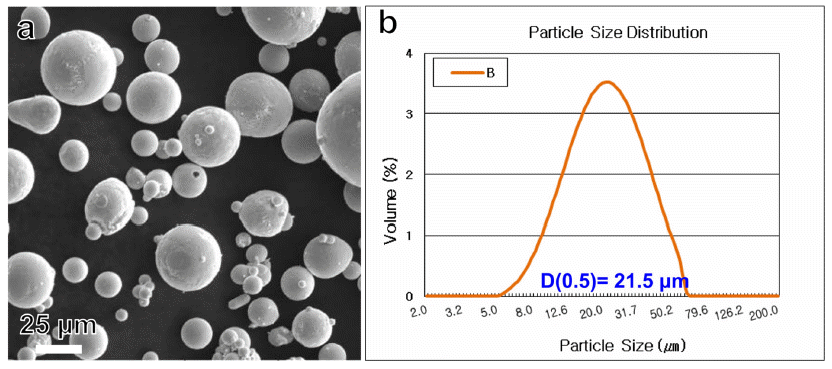
- 1,156 View
- 3 Download
-
Abstract
PDF
In this study, we fabricate a thin- and dense-BCuP-5 coating layer, one of the switching device multilayers, through a plasma spray process. In addition, the microstructure and macroscopic properties of the coating layer, such as hardness and bond strength, are investigated. Both the initial powder feedstock and plasma-sprayed BCuP-5 coating layer show the main Cu phase, Cu-Ag-Cu3P ternary phases, and Ag phase. This means that microstructural degradation does not occur during plasma spraying. The Vickers hardness of the coating layer was measured as 117.0 HV, indicating that the fine distribution of the three phases enables the excellent mechanical properties of the plasma-sprayed BCuP-5 coating layer. The pull-off strength of the plasma-sprayed BCuP-5 coating layer is measured as 16.5 kg/cm2. Based on the above findings, the applicability of plasma spray for the fabrication process of low-cost multi-layered electronic contact materials is discussed and suggested.
- [Korean]
- The Effects of Kaolin Addition on the Properties of Reticulated Porous Diatomite-kaolin Composites
- Chae-Young Lee, Sujin Lee, Jang-Hoon Ha, Jongman Lee, In-Hyuck Song, Kyoung-Seok Moon
- J Korean Powder Metall Inst. 2020;27(4):325-332. Published online August 1, 2020
- DOI: https://doi.org/10.4150/KPMI.2020.27.4.325
- 1,480 View
- 7 Download
-
Abstract
PDF
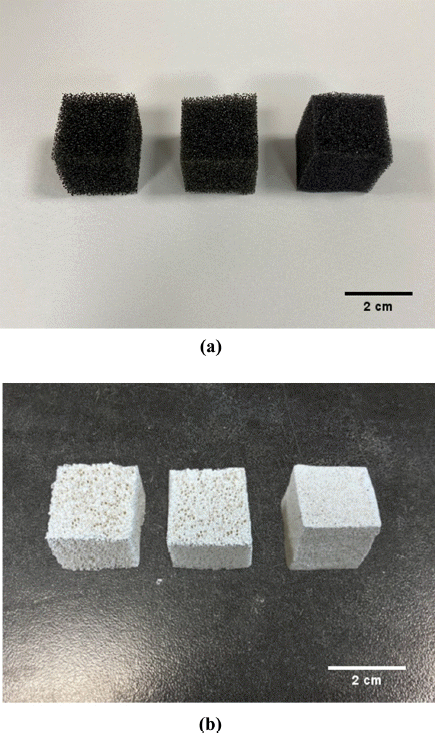
In this study, the effects of kaolin addition on the properties of reticulated porous diatomite-kaolin composites are investigated. A reticulated porous diatomite-kaolin composite is prepared using the replica template method. The microstructure and pore characteristics of the reticulated porous diatomite-kaolin composites are analyzed by controlling the PPI value (45, 60, and 80 PPI) of the polyurethane foam (which are used as the polymer template), the ball-milling time (8 and 24 h), and the amount of kaolin (0–50 wt. %). The average pore size decreases as the amount of kaolin increases in the reticulated porous diatomite-kaolin composite. As the amount of kaolin increases, it can be determined that the amount of inter-connected pore channels is reduced because the plate-shaped kaolin particles connect the gaps between irregular diatomite particles. Consequently, a higher kaolin percentage affects the overall mechanical properties by improving the pore channel connectivity. The effect of kaolin addition on the basic properties of the reticulated porous diatomite-kaolin composite is further discussed with characterization data such as pore size distribution, scanning electron microscopy images, and compressive strength.
- [Korean]
- Effect of Cobalt Contents on the Microstructure and Charpy Impact Properties of Ferritic/martensitic Oxide Dispersion Strengthened Steel
- Daehyun Kwon, Sanghoon Noh, Jung Gu Lee
- J Korean Powder Metall Inst. 2020;27(4):311-317. Published online August 1, 2020
- DOI: https://doi.org/10.4150/KPMI.2020.27.4.311

- 1,384 View
- 8 Download
-
Abstract
PDF
In this study, the effects of Co content on the microstructure and Charpy impact properties of Fe-Cr-W ferritic/martensitic oxide dispersion strengthened (F/M ODS) steels are investigated. F/M ODS steels with 0–5 wt% Co are fabricated by mechanical alloying, followed by hot isostatic pressing, hot-rolling, and normalizing/tempering heat treatment. All the steels commonly exhibit two-phase microstructures consisting of ferrite and tempered martensite. The volume fraction of ferrite increases with the increase in the Co content, since the Co element considerably lowers the hardenability of the F/M ODS steel. Despite the lowest volume fraction of tempered martensite, the F/M ODS steel with 5 wt% Co shows the highest micro-Vickers hardness, owing to the solid solution-hardening effect of the alloyed Co. The high hardness of the steel improves the resistance to fracture initiation, thereby resulting in the enhanced fracture initiation energy in a Charpy impact test at – 40°C. Furthermore, the addition of Co suppresses the formation of coarse oxide inclusions in the F/M ODS steel, while simultaneously providing a high resistance to fracture propagation. Owing to these combined effects of Co, the Charpy impact energy of the F/M ODS steel increases gradually with the increase in the Co content.
- [Korean]
- Microstructure and Mechanical Properties of Oxide Dispersion Strengthened alloy Based on Commercially Pure Titanium
- Taesung Park, Jeoung Han Kim
- J Korean Powder Metall Inst. 2018;25(4):327-330. Published online August 1, 2018
- DOI: https://doi.org/10.4150/KPMI.2018.25.4.327

- 1,559 View
- 11 Download
- 4 Citations
-
Abstract
PDF
This study is conducted as a preliminary research to verify the feasibility of Ti-based Oxide dispersion strengthened (ODS) alloy. Pure-Ti powder is mixed with Y2O3 powder and subsequently, mechanically alloyed at -150°C. The Ti-based ODS powder is hot-isostatically pressed and subsequently hot-rolled for recrystallization. The microstructure consists of elongated grains and Y excess fine particles. The oxide particle size is larger than that of the typical Febased ODS steel. Tensile test shows that the tensile ductility is approximately 25%, while the strength is significantly higher than that of pure Ti. The high-temperature hardness of the Ti-ODS alloy is also significantly higher than that of pure Ti at all temperatures, while being lower than that of Ti-6Al-4V. The dimple structure is well developed, and no evidence of cleavage fracture surface is observed in the fracture surface of the tensile specimen.
-
Citations
Citations to this article as recorded by- Additive manufacturing of Ti-6Al-4V based oxide dispersion strengthened alloy using in-situ oxide-dispersed powders and bound metal deposition
Woo Hyeok Kim, Raj Narayan Hajra, Hyung-Ki Park, Jung-Yeul Yun, Jeoung Han Kim
Journal of Alloys and Compounds.2026; 1050: 185574. CrossRef - Experimental and Numerical Evaluation of Rockwell Hardness at High Temperatures
NamSeok Lee
Journal of the Korean Society of Manufacturing Technology Engineers.2025; 34(3): 165. CrossRef - Spheroidization of Pure-vanadium Powder using Radio Frequency Thermal Plasma Process
Nana Kwabena Adomako, Seungmin Yang, Min Gyu Lee, N. S. Reddy, Jeoung-Han Kim
Journal of Korean Powder Metallurgy Institute.2019; 26(4): 305. CrossRef - Microstructure and Mechanical Properties of Friction-Welded Alloy 718 and SNCRW Stainless Steel After Post-Weld Heat-Treatment
Jeoung Han Kim, Nam-Yong Kim, Yu Sik Kong, Nho Kwang Park
Journal of Welding and Joining.2019; 37(4): 313. CrossRef
- Additive manufacturing of Ti-6Al-4V based oxide dispersion strengthened alloy using in-situ oxide-dispersed powders and bound metal deposition
- [Korean]
- The Effects of Si or Sn on the Sintered Properties of Fe-(Mo,Mn)-P Lean alloy
- Woo-Young Jung, Jin-Uk Ok, Dong-Kyu Park, In-Shup Ahn
- J Korean Powder Metall Inst. 2018;25(4):302-308. Published online August 1, 2018
- DOI: https://doi.org/10.4150/KPMI.2018.25.4.302

- 1,040 View
- 1 Download
-
Abstract
PDF
A lean alloy is defined as a low alloy steel that minimizes the content of the alloying elements, while maintaining the characteristics of the sintered alloy. The purpose of this study is to determine the change in microstructure and mechanical properties due to the addition of silicon or tin in Fe-Mo-P, Fe-Mn-P, and Fe-Mo-Mn-P alloys. Silicon- or tin-added F-Mo-P, Fe-Mn-P, and Fe-Mo-Mn-P master alloys were compacted at 700 MPa and subsequently sintered under a H2-N2 atmosphere at 1120°C. The sintered density of three alloy systems decreases under the same compacting pressure due to dimensional expansion with increasing Si content. As the diffusion rate in the Fe-P-Mo system is higher than that in the Fe-P-Mn system, the decrease in the sintered density is the largest in the Fe-PMn system. The sintered density of Sn added alloys does not change with the increasing Sn content due to the effect of non-dimensional changes. However, the effect of Si addition on the transverse rupture strengthening enhancement is stronger than that of Sn addition in these lean alloys.
- [Korean]
- Microstructure and Wear Properties of Oxide Dispersion Strengthened Steel Powder Added Steel-Based Composite Material for Automotive Part
- Young-Kyun Kim, Jong-Kwan Park, Kee-Ahn Lee
- J Korean Powder Metall Inst. 2018;25(1):36-42. Published online February 1, 2018
- DOI: https://doi.org/10.4150/KPMI.2018.25.1.36

- 1,353 View
- 4 Download
- 3 Citations
-
Abstract
PDF
In order to expand the application of oxide dispersion-strengthened (ODS) steel, a composite material is manufactured by adding mechanically alloyed ODS steel powder to conventional steel and investigated in terms of microstructure and wear properties. For comparison, a commercial automobile part material is also tested. Initial microstructural observations confirm that the composite material with added ODS steel contains i) a pearlitic Fe matrix area and ii) an area with Cr-based carbides and ODS steel particles in the form of a Fe-Fe3C structure. In the commercial material, various hard Co-, Fe-Mo-, and Cr-based particles are present in a pearlitic Fe matrix. Wear testing using the VSR engine simulation wear test confirms that the seatface widths of the composite material with added ODS steel and the commercial material are increased by 24% and 47%, respectively, with wear depths of 0.05 mm and 0.1 mm, respectively. The ODS steel-added composite material shows better wear resistance. Post-wear-testing surface and cross-sectional observations show that particles in the commercial material easily fall off, while the ODS steel-added material has an even, smooth wear surface.
-
Citations
Citations to this article as recorded by- Cost-Effective Optimization of High-Temperature Performance in Oxide Dispersion Strengthened Ni-Based Alloys through NbSi Powder Integration and Dual-Phase Composites
YeonJoo Lee, Jae Bok Seol, Kisub Cho, Hyokyung Sung, Jungjoon Kim, DoHun Kwon, HwiJun Kim, Hyunjoo Choi
Journal of Materials Engineering and Performance.2026;[Epub] CrossRef - First principles determination of formation of a Cr shell on the interface between Y–Ti–O nanoparticles and a ferritic steel matrix
Ki-Ha Hong, Jae Bok Seol, Jeoung Han Kim
Applied Surface Science.2019; 481: 69. CrossRef - Thermal Properties and Microstructural Changes of Fe-Co System Valve Seat Alloy by High Densification Process
In-Shup Ahn, Dong-Kyu Park, Kwang-Bok Ahn, Seoung-Mok Shin
Journal of Korean Powder Metallurgy Institute.2019; 26(2): 112. CrossRef
- Cost-Effective Optimization of High-Temperature Performance in Oxide Dispersion Strengthened Ni-Based Alloys through NbSi Powder Integration and Dual-Phase Composites
- [Korean]
- Mechanical Strength Values of Reaction-Bonded-Silicon-Carbide Tubes with Different Sample Size
- Seongwon Kim, Soyul Lee, Yoon-Suk Oh, Sung-Min Lee, Yoonsoo Han, Hyun-Ick Shin, Youngseok Kim
- J Korean Powder Metall Inst. 2017;24(6):450-456. Published online December 1, 2017
- DOI: https://doi.org/10.4150/KPMI.2017.24.6.450
- 959 View
- 2 Download
-
Abstract
PDF
Reaction-bonded silicon carbide (RBSC) is a SiC-based composite ceramic fabricated by the infiltration of molten silicon into a skeleton of SiC particles and carbon, in order to manufacture a ceramic body with full density. RBSC has been widely used and studied for many years in the SiC field, because of its relatively low processing temperature for fabrication, easy use in forming components with a near-net shape, and high density, compared with other sintering methods for SiC. A radiant tube is one of the most commonly employed ceramics components when using RBSC materials in industrial fields. In this study, the mechanical strengths of commercial RBSC tubes with different sizes are evaluated using 3-point flexural and C-ring tests. The size scaling law is applied to the obtained mechanical strength values for specimens with different sizes. The discrepancy between the flexural and C-ring strengths is also discussed.
- [Korean]
- Sintering behavior of Fe-(Mo-Mn-P)-xSi alloys according to the Green Density
- Woo-Young Jung, Jin-Uk Ok, Dong-Kyu Park, In-Shup Ahn
- J Korean Powder Metall Inst. 2017;24(5):400-405. Published online October 1, 2017
- DOI: https://doi.org/10.4150/KPMI.2017.24.5.400
- 1,814 View
- 7 Download
- 1 Citations
-
Abstract
PDF
The addition of a large amount of alloying elements reduces the compactibility and increases the compacting pressure, thereby shortening the life of the compacting die and increasing the process cost of commercial PM steel. In this study, the characteristic changes of Fe-Mo-P, Fe-Mn-P, and Fe-Mo-Mn-P alloys are investigated according to the Si contents to replace the expensive elements, such as Ni. All compacts with different Si contents are fabricated with the same green densities of 7.0 and 7.2 g/cm3. The transverse rupture strength (TRS) and sintered density are measured using the specimens obtained through the sintering process. The sintered density tends to decrease, whereas the TRS increases as the Si content increases. The TRS of the sintered specimen compacted with 7.2 g/cm3 is twice as high as that compacted with 7.0 g/cm3.
-
Citations
Citations to this article as recorded by- The Effects of Si or Sn on the Sintered Properties of Fe-(Mo,Mn)-P Lean alloy
Woo-Young Jung, Jin-Uk Ok, Dong-Kyu Park, In-Shup Ahn
Journal of Korean Powder Metallurgy Institute.2018; 25(4): 302. CrossRef
- The Effects of Si or Sn on the Sintered Properties of Fe-(Mo,Mn)-P Lean alloy
- [Korean]
- High Temperature Oxidation Behavior of Fe-14Cr Ferritic Oxide Dispersion Strengthened Steels Manufactured by Mechanical Alloying Process
- Young-Kyun Kim, Jong-Kwan Park, Hwi-Jun Kim, Man-Sik Kong, Kee-Ahn Lee
- J Korean Powder Metall Inst. 2017;24(2):133-140. Published online April 1, 2017
- DOI: https://doi.org/10.4150/KPMI.2017.24.2.133

- 1,271 View
- 9 Download
- 1 Citations
-
Abstract
PDF
This study investigates the oxidation properties of Fe-14Cr ferritic oxide-dispersion-strengthened (ODS) steel at various high temperatures (900, 1000, and 1100°C for 24 h). The initial microstructure shows that no clear structural change occurs even under high-temperature heat treatment, and the average measured grain size is 0.4 and 1.1 μm for the as-fabricated and heat-treated specimens, respectively. Y–Ti–O nanoclusters 10–50 nm in size are observed. High-temperature oxidation results show that the weight increases by 0.27 and 0.29 mg/cm2 for the asfabricated and heat-treated (900°C) specimens, and by 0.47 and 0.50 mg/cm2 for the as-fabricated and heat-treated (1000°C) specimens, respectively. Further, after 24 h oxidation tests, the weight increases by 56.50 and 100.60 mg/cm2 for the as-fabricated and heat-treated (1100°C) specimens, respectively; the latter increase is approximately 100 times higher than that at 1000°C. Observation of the surface after the oxidation test shows that Cr2O3 is the main oxide on a specimen tested at 1000°C, whereas Fe2O3 and Fe3O4 phases also form on a specimen tested at 1100°C, where the weight increases rapidly. The high-temperature oxidation behavior of Fe-14Cr ODS steel is confirmed to be dominated by changes in the Cr2O3 layer and generation of Fe-based oxides through evaporation.
-
Citations
Citations to this article as recorded by- Microstructure and Wear Properties of Oxide Dispersion Strengthened Steel Powder Added Steel-Based Composite Material for Automotive Part
Young-Kyun Kim, Jong-Kwan Park, Kee-Ahn Lee
journal of Korean Powder Metallurgy Institute.2018; 25(1): 36. CrossRef
- Microstructure and Wear Properties of Oxide Dispersion Strengthened Steel Powder Added Steel-Based Composite Material for Automotive Part
- [Korean]
- Stretch-Flangeability of Harmonic Structure Material Manufactured by Powder Metallurgy Method
- Jae Ik Yoon, Hak Hyeon Lee, Hyung Keun Park, Kei Ameyama, Hyoung Seop Kim
- J Korean Powder Metall Inst. 2017;24(2):128-132. Published online April 1, 2017
- DOI: https://doi.org/10.4150/KPMI.2017.24.2.128

- 1,339 View
- 1 Download
-
Abstract
PDF
Harmonic structure materials are materials with a core–shell structure having a shell with a small grain size and a core with a relatively large grain size. They are in the spotlight because their mechanical properties reportedly feature strength similar to that of a sintered powder with a fine grain size and elongation similar to that of a sintered powder with a coarse grain size at the same time. In this study, the tensile properties, microstructure, and stretchflangeability of harmonic structure SUS304L made using powder metallurgy are investigated to check its suitability for automotive applications. The harmonic powders are made by mechanical milling and sintered using a spark plasma sintering method at 1173 K and a pressure of 50 MPa in a cylindrical die. The sintered powders of SUS304L having harmonic structure (harmonic SUS304L) exhibit excellent tensile properties compared with sintered powders of SUS304L having homogeneous microstructure. In addition, the harmonic SUS304L has excellent stretch-flangeability compared with commercial advanced high-strength steels (AHSSs) at a similar strength grade. Thus, the harmonic SUS304L is more suitable for automotive applications than conventional AHSSs because it exhibits both excellent tensile properties and stretch-flangeability.
- [Korean]
- Mechanical Properties of Fe-P-(Mo,Mn) Sintered Alloy Related with Si Contents
- Woo-Young Jung, Dong-Kyu Park, Byung-Hyun Ko, Jin-Woo Park, In-Shup Ahn
- J Korean Powder Metall Inst. 2016;23(5):397-401. Published online October 1, 2016
- DOI: https://doi.org/10.4150/KPMI.2016.23.5.397

- 1,302 View
- 4 Download
- 2 Citations
-
Abstract
PDF
A lean alloy is defined as a low alloy steel with a minimum amount of the alloying element that maintains the characteristics of the sintered alloy. It is well known that the addition of elements such as Cr, P, Si, or Mn improves the mechanical characteristics of the alloy, but decreases the sinterability. The mother alloy is used to avoid an oxidation reaction with the alloying elements of Cr, P, Si or Mn. The purpose of this study is to determine the change in the mechanical properties of Fe-P-Mo and Fe-P-Mn alloys as a result of the addition of Si. In this article, the Fe-P-Mo and Fe-P-Mn alloys to which Si is added are compacted at 7.0 g/cm3 and then sintered in H2-N2 at 1120°C. The P around the macropores and large grains reduces due to the formation of SiO2 as the Si content increases. This is caused by the increase in strength owing to reducing intergranular fracture by suppressing the reaction with oxygen.
-
Citations
Citations to this article as recorded by- The Effects of Si or Sn on the Sintered Properties of Fe-(Mo,Mn)-P Lean alloy
Woo-Young Jung, Jin-Uk Ok, Dong-Kyu Park, In-Shup Ahn
Journal of Korean Powder Metallurgy Institute.2018; 25(4): 302. CrossRef - Sintering behavior of Fe-(Mo-Mn-P)-xSi alloys according to the Green Density
Woo-Young Jung, Jin-Uk Ok, Dong-Kyu Park, In-Shup Ahn
Journal of Korean Powder Metallurgy Institute.2017; 24(5): 400. CrossRef
- The Effects of Si or Sn on the Sintered Properties of Fe-(Mo,Mn)-P Lean alloy
- [English]
- Development of Powder Injection Molding Process for Fabrication of Glass Component
- Dongguo Lin, Junghyun Lee, Seong Jin Park
- J Korean Powder Metall Inst. 2016;23(1):26-32. Published online February 1, 2016
- DOI: https://doi.org/10.4150/KPMI.2016.23.1.26
- 3,756 View
- 32 Download
- 8 Citations
-
Abstract
PDF
Powder injection molding (PIM), which combines the advantages of powder metallurgy and plastic injection molding technologies, has become one of the most efficient methods for the net-shape production of both metal and ceramic components. In this work, plasma display panel glass bodies are prepared by the PIM process. After sintering, the hot isostatic pressing (HIP) process is adopted for improving the density and mechanical properties of the PIMed glass bodies. The mechanical and thermal behaviors of the prepared specimens are analyzed through bending tests and dilatometric analysis, respectively. After HIPing, the flexural strength of the prepared glass body reaches up to 92.17 MPa, which is 1.273 and 2.178 times that of the fused glass body and PIMed bodies, respectively. Moreover, a thermal expansion coefficient of 7.816 × 10⁻⁶/°C is obtained, which coincides with that of the raw glass powder (7.5-8.0 × 10⁻⁶/°C), indicating that the glass body is fully densified after the HIP process.
-
Citations
Citations to this article as recorded by- Fabrication and characteristics of Li2TiO3 pebbles manufactured by using powder injection molding (PIM) process
Young Ah Park, Yi-Hyun Park, Mu-Young Ahn, Young Soo Yoon
Journal of Nuclear Materials.2024; 597: 155140. CrossRef - Combined simulation of micro and nanoparticles in RF inductively coupled plasma torches with the variations of metallic species and feeding nozzle location
Cheongbin Cheon, Ho Jun Kim, Hae June Lee
Japanese Journal of Applied Physics.2023; 62(SA): SA1014. CrossRef - High-throughput injection molding of transparent fused silica glass
Markus Mader, Oliver Schlatter, Barbara Heck, Andreas Warmbold, Alex Dorn, Hans Zappe, Patrick Risch, Dorothea Helmer, Frederik Kotz, Bastian E. Rapp
Science.2021; 372(6538): 182. CrossRef - Controlling the sintering response in the development of multilayered components produced via powder injection molding route—a review
O. J. Ojo-kupoluyi, S. M. Tahir, T. T. Dele-Afolabi, M. S. Anuar
The International Journal of Advanced Manufacturing Technology.2020; 107(9-10): 3755. CrossRef - Fabrication of pressureless sintered Si3N4 ceramic balls by powder injection molding
Chang Woo Gal, Gi Woung Song, Woon Hyung Baek, Hyung Kyu Kim, Dae Keun Lee, Ki Wook Lim, Seong Jin Park
Ceramics International.2019; 45(5): 6418. CrossRef - Thermal decomposition behavior and modeling of PMN-PZT ceramic feedstock with varying binder compositions
Jae Man Park, Jun Sae Han, Chang Woo Gal, Joo Won Oh, Dongguo Lin, Jaebum Noh, Kunal H Kate, Sundar V Atre, Youngmoo Kim, Seong Jin Park
Materials Research Express.2019; 6(6): 065316. CrossRef - Powder Injection Molding Process in Industrial Fields
Joo Won OH, Chang Woo GAL, Daseul SHIN, Jae Man PARK, Woo Seok YANG, Seong Jin PARK
Journal of the Japan Society of Powder and Powder Metallurgy.2018; 65(9): 539. CrossRef - Optimization of Process Condition for Fe Nano Powder Injection Molding
Joo Won Oh, Won Sik Lee, Seong Jin Park
Journal of Korean Powder Metallurgy Institute.2017; 24(3): 223. CrossRef
- Fabrication and characteristics of Li2TiO3 pebbles manufactured by using powder injection molding (PIM) process
- [Korean]
- Characteristics of the Ceramic Filter with the Control of Particle Size and Graphite Additive for the Hazardous Particle and Gas Removal
- Eul-Hun Cho, Kun-Jae Lee
- J Korean Powder Metall Inst. 2014;21(6):454-459. Published online December 1, 2014
- DOI: https://doi.org/10.4150/KPMI.2014.21.6.454

- 916 View
- 2 Download
-
Abstract
PDF
In this study, the porous ceramic filter was developed to be able to remove both dust and hazardous gas contained in fuel gas at high temperature. The porous ceramic filters were fabricated and used as a catalyst support. And the effects have been investigated such as the mean particle size, organic content and addition of foaming agent on the porosity, compressive strength and pressure drop of ceramic filters. With the increase of mean powder size and the organic content for the cordierite filter, the porosity was increased, but the compressive strength and pressure drop were decreased. From the results of the research, the optimum condition for the fabrication of ceramic filters could be acquired and they had the porosity of 58%, the compressive strength of 13.4 MPa and the pressure drop of 250 Pa. It was expected that this ceramic filter was able to be applied to the glass melting furnace, combustor, and dust/toxic gas removal filter.
- [Korean]
- Microstructure Evolution of 15Cr ODS Steel by a Simple Torsion Test
- Hyun Ju Jin, Suk Hoon Kang, Tae Kyu Kim
- J Korean Powder Metall Inst. 2014;21(4):271-276. Published online August 1, 2014
- DOI: https://doi.org/10.4150/KPMI.2014.21.4.271
- 1,305 View
- 2 Download
- 4 Citations
-
Abstract
PDF
15Cr-1Mo base oxide dispersion strengthened (ODS) steel which is considered to be as a promising candidate for high- temperature components in nuclear fusion and fission systems because of its excellent high temperature strength, corrosion and radiation resistance was fabricated by using mechanical alloying, hot isostatic pressing and hot rolling. Torsion tests were performed at room temperature, leading to two different shear strain routes in the forward and reverse directions. In this study, microstructure evolution of the ODS steel during simple shearing was investigated. Fine grained microstructure and a cell structure of dislocation with low angle boundaries were characterized with shear strain in the shear deformed region by electron backscattered diffraction (EBSD). Grain refinement with shear strain resulted in an increase in hardness. After the forward-reverse torsion, the hardness value was measured to be higher than that of the forward torsion only with an identical shear strain amount, suggesting that new dislocation cell structures inside the grain were generated, thus resulting in a larger strengthening of the steel.
-
Citations
Citations to this article as recorded by- Effect of high-energy ball milling on the microstructure and mechanical properties of Ni-based ODS alloys fabricated using gas-atomized powder
Chun Woong Park, Won June Choi, Jongmin Byun, Young Do Kim
Journal of Materials Science.2022; 57(38): 18195. CrossRef - Analysis on Milling Behavior of Oxide Dispersion Strengthened Ni-based Atomizing Powder with Ni5Y Intermetallic Phase
Chun Woong Park, Jong Min Byun, Won June Choi, Young Do Kim
Journal of Korean Powder Metallurgy Institute.2019; 26(2): 101. CrossRef - Current Status and Future Prospective of Advanced Radiation Resistant Oxide Dispersion Strengthened Steel (ARROS) Development for Nuclear Reactor System Applications
Tae Kyu Kim, Sanghoon Noh, Suk Hoon Kang, Jin Ju Park, Hyun Ju Jin, Min Ku Lee, Jinsugn Jang, Chang Kyu Rhee
Nuclear Engineering and Technology.2016; 48(2): 572. CrossRef - A Precipitation Behavior of Nano-Oxide Particles in Mechanically Alloyed Fe-5Y2O3Powders
Ga Eon Kim, Sanghoon Noh, Ji Eun Choi, Young Do Kim, Tae Kyu Kim
Journal of Korean Powder Metallurgy Institute.2015; 22(1): 46. CrossRef
- Effect of high-energy ball milling on the microstructure and mechanical properties of Ni-based ODS alloys fabricated using gas-atomized powder
 First
First Prev
Prev

TOP

