 KPMI
KPMI

Articles
- Page Path
- HOME > J Powder Mater > Volume 33(3); 2026 > Article
-
Research Article
- Microstructure, Magnetic Properties, and Performance of Fe-6.5Si Soft Magnetic Core Produced by Laser Powder Bed Fusion
-
Ji Sang Yoon1,2
 , Yeon Woo Kim1, Gyu Hyun Park3, Youk Jin Kim4, Sang Heon Lee5, Jeong Seok Kim6, Sung Ho Yu7, Jeong Min Park1,3,8,*
 -
Journal of Powder Materials 2026;33(3):177-183.
DOI: https://doi.org/10.4150/jpm.2026.00094
Published online: June 30, 2026
1Nano Materials Division, Korea Institute of Materials Science (KIMS), Changwon 51508, Republic of Korea
2Department of Metallurgical Engineering, Pukyong National University, Busan 48513, Republic of Korea
3Center for Advanced Functional Powder, Korea Institute of Materials Science (KIMS), Changwon 51508, Republic of Korea
4eP (electric propulsion) Proto Development Team, Hyundai Motor Group, Hwaseong 18280, Republic of Korea
5Aerospace Development Team, Samhyun Co., Ltd, Changwon 51398, Republic of Korea
6Electrified Powertrain Development Team, Samhyun Co., Ltd, Changwon 51398, Republic of Korea
7Metal 3D Printing Team, Partners Lab Co., Ltd, Changwon 51783, Republic of Korea
8Department of Advanced Future Convergence Materials, Korea University (KU), Seoul 02841, Republic of Korea
- *Corresponding author: J. M. Park (jmpark@kims.re.kr)
© The Korean Powder Metallurgy & Materials Institute
This is an Open Access article distributed under the terms of the Creative Commons Attribution Non-Commercial License (http://creativecommons.org/licenses/by-nc/4.0/) which permits unrestricted non-commercial use, distribution, and reproduction in any medium, provided the original work is properly cited.
- 1,226 Views
- 28 Download

Abstract
- High-silicon electrical steels containing 6.5 wt.% Si (Fe-6.5Si) are promising materials for high-efficiency electric motors because of their high electrical resistivity and low core loss. However, the intrinsic brittleness of high-silicon steels limits their formability using conventional fabrication methods, such as cold rolling, pressure forming, and sintering, making it difficult to fabricate three-dimensional (3D) soft magnetic cores for axial-flux permanent magnet (AFPM) motors. Additive manufacturing has recently attracted attention as an effective approach for producing complex magnetic components. In particular, laser powder bed fusion (LPBF) enables the fabrication of geometrically complex structures through localized melting and rapid solidification of metal powders. During LPBF, rapid thermal cycling can generate unique microstructures that influence the magnetic properties of fabricated materials. In this study, Fe-6.5Si samples were fabricated using LPBF, and their microstructure and magnetic properties were investigated. In addition, a complex-shaped 3D core was successfully fabricated by LPBF, and the performance of an AFPM motor equipped with the LPBF-fabricated core was evaluated. The results show that the LPBF-fabricated core can provide superior performance-to-weight efficiency for lightweight motor applications.
- Soft magnetic materials play a critical role in electromagnetic devices such as electric motors, transformers, and inductors, owing to their ability to achieve high magnetic flux density with low energy loss. In electric motor systems, the overall efficiency is strongly governed by the magnetic properties of the core materials, where high permeability and low core loss are essential for minimizing energy dissipation during cyclic magnetization [1-8].
- Among various soft magnetic materials, high-silicon electrical steels containing 6.5 wt.%Si (Fe-6.5Si) have attracted considerable attention due to their high permeability and low core loss. The high silicon content increases the electrical resistivity of the alloy, which effectively reduces core loss, especially under high-frequency operating conditions [9-11]. However, the high silicon content increases the strength of the alloy but also induces brittleness, resulting in reduced formability [9, 12, 13]. In conventional powder-based fabrication routes such as soft magnetic composites (SMCs), the increased powder strength hinders compaction and reduces densification during sintering. As a result, the fabrication of dense and structurally sound three-dimensional (3D) soft magnetic cores remains a significant challenge, particularly for advanced motor systems such as axial-flux permanent magnet (AFPM) motors [14-18].
- Recently, additive manufacturing (AM) technologies have attracted significant attention as alternative fabrication methods for producing complex metallic components. Among them, the laser powder bed fusion (LPBF) process enables the fabrication of near-net-shape parts through selective melting of metal powder in a layer-by-layer manner [19-21]. The rapid melting and solidification inherent to the LPBF process result in unique microstructural features. These microstructural features play a critical role in determining the physical and functional properties of the fabricated materials [22, 23].
- In particular, LPBF has been actively explored for the fabrication of soft magnetic materials, owing to its capability to produce complex geometries and tailor microstructures [24-26]. Although several studies have investigated the microstructure and magnetic properties of LPBF-processed soft magnetic materials, research on the fabrication and practical application of LPBF-fabricated Fe-6.5Si soft magnetic cores for electric motor systems remains limited.
- Unlike previous studies that primarily focused on microstructural and magnetic characterization, this study further investigates the practical applicability of LPBF-fabricated Fe-6.5Si by integrating the fabricated core into a prototype motor system. In addition to evaluating the microstructure and magnetic properties, the motor performance was experimentally assessed and analyzed on a mass-normalized basis.
1. Introduction
- 2.1 Sample fabrication
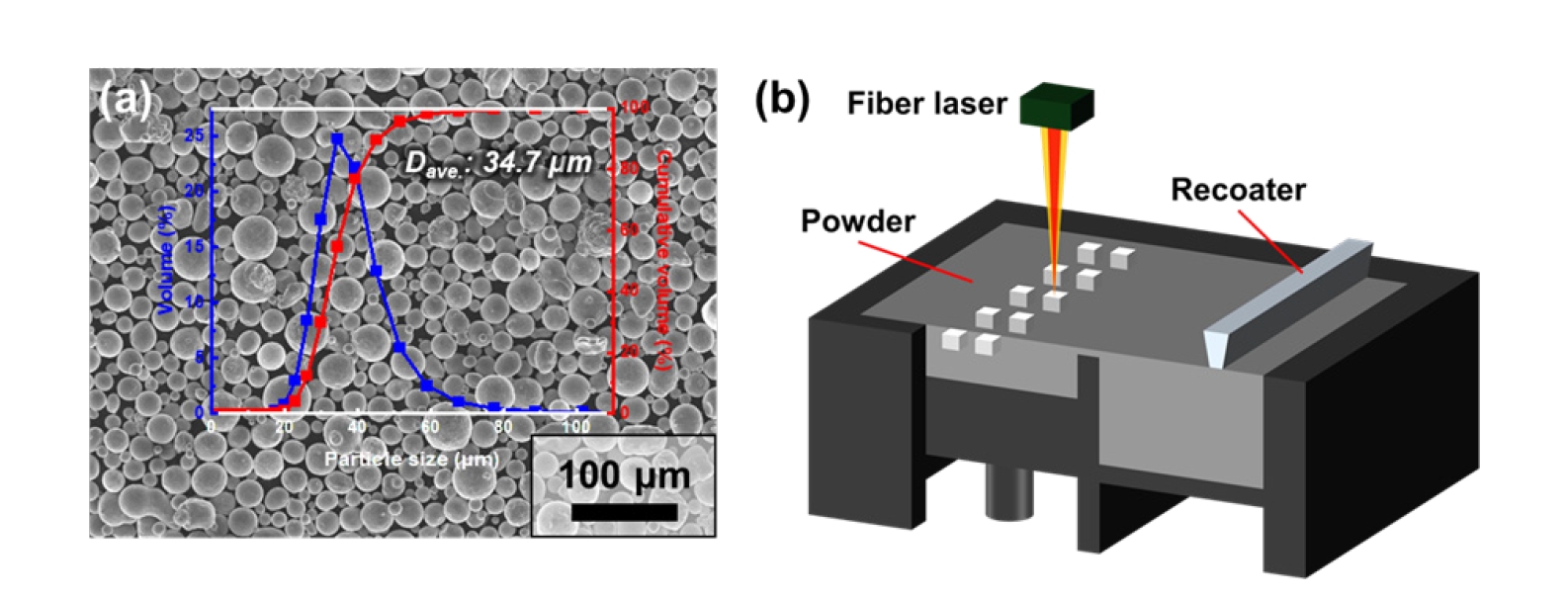
- Gas-atomized silicon steel powder with the nominal composition of Fe-6.5 wt.%Si (MK Co., Ltd., Republic of Korea) was used as the feedstock material for the LPBF process. The morphology of the powder particles was observed using field emission scanning electron microscopy (FE-SEM, JEOL, Japan), as shown in Fig. 1(a). The powder exhibited a spherical shape, favorable for LPBF processing. The particle size distribution of the powder was analyzed, as shown in the inset of Fig. 1(a). A schematic illustration of the LPBF process used in this study is shown in Fig. 1(b). Cubic samples were initially fabricated for screening LPBF process window with respect to volumetric energy density (VED) vs. relative density [27]. A laser power of 180 W and a scan speed of 800 mm/s were finally selected to fabricate the samples for characterization of microstructure and magnetic properties, which exhibited the highest relative density (99.57 %) of the cubic samples in our preliminary screening of LPBF process window.
- 2.2 Microstructure analysis and characterization
- The microstructure of the LPBF-fabricated Fe-6.5Si was investigated using FE-SEM (TESCAN, Czech Republic) equipped with an electron backscatter diffraction (EBSD) detector (Oxford Instruments, UK). EBSD analysis was performed on a plane parallel to the build direction to characterize the grain morphology of the as-printed samples. For microstructure analysis of the LPBF-fabricated Fe-6.5Si, as-printed samples were mechanically polished using a 0.04 μm colloidal silica suspension.
- The magnetic properties of the LPBF-fabricated Fe-6.5Si specimens were evaluated using a single sheet tester (SY-8219, MAGNET-PHYSIK, Germany). Alternating current (AC) hysteresis loops were measured at a frequency of 50 Hz. Sheet-type specimens with dimensions of approximately 40 mm × 10 mm × 0.4 mm were prepared for the measurement. All microstructural and magnetic characterizations were conducted using as-printed samples without post-processing heat treatment to evaluate the characteristics and applicability of the LPBF process itself.
2. Experimental Procedure
- 3.1 Microstructure of the LPBF-fabricated Fe-6.5Si
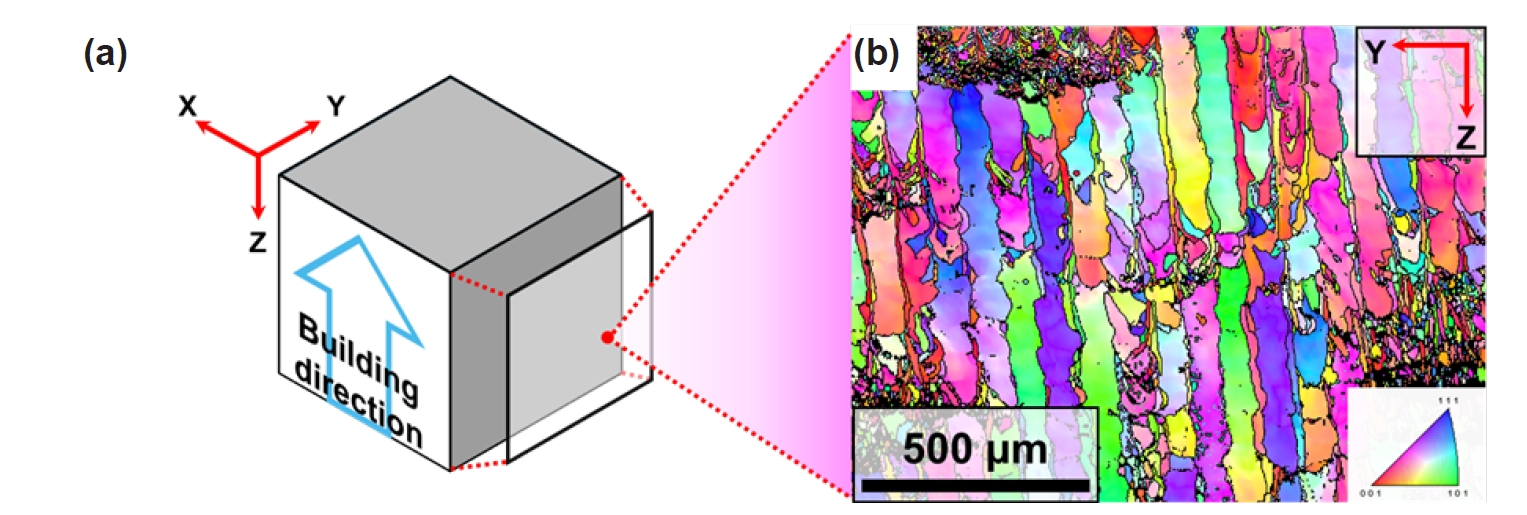
- The microstructure of the LPBF-fabricated Fe-6.5Si was analyzed using EBSD, and the inverse pole figure (IPF) map obtained from a plane parallel to the build direction is shown in Fig. 2. As shown in the figure, elongated columnar grains are observed along the build direction. This suggests that grain growth was strongly influenced by the thermal gradient during the LPBF process. Such columnar grain structures are commonly observed in LPBF-fabricated alloys due to directional solidification under steep thermal gradients. During the LPBF process, heat predominantly flows toward the previously solidified layers and the build platform, generating a strong thermal gradient along the build direction [25, 28-30]. Due to this directional heat flow, grains tend to grow along the build direction, resulting in a columnar grain structure.
- The quantitative EBSD analysis revealed that the average grain size was approximately 131.2 μm, indicating relatively coarse grain growth during the LPBF process. In addition, the inverse pole figure (IPF) analysis showed a preferred crystallographic orientation along the build direction, with a <001> texture intensity of approximately 4.1. The grain structure also exhibited a heterogeneous distribution, consisting of elongated columnar grains together with relatively finer grains.
- 3.2 Magnetic properties of the LPBF-fabricated Fe-6.5Si
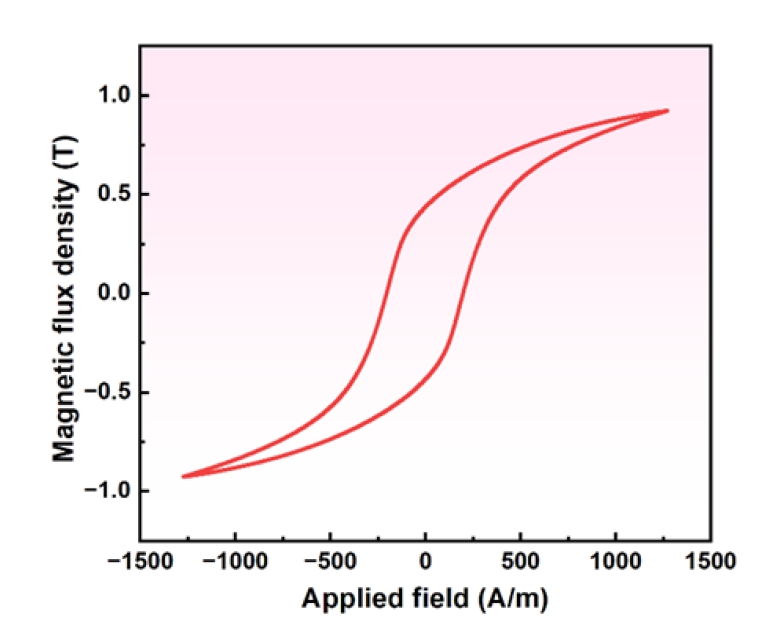
- The magnetic properties of the LPBF-fabricated Fe-6.5Si were evaluated using AC hysteresis measurements, and the corresponding hysteresis loop is shown in Fig. 3. The specimen exhibits a relatively narrow hysteresis loop, indicative of soft magnetic behavior [8]. The magnetic properties were measured three times under identical conditions, and the values reported in Table 1 represent the average with standard deviation. The core loss (Pcm) was measured to be 5.3 W/kg, and the coercivity (Hc) was 200.7 A/m. These properties are desirable as lower values indicate improved soft magnetic performance due to reduced energy loss and easier magnetization reversal. The maximum magnetic flux density (Bm) was 923.9 mT, and the effective permeability (μa) was 575.9. Higher values of Bm and μa are typically associated with improved magnetic performance, reflecting enhanced flux-carrying capability and magnetic response. These magnetic properties are considered to be closely related to the microstructure of the LPBF-fabricated samples. A higher relative density reduces defect density and porosity, which can facilitate magnetic flux flow. The relatively large grain size may reduce grain boundary fraction, thereby facilitating domain wall motion and contributing to improved magnetic properties. In addition, well-developed crystallographic texture may promote more favorable domain wall motion and reduce core loss, thereby influencing coercivity and core loss characteristics. Furthermore, LPBF-induced features such as residual stress, dislocation density, porosity and columnar grain morphology may also influence magnetic properties, thereby affecting the overall hysteresis behavior [31].
- The present results are based on an LPBF processing condition exhibiting the highest relative density, which provides insight into the achievable magnetic performance of LPBF-fabricated Fe-6.5Si, although the results may not fully represent the entire range of process–property relationships. The magnetic properties obtained in this study are in good agreement with those reported in a previous study on LPBF-fabricated Fe-6.5Si [25].
- 3.3 Motor performance evaluation
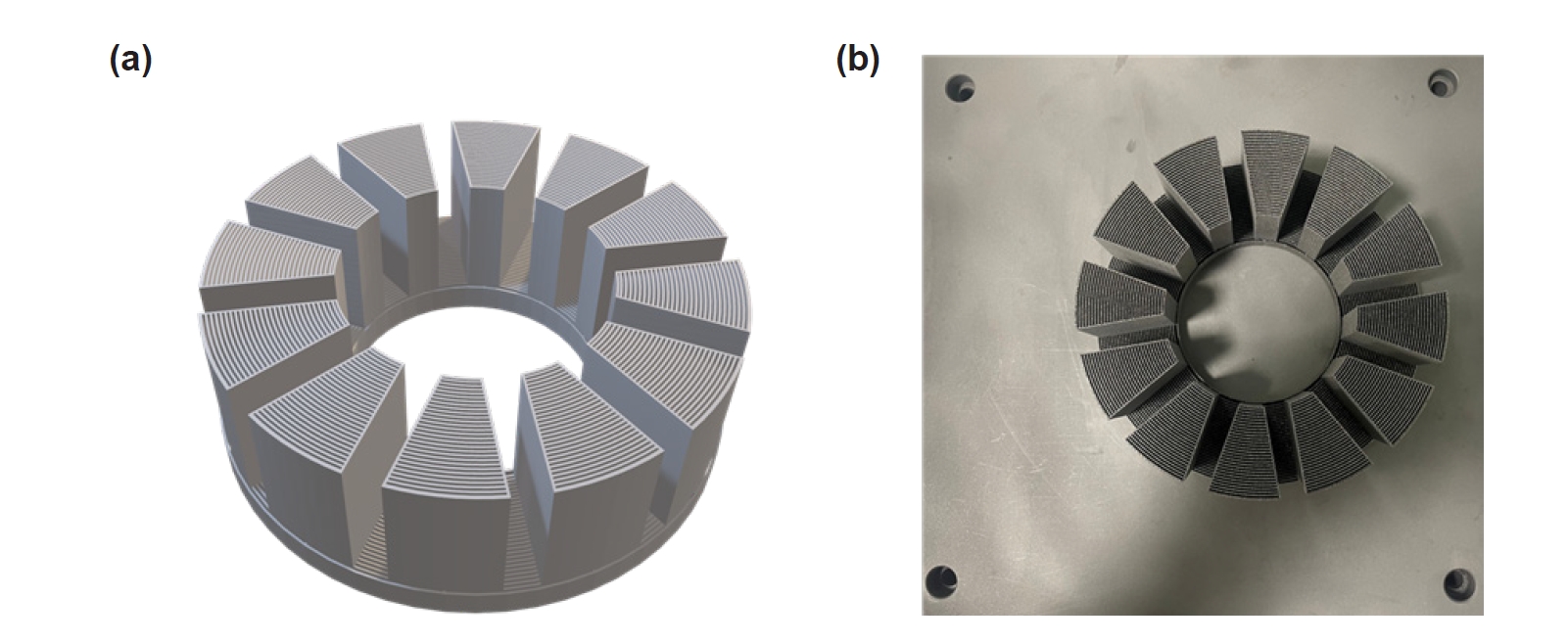
- To evaluate the effect of the LPBF-fabricated Fe-6.5Si soft magnetic core on electric motor performance, a slit-structured core was manufactured using the same processing conditions as those used for the cubic and magnetic characterization samples. The 3D CAD model of the designed core and the as-printed core are shown in Fig. 4(a) and (b), respectively.
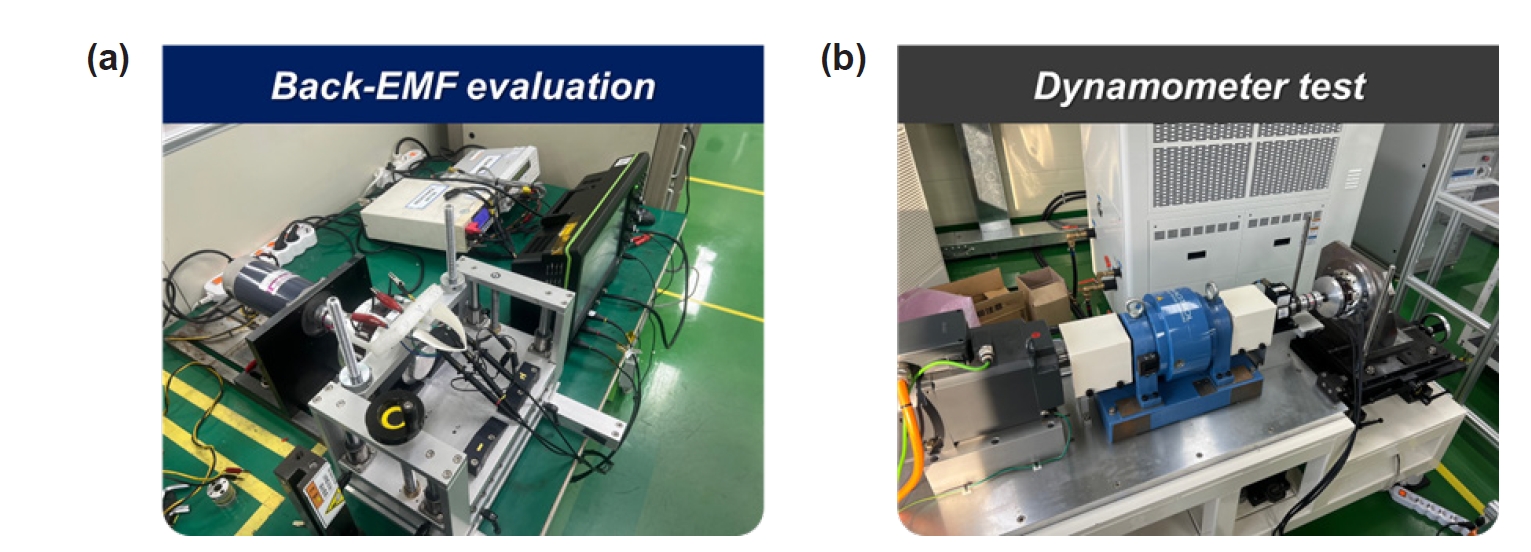
- The fabricated Fe-6.5Si soft magnetic core was assembled into a prototype motor system, and the motor performance was evaluated using a dynamometer test system. The motor performance evaluation was conducted using the as-printed LPBF core without post-processing heat treatment. The experimental setup for back-EMF evaluation and performance characterization is presented in Fig. 5(a) and (b), respectively. The performance test was conducted by Samhyun Co., Ltd., and key motor performance parameters including torque, output power, and back electromotive force (back-EMF) were measured.
- The electrical characteristics of the fabricated motor were first evaluated through back-EMF measurements. At a rotational speed of 500 rpm, the LPBF-fabricated core exhibited back-EMF values of approximately 4.16-4.35 Vrms, corresponding to about 50 % of the commercial motor value (~ 8.6 Vrms). This reduction is mainly attributed to the decreased magnetic core volume resulting from the topology-modified core design [32].
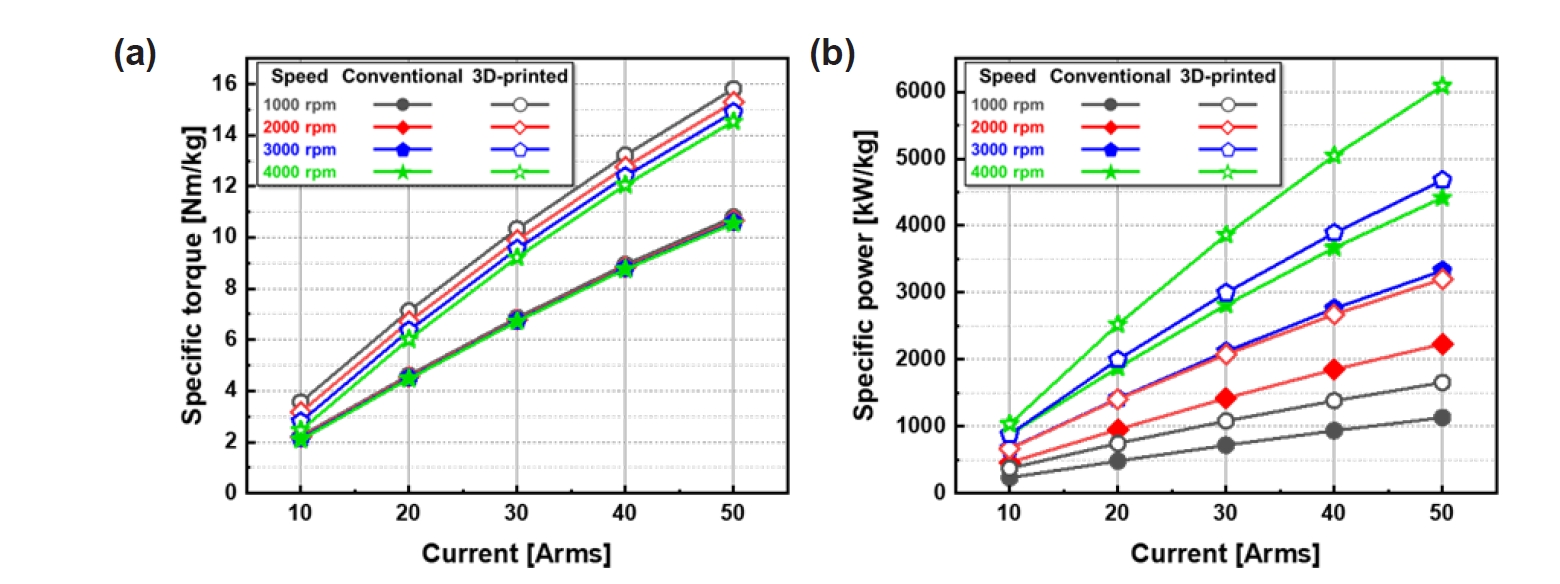
- Further dynamometer tests were performed at rotational speeds ranging from 1,000 to 4,000 rpm. The torque and output power of the LPBF motor were measured under various current conditions and compared with those of a commercial motor with a conventional laminated core. The LPBF-fabricated core exhibits lower absolute torque and output compared to the conventional core (approximately 40–50 %). This reduced motor performance can be attributed to both design factors and intrinsic material characteristics. From the design perspective, the topology-modified slit structure and the reduced effective magnetic core volume contribute to the lower back-EMF, torque, and output power. From the material perspective, unlike the conventional laminated core, the LPBF-fabricated core has a bulk-type structure, which may result in a larger effective current path and increased eddy current loss. In general, core loss in soft magnetic materials consists mainly of hysteresis loss and eddy current loss. Hysteresis loss is primarily related to coercivity and domain wall motion, whereas eddy current loss is strongly influenced by the effective current path, thickness, and operating frequency [1, 2]. However, as shown in Fig. 6(a) and (b), the LPBF-fabricated motor showed improved torque and output performance on a mass-normalized basis. This suggests enhanced performance-to-weight efficiency compared to the conventional motor.
- Notably, the mass of the LPBF-fabricated core (~600 g) is significantly lower than that of the conventional laminated core (~1.8 kg), corresponding to a reduction of approximately 66 %. Considering this substantial decrease in core mass, the motor performance normalized by mass can be estimated to be approximately 1.5 times higher than that of the conventional motor. Despite the reduction in absolute performance, these results highlight that the LPBF-fabricated core offers superior performance-to-weight efficiency, demonstrating the potential of additive manufacturing for lightweight electric motor applications.
3. Results and Discussion
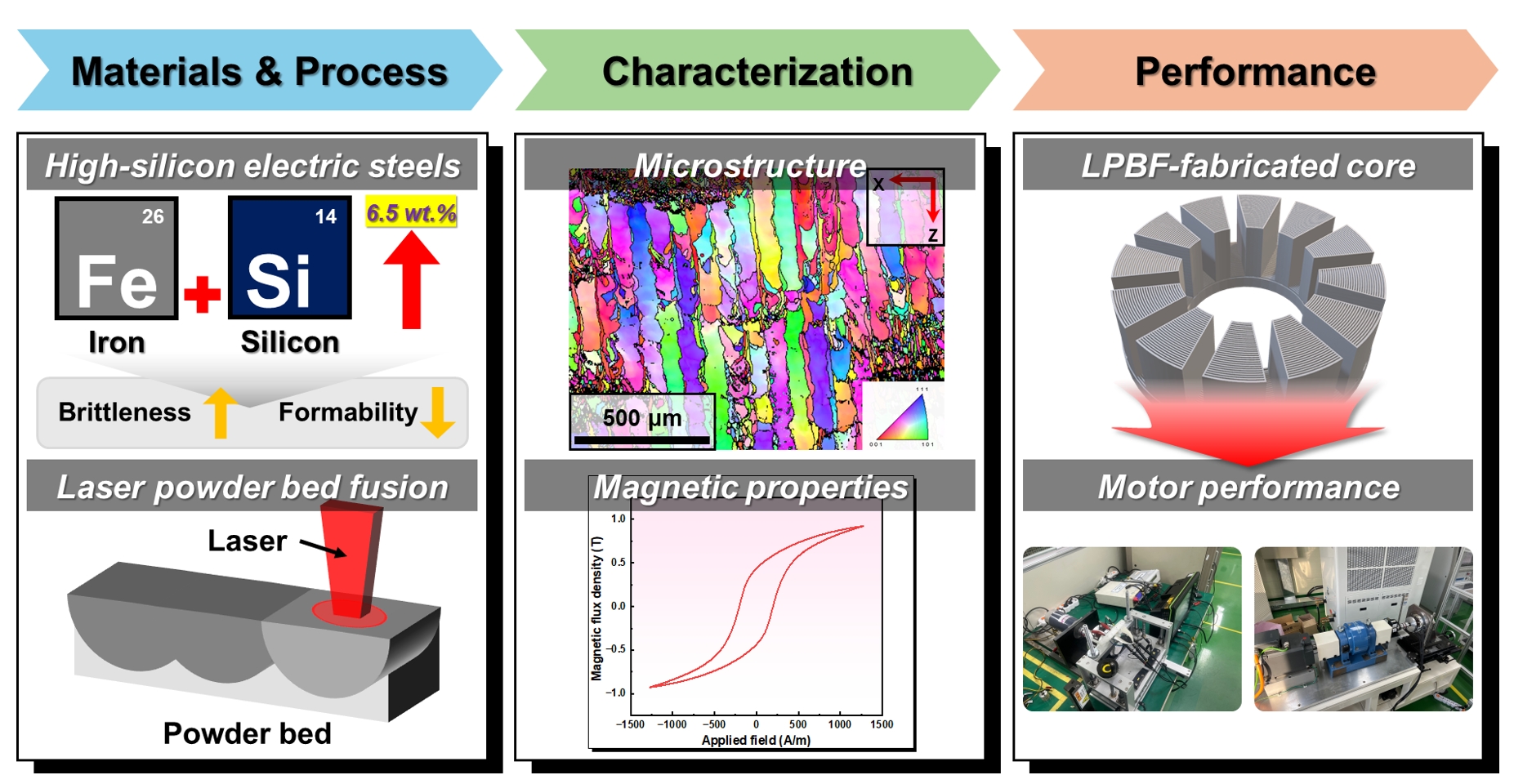
- In this study, Fe-6.5Si soft magnetic core was fabricated using the laser powder bed fusion (LPBF) process, and its microstructural characteristics, magnetic properties, and motor performance were systematically investigated. The LPBF process enabled the fabrication of dense Fe-6.5Si samples with a relative density of 99.57 %, exhibiting columnar microstructures aligned along the build direction and typical soft magnetic behavior. A prototype motor incorporating the LPBF-fabricated core was successfully manufactured and evaluated through dynamometer testing. Although the LPBF-fabricated core exhibited lower absolute performance (approximately 40-50 %) compared to a conventional laminated core, a significant mass reduction of approximately 66 % was achieved. Consequently, performance normalized by core mass was estimated to be approximately 1.5 times higher than that of the conventional motor. Despite the reduction in absolute performance, these results demonstrate that the LPBF-fabricated core offers superior performance-to-weight efficiency, highlighting the potential of LPBF technology for lightweight soft magnetic components in electric motor applications.
4. Conclusion
-
Funding
This work was supported by Fundamental R&D Projects (PNKB140 and PNKB310) of the Korea Institute of Materials Science (KIMS). This work was also supported by the National Research Foundation of Korea (NRF) [grant number: RS-2023-00282305] and the Ministry of Trade, Industry and Energy of Korean government (MOTIE) [grant number: RS-2025-02317513].
-
Conflict of Interest
The authors declare that they have no conflict of interest.
-
Data Availability Statement
The data that support the findings of this study are not publicly available due to confidentiality agreements with industrial partners.
-
Author Information and Contribution
Ji Sang Yoon: Conceptualization, Data curation, Formal analysis, Investigation, Methodology, Validation, Visualization, Writing – original draft
Yeon Woo Kim: Data curation, Formal analysis, Investigation, Visualization
Gyu Hyun Park: Formal analysis, Investigation
Youk Jin Kim: Investigation, Resources
Sang Heon Lee: Resources, Validation
Jeong Seok Kim: Resources, Validation
Sung Ho Yu: Investigation, Project administration
Jeong Min Park: Conceptualization, Data curation, Investigation, Methodology, Project administration, Supervision, Validation, Visualization, Writing – review & editing
-
Acknowledgments
None.
Article information


| Sample | Pcm (W/kg) | θ (deg) | μa (-) | Br (mT) | Bm (mT) | Hc (A/m) | Hm (A/m) | Br/Bm (-) |
|---|---|---|---|---|---|---|---|---|
| Fe-6.5Si | 5.3 ± 0.2 | 82.1 ± 0.3 | 575.9 ± 4.3 | 426.4 ± 6.6 | 923.9 ± 4.9 | 200.7 ± 2.9 | 1270.5 ± 8.7 | 0.5 ± 0.01 |
- 1. J. M. Silveyra, E. Ferrara, D. L. Huber and T. C. Monson: Science, 362 (2018) eaao0195.Article
- 2. B. S. Ram, A. K. Paul and S. V. Kulkarni: J. Magn. Magn. Mater, 537 (2021) 168210.Article
- 3. G. Stornelli, A. Faba, A. Di Schino, P. Folgarait, M. R. Ridolfi, E. Cardelli and R. Montanari: Materials, 14 (2021) 1489.Article
- 4. O. Gutfleisch, M. A. Willard, E. Brück, C. H. Chen, S. G. Sankar and J. P. Liu: Adv. Mater., 23 (2011) 821.Article
- 5. S. I. Jeong and G. T. Hwang: J. Powder Mater., 32 (2025) 529.ArticlePDF
- 6. S. M. Kim, E. J. Cha, D. H. Kwon, S. U. Hong, Y. J. Lee, S. J. Lee, K. A. Lee and H. J. Kim: J. Powder Mater., 29 (2022) 459.Article
- 7. H. Song, H. Lee, J. Kim and J. Kim: J. Powder Mater., 28 (2021) 509.Article
- 8. H. A. Im, K. H. Bae, Y. G. Nam, S. An, S. Yang, Y. J. Kim, J. W. Lee and J. W. Jeong: J. Powder Mater., 28 (2021) 293.Article
- 9. G. Ouyang, X. Chen, Y. Liang, C. Macziewski and J. Cui: J. Magn. Magn. Mater., 481 (2019) 234.Article
- 10. G. Ouyang, C. R. Macziewski, B. Jensen, T. Ma, R. Choudhary, K. Dennis, L. Zhou, D. Paudyal, I. Anderson, M. J. Kramer and J. Cui: Acta Mater., 205 (2021) 116575.Article
- 11. H. Shokrollahi and K. Janghorbanm: J. Mater. Process. Technol., 189 (2007) 1.Article
- 12. X. L. Wang, H. Z. Li, Z. Y. Liu, H. T. Liu, G. D. Wang, Z. H. Luo, F. Q. Zhang, S. L. Chen and L. Lyu: Mater. Charact., 111 (2016) 67.Article
- 13. A. M. Glezer, I. V. Maleeva and A. I. Zakharov: Metal. Sci. Heat Treat., 27 (1985) 908.ArticlePDF
- 14. C. Jiang, X. Li, S. S. Ghosh, H. Zhao, Y. Shen and T. Long: IEEE Trans. Power Electron., 35 (2020) 10821.
- 15. A. J. Moses: IEE Proc. A, 137 (1990) 233.Article
- 16. Y. W. Kim, S. Lee, J. B. Seol, N. Kang, Y. S. Choi, J. H. Yu, J. G. Lee, T. H. Kim and J. M. Park: Mater. Des., 259 (2025) 114929.Article
- 17. Y. W. Kim, H. Park, T. H. Kim, K. T. Kim, J. H. Yu, Y. S. Choi and J. M. Park: J. Powder Mater., 30 (2023) 116.Article
- 18. J. A. Lee, D. W. Lee, H. Ha, K. H. Kwon, E. B. Park, T. Kim and H. S. Kim: J. Powder Mater., 32 (2025) 451.ArticlePDF
- 19. Y. Chang, H. Joo, W. Yong, Y. Jo, S. Kim, H. Kim, Y. W. Kim, K. T. Kim and J. M. Park: J. Powder Mater., 31 (2024) 390.ArticlePDF
- 20. J. A. Lee, Y. W. Kim, T. Nakano, H. Joo, J. M. Park and H. S. Kim: Acta Mater., 309 (2026) 122101.Article
- 21. J. Wang, S. Lee, Y. W. Kim, K. T. Kim, J. M. Park and D. Raabe: Acta Mater., 301 (2026) 121751.Article
- 22. H. Park, H. Jung, M. Y. Sung, Y. K. Kim, J. Jung, Y. Lee, N. Kang, K. T. Kim, Y. S. Na, S. S. Sohn and J. M. Park: Mater. Sci. Eng. A, 950 (2025) 149460.Article
- 23. H. Park, J. Yoo, H. Hwang, M. Jin, Y. Jo, T. J. Jang, J. H. Yu, S. S. Sohn and J. M. Park: Mater. Sci. Eng. A, 959 (2026) 150080.Article
- 24. B. Koo, M. S. Jang, Y. G. Nam, S. Yang, J. Yu, Y. H. Park and J. W. Jeong: Appl. Surf. Sci., 553 (2021) 149510.Article
- 25. H. Lee, Y. Choi, J. Ahn, K. Lee, Y. Kim, J. Choi, H. Lee and J. Kim: J. Mater. Process. Technol., 331 (2024) 118521.Article
- 26. A. Z. Macknojia, J. V. Tran, M. P. McKinstry, J. Galindo, Y. Jin, S. Dowden, S. M. Patil, M. V. Pantawane, K. V. M. Krishna, R. Banerjee, S. S. Joshi and N. B. Dahotre: Mater. Des., 241 (2024) 112883.Article
- 27. J. M. Park, J. Jung, S. Lee, H. Park, Y. W. Kim and J. H. Yu: J. Powder Mater., 31 (2024) 137.ArticlePDF
- 28. J. M. Park: J. Powder Mater., 29 (2022) 132.Article
- 29. J. M. Park, J. Choe, J. G. Kim, J. W. Bae, J. Moon, S. Yang, K. T. Kim, J. H. Yu and H. S. Kim: Mater. Res. Lett., 8 (2020) 1.ArticlePDF
- 30. S. Lee, H. Park, M. J. Baek, D. J. Lee, J. W. Bae, J. H. Yu and J. M. Park: J. Powder Mater., 32 (2025) 244.ArticlePDF
- 31. F. Meng, S. Huang, K. B. Lau, Y. Zhou, Y. Deng, P. Wang, X. Shen and C. H. T. Lee: Mater. Des., 231 (2023) 112037.Article
- 32. K. Kondo, S. Kusase, T. Maekawa and K. Hanada: IEEE Trans. Ind. Appl., 50 (2014) 2485.Article
References
Figure & Data
References
Citations

 ePub Link
-
 Cite this Article
- Cite this Article
-
- Close
- Download Citation
- Close
 XML Download
- Figure
-
- Related articles
-
- Microstruture and Mechanical Properties of Ti.Grade12-Ti/TiN/WC Composite Produced by Spark Plasma Sintering Process
- Microstructure and Mechanical Properties of AA3003 Tube for Heat Exchanger Processed by Floating Plug Drawing
- Effect of Building Orientation on Tensile Properties of Hastelloy X alloy Manufactured by Laser Powder Bed Fusion
- Ultra-Low-Temperature (4.2 K) Tensile Properties and Deformation Mechanism of Stainless Steel 304L Manufactured by Laser Powder Bed Fusion
- Effect of Hatch Spacing on the Microstructure and Mechanical Properties of SA508 Gr.3 Steel Fabricated by Laser Powder Bed Fusion


Fig. 1.
Fig. 2.
Fig. 3.
Fig. 4.
Fig. 5.
Fig. 6.
Graphical abstract
| Sample | Pcm (W/kg) | θ (deg) | μa (-) | Br (mT) | Bm (mT) | Hc (A/m) | Hm (A/m) | Br/Bm (-) |
|---|---|---|---|---|---|---|---|---|
| Fe-6.5Si | 5.3 ± 0.2 | 82.1 ± 0.3 | 575.9 ± 4.3 | 426.4 ± 6.6 | 923.9 ± 4.9 | 200.7 ± 2.9 | 1270.5 ± 8.7 | 0.5 ± 0.01 |
Table 1.
TOP

