 KPMI
KPMI

Previous issues
- Page Path
- HOME > Browse Articles > Previous issues
- Volume 33(3); June 2026
-


 PDF
PDFResearch Articles
- [English]
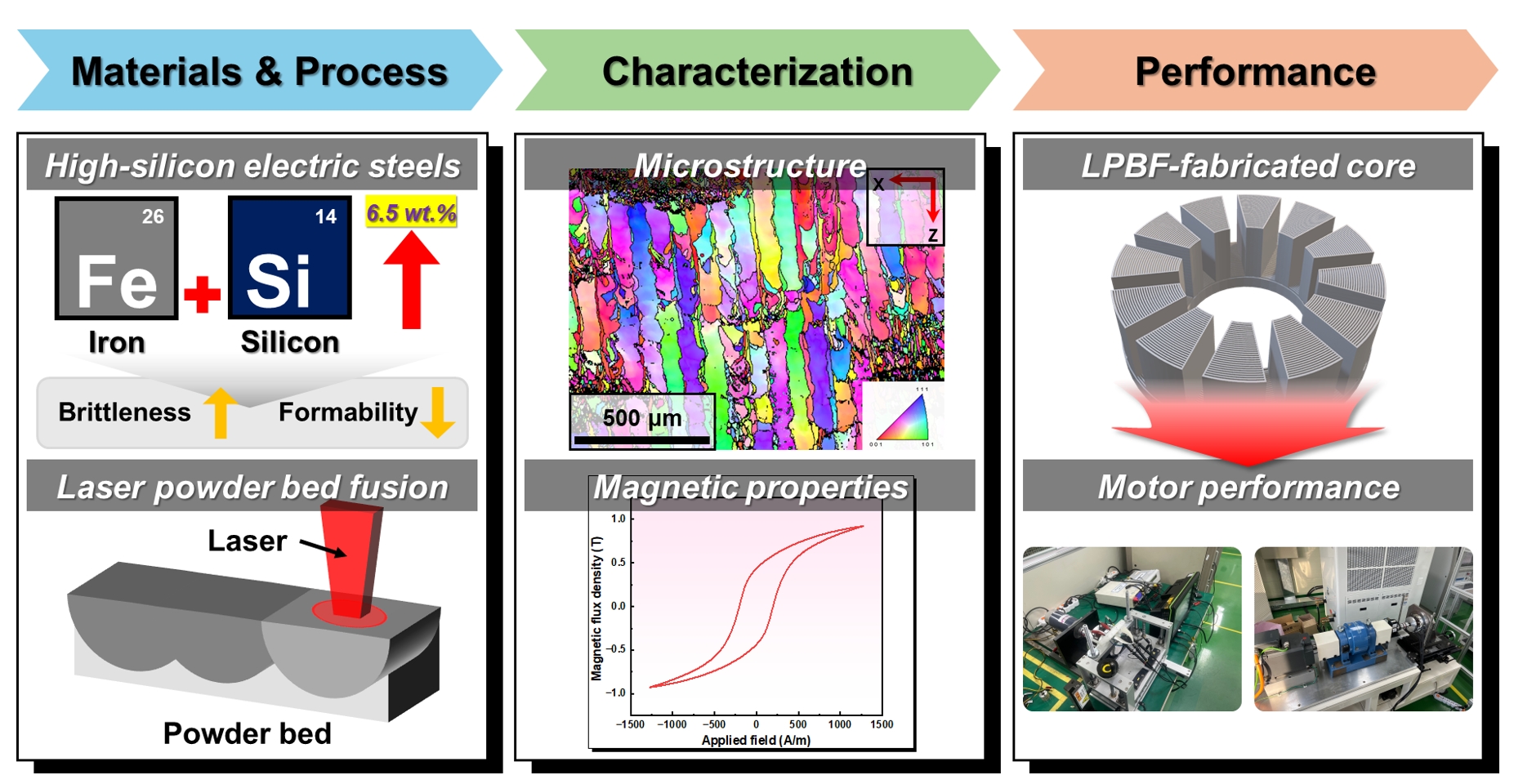
- Microstructure, Magnetic Properties, and Performance of Fe-6.5Si Soft Magnetic Core Produced by Laser Powder Bed Fusion
- Ji Sang Yoon, Yeon Woo Kim, Gyu Hyun Park, Youk Jin Kim, Sang Heon Lee, Jeong Seok Kim, Sung Ho Yu, Jeong Min Park
- J Powder Mater. 2026;33(3):177-183. Published online June 30, 2026
- DOI: https://doi.org/10.4150/jpm.2026.00094
- 1,392 View
- 28 Download
-
 Abstract
 PDF
PDF - High-silicon electrical steels containing 6.5 wt.% Si (Fe-6.5Si) are promising materials for high-efficiency electric motors because of their high electrical resistivity and low core loss. However, the intrinsic brittleness of high-silicon steels limits their formability using conventional fabrication methods, such as cold rolling, pressure forming, and sintering, making it difficult to fabricate three-dimensional (3D) soft magnetic cores for axial-flux permanent magnet (AFPM) motors. Additive manufacturing has recently attracted attention as an effective approach for producing complex magnetic components. In particular, laser powder bed fusion (LPBF) enables the fabrication of geometrically complex structures through localized melting and rapid solidification of metal powders. During LPBF, rapid thermal cycling can generate unique microstructures that influence the magnetic properties of fabricated materials. In this study, Fe-6.5Si samples were fabricated using LPBF, and their microstructure and magnetic properties were investigated. In addition, a complex-shaped 3D core was successfully fabricated by LPBF, and the performance of an AFPM motor equipped with the LPBF-fabricated core was evaluated. The results show that the LPBF-fabricated core can provide superior performance-to-weight efficiency for lightweight motor applications.
- [English]
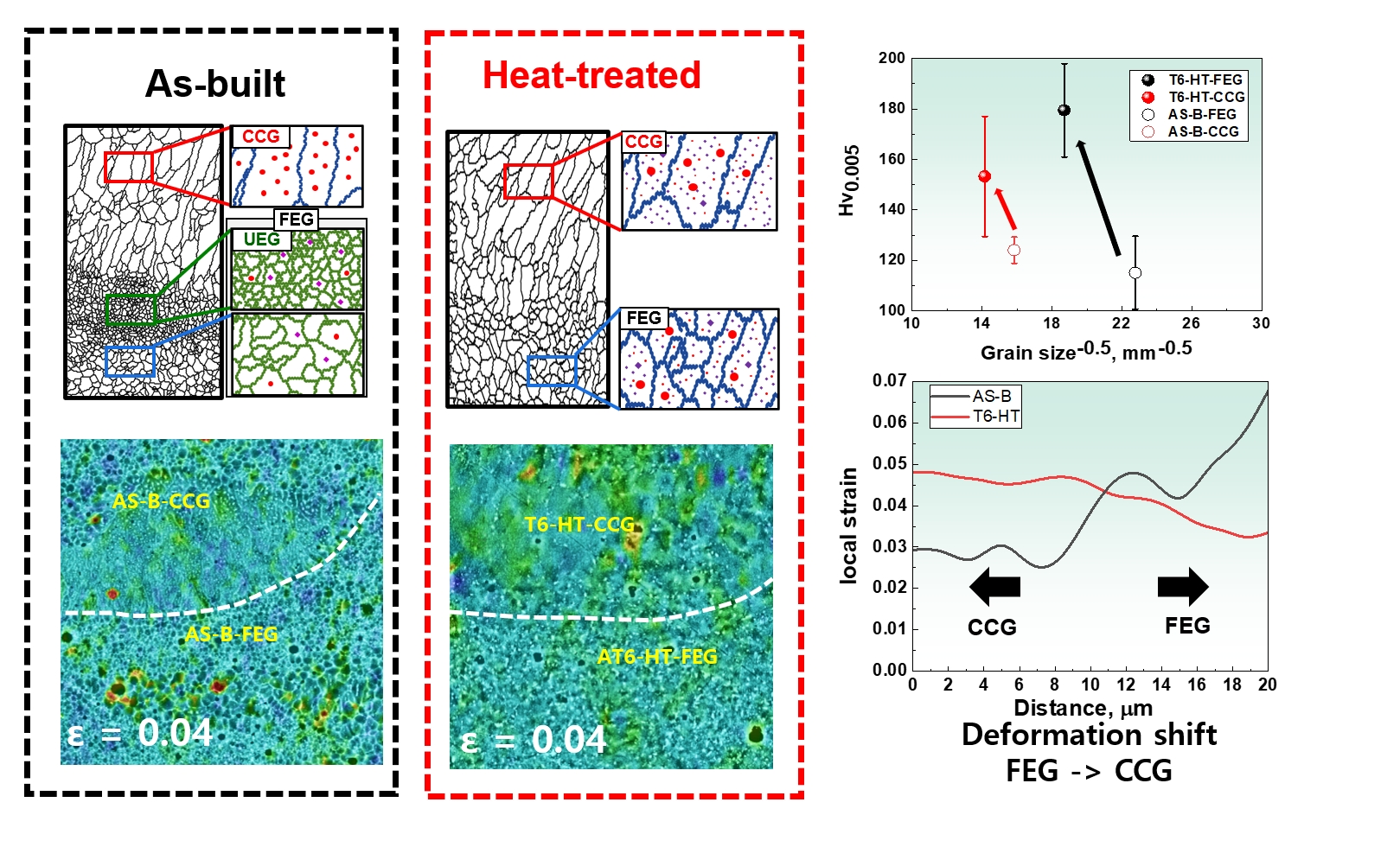
- Heat-Treatment-Induced Deformation Shift in LPBF-Fabricated Heterogeneous Microstructured Al–Zn–Mg–Cu Alloys
- Jungho Choe, Ji Hun Yu, Jina Kwak
- J Powder Mater. 2026;33(3):184-194. Published online June 30, 2026
- DOI: https://doi.org/10.4150/jpm.2026.00136
- 1,111 View
- 13 Download
-
Abstract
PDF
- This study investigated the effect of T6 heat treatment on the tensile properties and deformation behavior of heterogeneous microstructured Al–Zn–Mg–Cu alloys fabricated by laser powder bed fusion. In the as-built state, pronounced microstructural heterogeneity, including non-uniform precipitate distributions and solute segregation concentrated in the coarse columnar grain (CCG) regions, promoted strain localization within the fine equiaxed grain (FEG) regions. This architectural imbalance produced a high ratio of hetero-deformation-induced (HDI) stress to overall flow stress. T6 heat treatment induced solute homogenization and more uniform precipitation across the matrix, together with grain growth that largely eliminated the distinct ultrafine equiaxed grain zones. These changes caused a clear hardness reversal between the FEG and CCG regions, shifting strain localization toward the CCG regions. Consequently, although the absolute magnitude of HDI stress increased with the higher flow stress, its relative contribution decreased because of the homogenized architecture. Despite reduced uniform elongation caused by early necking, overall tensile ductility improved substantially through suppression of premature intergranular cracking in the FEG regions, clarifying the relationship between microstructural evolution and deformation behavior.
- [English]
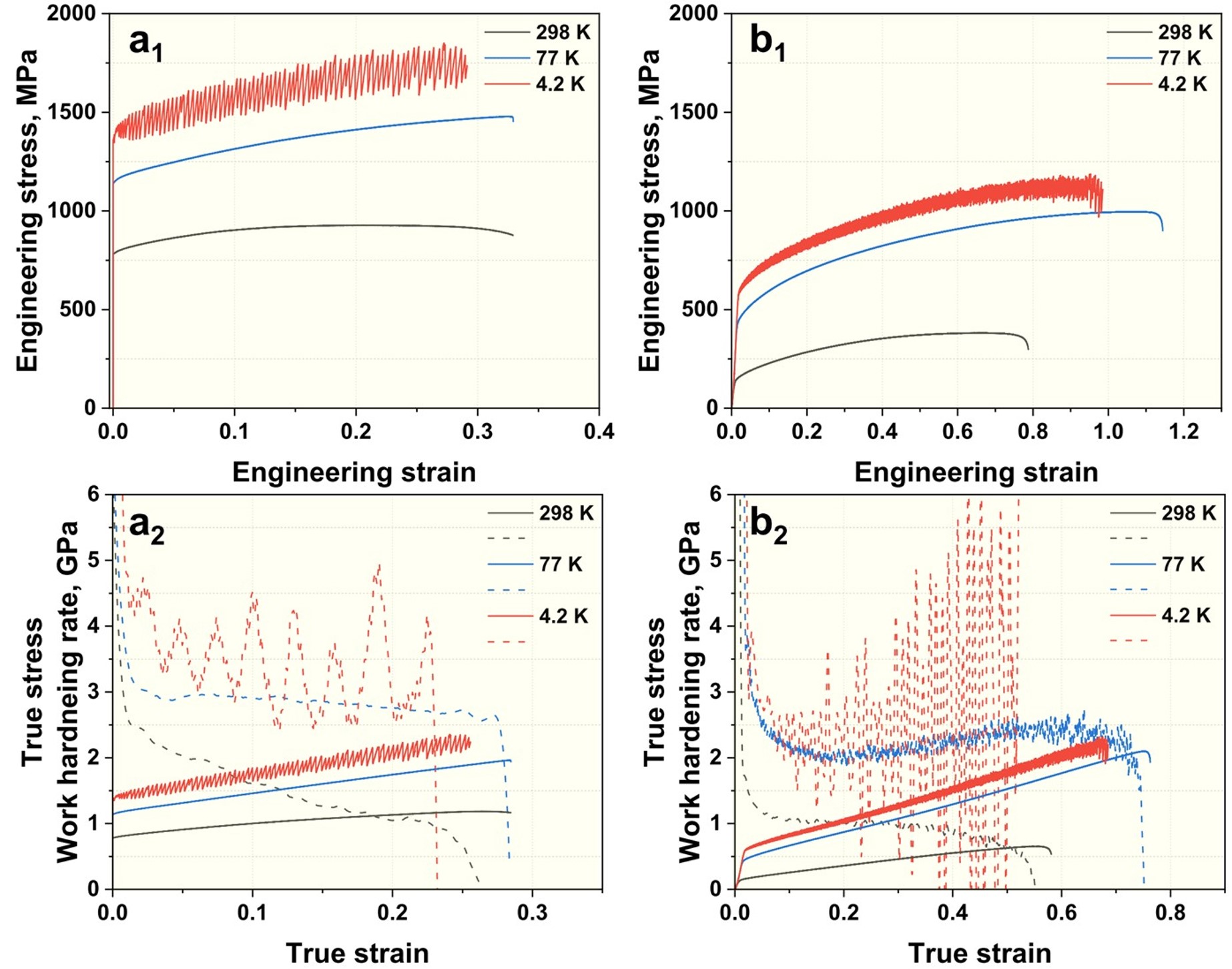
- Ultra-Low Temperature Mechanical Response of Laser Powder Bed Fusion–Processed C-Containing CoCrFeMnNi High-Entropy Alloy
- Jae-Yong Cheon, Seong-June Youn, Young-Sang Na, Young-Kyun Kim
- J Powder Mater. 2026;33(3):195-202. Published online June 30, 2026
- DOI: https://doi.org/10.4150/jpm.2026.00101
- 1,142 View
- 19 Download
-
Abstract
PDF
- This study examined the microstructure and tensile behavior, from room temperature to 4.2 K, of a carbon-containing CoCrFeMnNi high-entropy alloy (HEA) fabricated by laser powder bed fusion (LPBF). Microstructural analysis revealed that the LPBF-built HEA comprised a single face-centered cubic (FCC) phase and exhibited epitaxial grain growth along the build direction. Dislocation cell structures and Cr-rich carbides were also observed within the grains. Tensile testing demonstrated a monotonic increase in both yield strength and ultimate tensile strength with decreasing temperature, and the LPBF-fabricated HEA consistently exhibited higher strength than its wrought counterpart across the entire temperature range investigated. Deformation twins were identified in all tested specimens, with the twin fraction increasing markedly at 4.2 K. These findings suggest that the excellent mechanical performance of the LPBF-fabricated carbon-containing CoCrFeMnNi HEA under ultra-low-temperature conditions is attributable to the combined effects of process-inherent microstructural features and pronounced deformation twinning.
- [Korean]
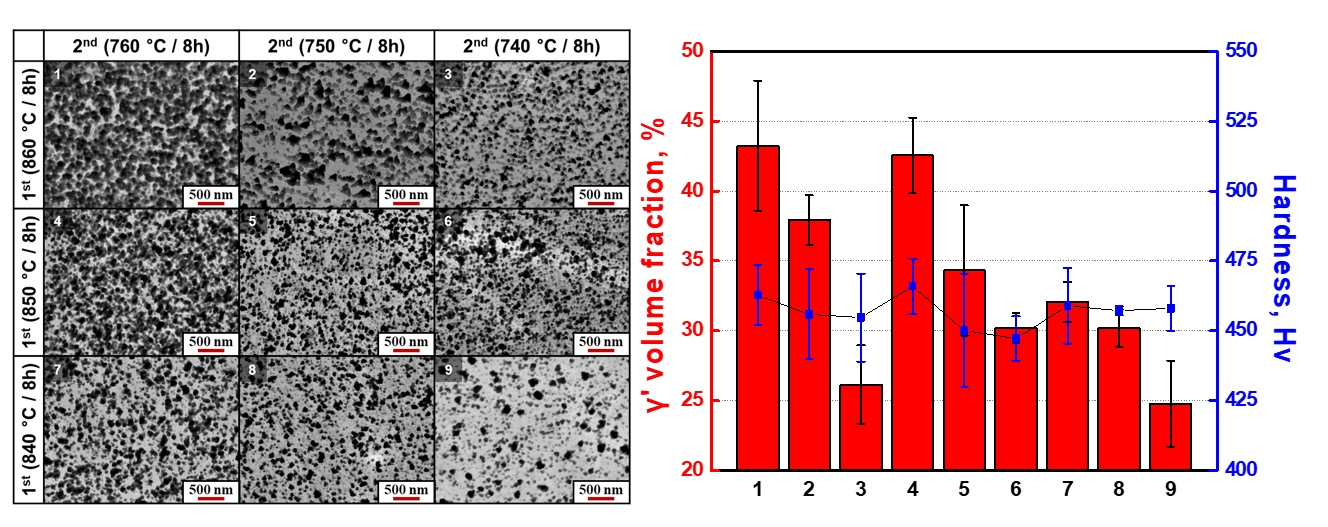
- Aging Temperature Effect on the Microstructure and Mechanical Properties of Directed Energy Deposited Inconel 939 Alloy
- Youngwoo Kim, Ye Chan Sung, Ho Seoung Kang, Jung Gi Kim
- J Powder Mater. 2026;33(3):203-213. Published online June 30, 2026
- DOI: https://doi.org/10.4150/jpm.2026.00115
- 1,125 View
- 33 Download
-
Abstract
PDF
- Directed energy deposition (DED) of Inconel 939 (IN939) alloy is useful for fabricating and repairing geometrically complex components used in gas turbine systems. Repeated laser scanning produces a non-equilibrium microstructure that can support high mechanical strength. However, because the microstructure of DED IN939 differs from that of conventionally manufactured IN939, it may evolve differently under the same post-heat-treatment conditions. Therefore, this study applied different aging temperatures to investigate the microstructural evolution and mechanical properties of DED IN939 alloys and to identify suitable post-heat-treatment conditions. Quantitative microstructural characterization showed that both the γ′ phase fraction and γ′ size increased as the first and second aging temperatures increased. Consistent with γ′ evolution under the different aging conditions, specimen strength was positively correlated with aging temperature, whereas elongation decreased because excessive γ′ formation and growth narrowed the γ′ channel width. Consequently, aging at 840 °C for 8 hours followed by aging at 740 °C for 8 hours provided the best combination of high strength and ductility in room-temperature tensile tests.
- [English]
- A Powder-Metallurgical Route to Ag2(Te,S) Compounds and Their Thermoelectric Properties
- Seungki Jo, Yoojeong Ji, Linh Ba Vu, Kyung Tae Kim
- J Powder Mater. 2026;33(3):214-220. Published online June 30, 2026
- DOI: https://doi.org/10.4150/jpm.2026.00122
- 1,126 View
- 17 Download
-
Abstract
PDF
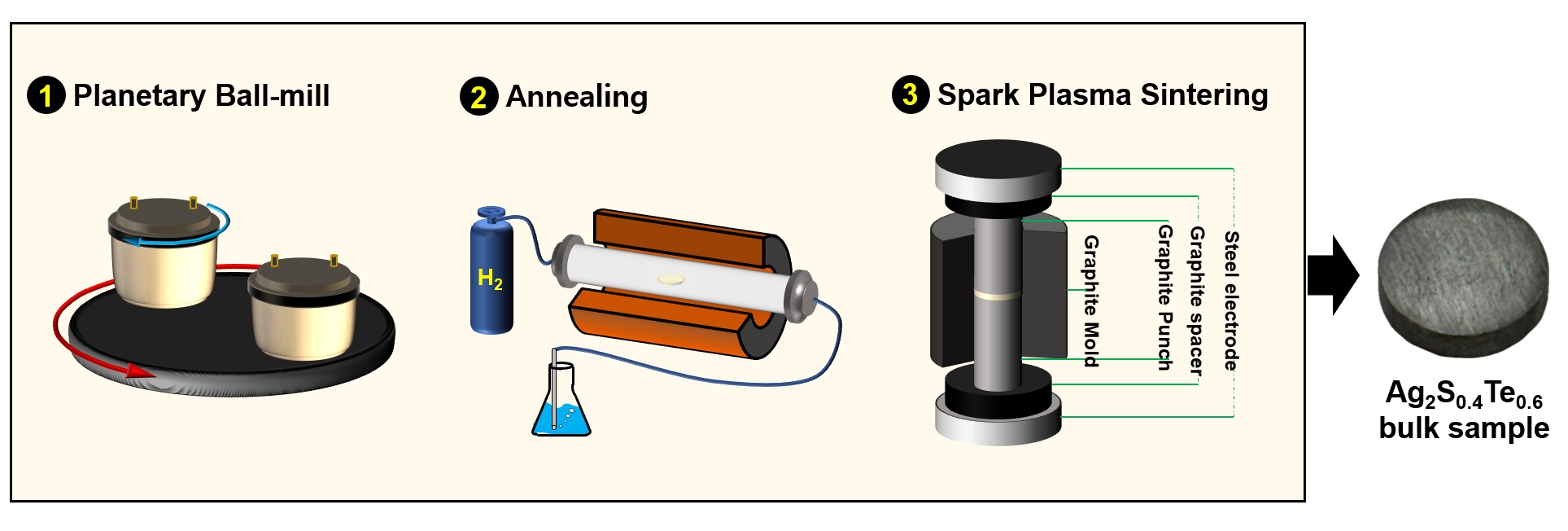
- Silver chalcogenides have attracted considerable attention as promising materials for wearable power generation because they combine mechanical ductility with favorable thermoelectric properties. However, most reported synthesis methods rely on high-temperature melting and annealing, which offer limited microstructural control and therefore restrict opportunities for further performance improvement. In this study, Ag2S0.4Te0.6 compounds were synthesized through a powder-metallurgical route that combined mechanical alloying with rapid densification by spark plasma sintering. Ball milling produced amorphized microscale powders, which were successfully consolidated at different sintering temperatures. The sample sintered at 600 °C exhibited the highest power factor, mainly because of its optimized electrical transport properties, and achieved zT values of approximately 0.32 near room temperature and approximately 0.50 at 473 K. These results indicate that powder-metallurgical processing is a viable strategy for tailoring transport properties and improving the thermoelectric performance of silver chalcogenide materials for wearable applications.
- [English]
- Interfacial Characterization of Al2O3-Coated p-Type Bi–Sb–Te Powders by Thermal and UV-assisted Atomic Layer Deposition
- Jin Kyeong Shin, Yeongtae Choi, Byung Joon Choi
- J Powder Mater. 2026;33(3):221-229. Published online June 30, 2026
- DOI: https://doi.org/10.4150/jpm.2026.00108
- 1,174 View
- 12 Download
- 1 Citations
-
Abstract
PDF
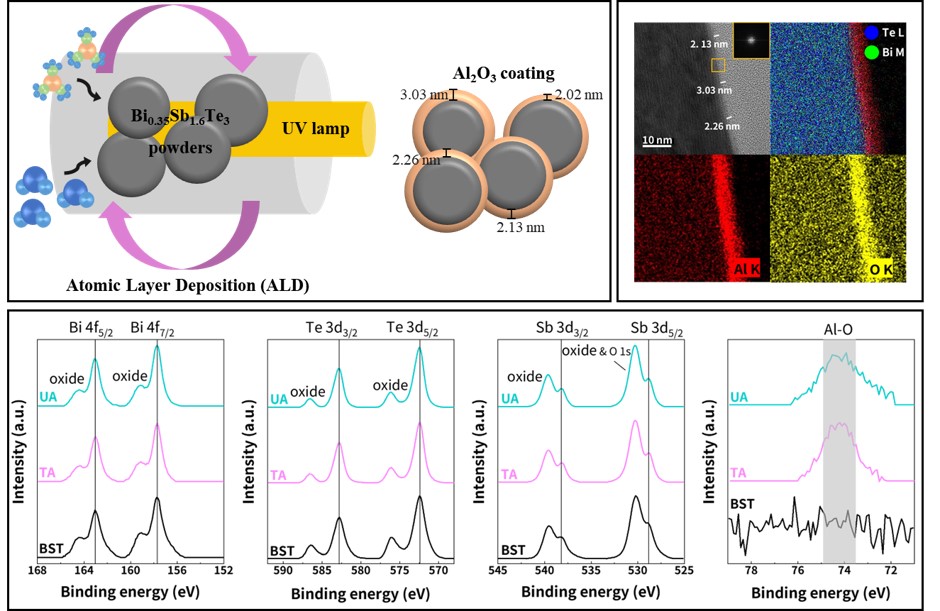
- Interface engineering is an effective strategy for enhancing thermoelectric performance by modulating carrier and phonon transport at interfaces. Atomic layer deposition (ALD), which enables uniform, conformal, and thickness-controlled coatings, is particularly well-suited for this purpose. In this study, p-type Bi0.35Sb1.6Te3 (BST) powders were coated with Al2O3 using thermal ALD and UV-assisted ALD (UV-ALD) at 85 °C. Scanning electron microscopy showed that neither process substantially altered the morphology of the BST powders. However, particle size analysis revealed that the UV-ALD sample exhibited a greater tendency toward partial agglomeration, which may be associated with the more pronounced OH-related band observed in the Fourier-transform infrared spectroscopy results. Cs-corrected scanning transmission electron microscopy and energy-dispersive X-ray spectroscopy mapping revealed continuous Al₂O₃-based coating layers approximately 2–3 nm thick on the BST particle surfaces, forming a core–shell structure. Fast Fourier transform analysis suggested that the coating layers were amorphous, and X-ray photoelectron spectroscopy indicated Al–O bond formation while the main chemical states of BST were preserved. These results demonstrate that both thermal ALD and UV-ALD can effectively deposit continuous amorphous Al₂O₃-based interfacial layers on BST powders, providing a structural basis for future studies of interface-engineered thermoelectric materials.
-
Citations
Citations to this article as recorded by
- Fabrication of Multilayer Core-Shell Structure for High Power Factor in Bi2Te2.7Se0.3 Thermoelectrics
Su Min Eun, Jin Kyeong Shin, Se Been Jeong, Eui Seon Lee, Sung-Tag Oh, Byung Joon Choi
Journal of Powder Materials.2026; 33(4): 299. CrossRef
- Fabrication of Multilayer Core-Shell Structure for High Power Factor in Bi2Te2.7Se0.3 Thermoelectrics
- [English]
- Fabrication and Thermal Conductivity of Boron Nitride Nano Barb/Acrylic Polymer Nanocomposites
- Hyojeong Lee, Jiyeon Koo, Eunsu Park, Hyunjoo Choi
- J Powder Mater. 2026;33(3):230-238. Published online June 30, 2026
- DOI: https://doi.org/10.4150/jpm.2026.00143
- 1,028 View
- 15 Download
-
Abstract
PDF
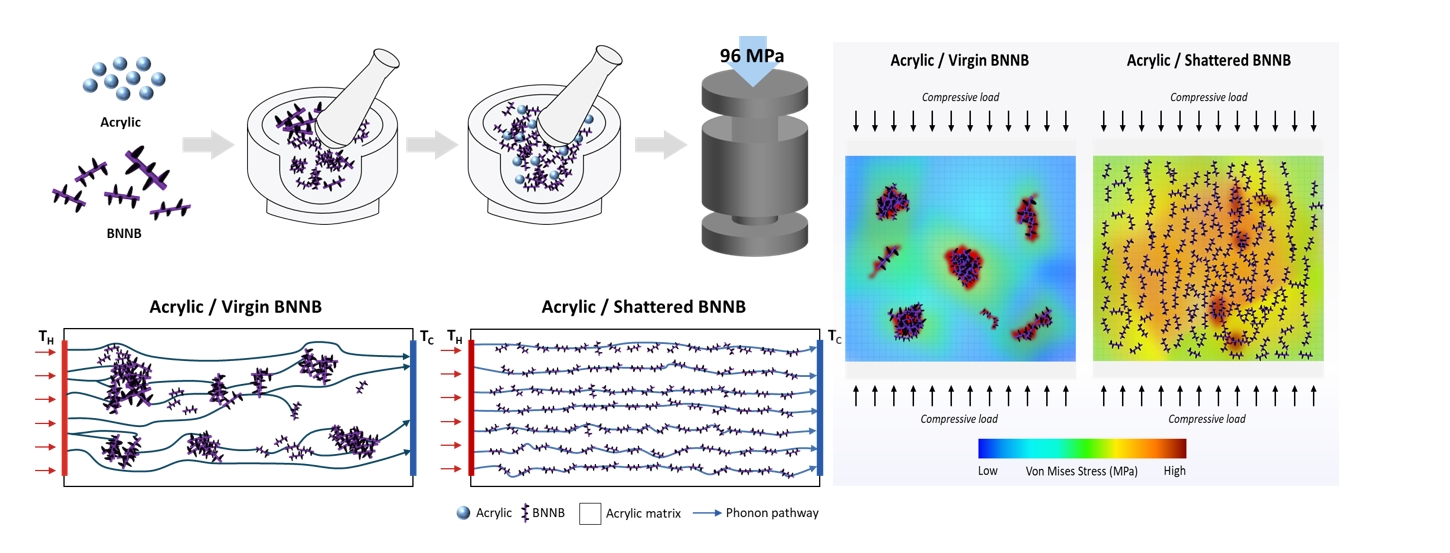
- The effect of manual mortar-grinding pretreatment on the thermal and mechanical properties of Boron Nitride Nano Barb (BNNB)-filled acrylic polymer composites was investigated. Composites incorporated with 5 wt.% (≈3 vol.%) of either virgin or mechanically fractured (shattered) BNNB were fabricated via hot-pressing of a thermoplastic acrylic resin at 230°C under 96 MPa for 90 min. Vickers hardness increased from 20.4 HV for neat acrylic to 29.2 HV (+43.1%) for the shattered BNNB composite, which is attributed to the omnipresent activation of barb-mediated mechanical interlocking within the polymer matrix. Thermal conductivity improved by 18.1% and 34.7% relative to neat acrylic for the Acrylic/Virgin BNNB and Acrylic/Shattered BNNB composites, respectively. The superior thermal performance is attributed to a phonon bridging network formed through barb-mediated contact between dispersed BNNB fragments, supported by experimental values exceeding Lewis–Nielsen model predictions. These results demonstrate that simple manual grinding simultaneously enhances mechanical and thermal properties without chemical surface modification, offering a practical strategy for thermally conductive polymer composite design.
- [English]
- Phase Formation Behavior and Piezocatalytic Properties of Sodium Bismuth Titanate-Based Perovskite Fine Powders Prepared by Ultrasonic Spray Pyrolysis
- Hee Yeon Jeon, Jae Min Park, Ju Eun You, Young-In Lee
- J Powder Mater. 2026;33(3):239-248. Published online June 30, 2026
- DOI: https://doi.org/10.4150/jpm.2026.00129
- 1,177 View
- 11 Download
-
Abstract
PDF
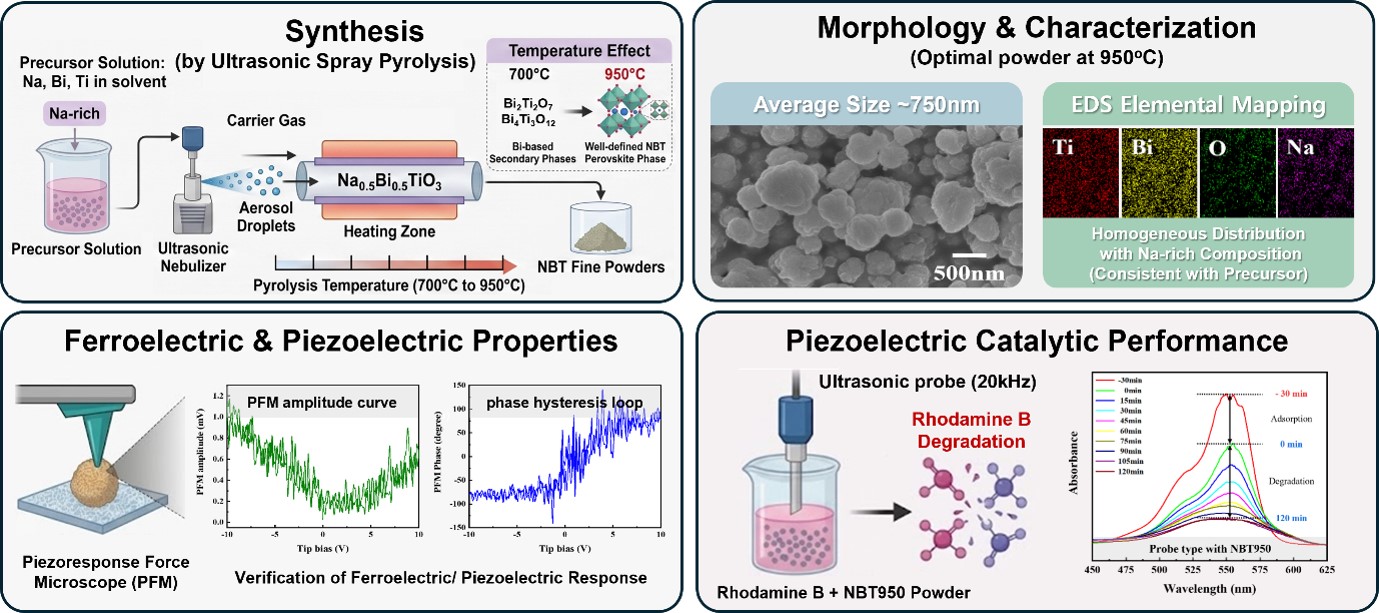
- Sodium bismuth titanate (Na0.5Bi0.5TiO3, NBT) is a representative lead-free piezoelectric ceramic with ferroelectric and piezoelectric properties, promising candidate for piezocatalytic applications driven by mechanical vibration. In this study, NBT-based perovskite fine powders were prepared by ultrasonic spray pyrolysis (USP), a continuous aerosol process based on droplet-level reaction control. The effect of pyrolysis temperature, varied from 700oC to 950oC, on phase formation and particle morphology was investigated. At lower temperatures, Bi-based secondary phases predominated, whereas the perovskite phase gradually developed with increasing temperature. The powder synthesized at 950oC exhibited a well-defined perovskite crystal structure with improved crystallinity. FE-SEM analysis showed that the powders consisted of spherical particles with an average size of approximately 750 nm, without severe interparticle agglomeration. EDS analysis confirmed a relatively homogeneous distribution of Na, Bi, Ti, and O, with Na-rich composition, consistent with Na-rich precursor condition. Piezoresponse force microscope (PFM) measurements verified the ferroelectric and piezoelectric responses of the powder synthesized at 950oC. In Rhodamine B degradation tests under probe-type ultrasonication, adding the NBT-based powder increased the reaction rate constant from 7.96×10⁻³ to 1.16×10⁻² min-1. These results suggest that USP is a feasible continuous process for preparing NBT-based perovskite fine powders for lead-free piezocatalytic applications.
 First
First Prev
Prev

TOP

